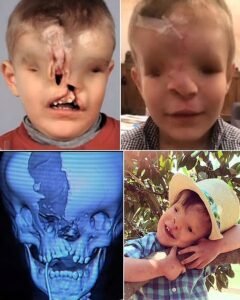
Sometimes, a single photograph can reach farther than anyone could ever imagine. It can cross oceans, connect strangers, and bring hope to a family that has spent years searching for a miracle.
For Yahya El Jabaly, a young boy born in Morocco with severe facial differences, that photograph became the beginning of a remarkable journey. His family had searched for medical help, hoping someone would be willing and able to treat his complex condition. But finding the right medical team seemed almost impossible.
Then a neighbour decided to share Yahya’s photograph on Facebook.
Thousands of kilometres away in Melbourne, Australia, a Moroccan woman named Fatima Baraka came across the image. She could have continued scrolling, as so many people do when they encounter a heartbreaking story online. Instead, she stopped, paid attention, and began asking an important question.
Could someone help this child?
Her decision to search for an answer would eventually connect Yahya and his family with a specialist medical team willing to undertake an extraordinarily complex operation.
a childhood that began with enormous challenges
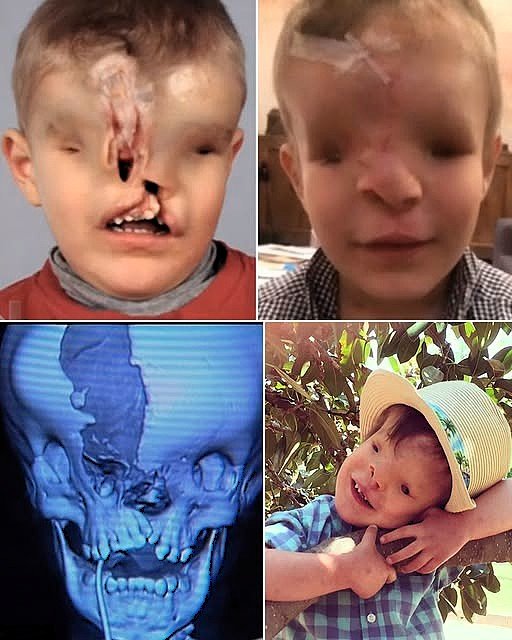
Yahya was born with severe congenital facial malformations affecting several important structures of his face. Reports described him as having absent eyes and an incompletely formed nose and upper jaw.
For his parents, the challenges began long before any possibility of surgery appeared.
Like any family facing a serious medical condition, they wanted their child to receive the best care available. They sought medical assistance, hoping to find specialists who could explain his condition and offer a treatment plan.
But Yahya’s condition was unusually complex. Reconstructing his facial structures would require considerable expertise, careful planning, and a team prepared to take on the risks involved.
The family continued looking for answers, carrying the uncertainty that comes with not knowing whether the help a child needs will ever become available.
For parents, that uncertainty can be exhausting. Every unanswered question can bring fresh worry, while every new attempt to find treatment requires courage to hope again.
Yet Yahya’s story was not destined to end with those unanswered questions.
An unexpected connection was about to open a new door.
the facebook post that reached across the world
The turning point began with an ordinary act: a neighbour shared Yahya’s photograph on Facebook in the hope that someone might know how to help.
The post eventually reached Fatima Baraka, a Moroccan woman living in Melbourne.
Although she was far from Yahya’s home, the distance did not stop her from becoming involved. She began searching for a surgeon who might be able to assess the boy and help address his condition.
Finding an appropriate specialist for a case like Yahya’s was not a simple task. His needs were complex, and any major reconstruction would require careful consideration of the potential benefits and risks.
Still, Fatima kept looking.
Her involvement went beyond sharing the photograph or expressing sympathy. She helped raise funds and travelled to Morocco to bring Yahya and his family to Australia so that he could receive specialist medical attention.
Imagine what that journey must have meant to his parents.
After years of searching, they were travelling toward a medical team prepared to evaluate their son’s needs and consider a challenging surgical plan. There was no guarantee that every problem could be solved, but at last, there was a concrete opportunity to pursue treatment.
Sometimes, hope does not arrive as a dramatic announcement. Sometimes, it begins with a stranger who decides that another person’s problem deserves more than a moment of sympathy.
a medical team takes on a complex challenge
At Melbourne’s Royal Children’s Hospital, Professor Tony Holmes and his team prepared to undertake a demanding facial reconstruction.
The operation was exceptionally complex because the surgeons needed to reconstruct important facial structures while working within the limitations created by Yahya’s congenital condition.
According to accounts of the case, the operation lasted approximately eighteen hours.
During the procedure, the surgical team reconstructed Yahya’s upper jaw and created a nose using his own tissue.
Such reconstruction requires careful planning and considerable technical skill. Surgeons must consider the available tissue, the structures that need rebuilding, healing, and the possibility that additional procedures will be needed as treatment progresses.
The operation was a major milestone, but it was never a simple, one-step solution to every challenge Yahya faced.
His condition involved more than appearance. His long-term care also required attention to communication, development, education, and the support he would need as he grew older.
Nevertheless, the surgery represented a significant step forward in a journey that had once seemed to offer few options.
the moment his parents saw him again
After such a lengthy operation, Yahya’s parents finally had the opportunity to see their son following the reconstruction.
For a family that had spent years seeking medical help, that moment carried enormous emotional weight.
They had endured uncertainty, travelled far from home, and placed their trust in a team undertaking a high-risk procedure. Now they could see the results of the first major stage of treatment.
The operation had reconstructed parts of Yahya’s face, giving him a new opportunity to continue receiving specialist care.
But the most important part of the story was not simply what had changed in photographs. It was the possibility of a future with better support, further treatment, and opportunities to develop skills that would help him navigate everyday life.
For his parents, the experience was about their child—not about achieving a perfect appearance or meeting anyone else’s expectations.
It was about seeking the care he needed and giving him the best possible chance to grow and learn.
surgery was only the beginning
Although the operation was reported as successful, Yahya’s medical journey continued.
Further reconstruction was planned, including the addition of cartilage to improve the structure of his nose.
It was also important to understand what surgery could not change. Yahya remained blind, and reconstructive surgery could not restore his sight.
That reality makes the wider story of his care especially important.
A child’s well-being cannot be measured by surgical results alone. Medical treatment may address particular physical needs, but children also need opportunities to communicate, learn, build relationships, and develop independence.
Reports from 2015 described Yahya beginning speech therapy. His vocal cords were intact, and specialists were working toward supporting his communication.
There were also plans for him to attend a school for blind children after returning to Morocco.
These steps were essential parts of preparing for his future. Speech therapy could help him develop ways to express himself, while appropriate schooling could support his learning and independence.
For a child who is blind, accessible education, family support, and the right resources can make an enormous difference in everyday life.
Yahya’s story therefore extended beyond an operating room. It included the ongoing work of helping a young person communicate, learn, and participate in the world around him.
the extraordinary power of one person caring
Fatima Baraka did not perform the surgery. She was not the specialist who reconstructed Yahya’s facial structures, and she could not personally guarantee the outcome.
But she played an important role in helping connect a family in need with people who could assess and provide specialist care.
Her contribution illustrates something easily overlooked in discussions about medical breakthroughs: major changes often depend on many people working together.
A neighbour shared a photograph. Fatima saw it and began searching. Funds were raised. Travel was arranged. Medical professionals evaluated Yahya and carried out the reconstruction. Plans were made for further treatment, therapy, and education.
Each step mattered.
No single person could meet all of Yahya’s needs alone. Yet when people contributed what they could, a path forward became possible.
That is one of the most meaningful lessons in this story. Helping someone does not always require having every answer. Sometimes it means taking the first step, finding the right person, or refusing to ignore a request for help simply because the problem seems too difficult.
a reminder that every child deserves a chance
Yahya’s journey also reminds us that children with disabilities and congenital conditions deserve dignity, compassion, and opportunities to reach their potential.
They should not be defined only by their medical diagnoses or physical differences. They are children with individual personalities, needs, abilities, and futures.
Medical care can be an important part of that future, but so can inclusive education, accessible services, family support, and a community willing to treat them with respect.
The most meaningful response to a child’s challenges is not pity. It is a commitment to helping that child access the care, resources, and opportunities they deserve.
Yahya’s story began with a photograph shared by a neighbour who hoped someone might help. It travelled across thousands of kilometres before reaching Fatima Baraka, who decided to take that hope seriously.
From there, the efforts of many people helped create an opportunity for treatment that had once seemed out of reach.
We cannot know everything the future will hold for Yahya, and his journey was never something one operation could completely resolve. But his story shows what can happen when compassion leads to practical action.
A photograph cannot perform surgery. A social media post cannot replace medical expertise. And good intentions alone cannot solve every problem.
But a photograph can bring a child’s needs to someone’s attention. A determined person can search for qualified help. And a team of professionals can sometimes turn that connection into a life-changing opportunity.
Sometimes, changing a life begins with something as simple as refusing to scroll past someone who needs help. ❤️
If Yahya’s story touched your heart, share it to remind others that kindness can travel across borders and that every child deserves compassion, dignity, and the chance to receive the care they need.
What do you think can happen when someone takes another person’s request for help seriously? Share your thoughts in the comments.