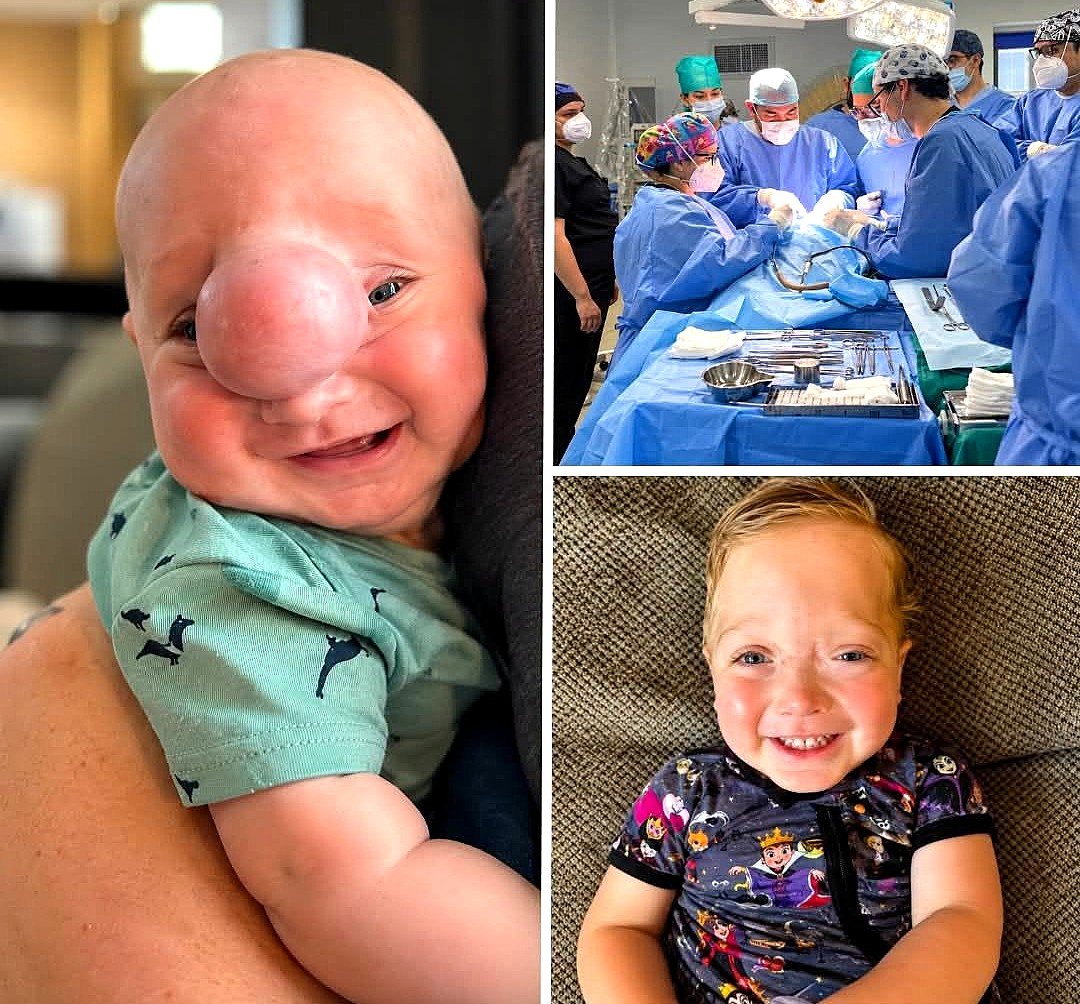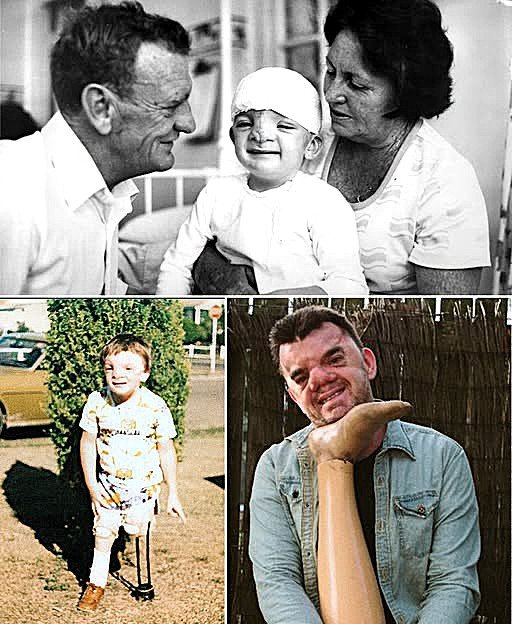
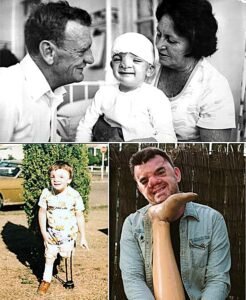
When Robert Hoge was born in Brisbane, Australia, in 1972, his arrival was followed by fear rather than celebration.
His mother, Mary, could not bring herself to look at him for an entire week.
Robert had been born with a large tumor where his nose should have been. The growth had pushed his eyes toward the sides of his face. His legs were also severely malformed, and doctors knew they would eventually have to be amputated.
For his mother, it was an overwhelming reality.
She was frightened.
She was grieving the future she had imagined for her baby.
At first, Mary told hospital staff that she did not want to take Robert home. One doctor even suggested that the family consider placing him in an institution.
It is difficult to imagine what those first days must have felt like.
A newborn child was lying in a hospital, while his mother struggled to understand what his life—and hers—would look like.
But then something changed.
Robert’s family had a decision to make.
His brothers and sisters were asked whether they wanted their baby brother to come home.
Their answer was immediate.
They wanted him.
There was no hesitation.
No condition.
No question about whether he would look different.
They simply wanted their brother.
And Robert went home.
That decision would shape the rest of his life.
His childhood became a long journey through hospitals, operating rooms and recovery rooms.
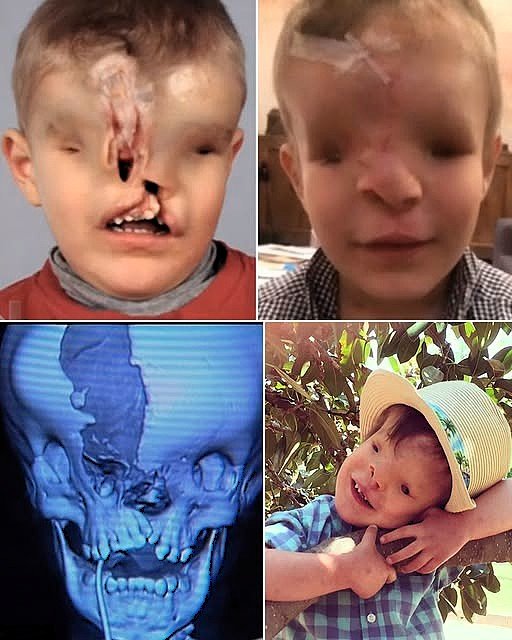
Doctors removed the tumor and performed reconstructive surgeries to reshape his face. Other procedures helped him breathe, see and function more easily.
By the time Robert was 14 years old, he had already undergone 24 operations.
Then came another decision.
Doctors offered a procedure that could significantly alter his appearance. It could move his eyes closer together and create a face that looked more conventionally familiar.
But there was a devastating possibility.
The operation could leave Robert blind.
This time, his parents didn’t decide for him.
They told their teenage son that the choice belonged to him.
It was an enormous responsibility for a 14-year-old.
He could undergo another operation and potentially change the face that had attracted so much attention throughout his childhood.
Or he could refuse—and keep his eyesight while continuing to live with a face that society might consider unusual.
During the family discussion, Robert’s brother Michael offered a simple thought that stayed with him.
What would be the point of having a face that looked better if Robert couldn’t see it?
The question changed everything.
Robert said no.
He refused the surgery.
He chose his eyesight.
He chose the face he already had.
And that decision became much more than a medical choice.
It became an early declaration that his life would not be determined entirely by other people’s ideas about appearance.
That did not mean life suddenly became easy.
It didn’t.
Growing up with a visibly different face meant Robert experienced staring, rejection and cruel comments.
There were moments when strangers reduced him to his appearance before knowing anything about him.
But over time, Robert began to understand something important:
Other people’s discomfort did not have to become his definition.
He eventually became a journalist.
He worked in politics.
He married.
He became a father.
And he later wrote about his life in his memoir, Ugly.
The title is deliberately uncomfortable.
Robert did not choose it because he believed a person’s worth could be measured by whether they were attractive.
He chose it because he wanted to confront the word rather than allow it to control him.
His writing explores something many people avoid discussing: the fact that humans notice differences.
We notice faces.
We notice scars.
We notice disabilities.
We notice anything that looks unfamiliar.
Pretending otherwise doesn’t necessarily make someone feel accepted.
Robert’s perspective is different.
Instead of asking people to pretend they don’t see his differences, he challenges them to see those differences—and then understand that they are only one part of a complete human being.
A face can be different.
A body can be different.
Someone can attract attention simply by walking into a room.
And none of those things determine how much that person deserves to be loved, respected or included.
Years after his birth, Robert discovered the diary his mother had kept during those terrifying first days.
He finally saw, in her own words, how frightened she had been.
Perhaps that discovery could have filled him with anger.
Instead, he came to understand something complicated about his mother’s story.
She had been afraid.
She had not known what to do.
But she eventually chose to take her son home.
And Robert grew up surrounded by family members who had wanted him there from the beginning.
The little boy whose mother once struggled to look at him became a man who learned to look directly at the world.
He didn’t erase his past.
He didn’t pretend his appearance had never affected his life.
He didn’t claim that differences don’t matter.
Instead, he learned that difference and worth are not opposites.
At 14, Robert was given the possibility of changing his face at the risk of losing his sight.
He chose to see the world with the face he already had.
And perhaps that choice carried a message far beyond that operating room:
You don’t have to become someone else’s idea of normal to deserve a place in the world.
Robert Hoge’s story is not simply about surgery, disability or appearance.
It is about the complicated journey toward accepting yourself in a world that constantly tells people how they are supposed to look.
And it leaves us with a question worth sitting with:
Should acceptance mean pretending we don’t notice someone’s differences—or noticing them, understanding them, and realizing they never diminish that person’s value? ❤️