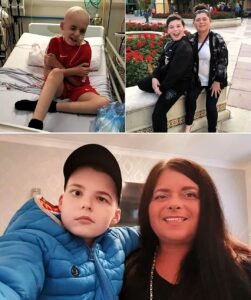
For years, Kieran Crighton and his family learned to live with uncertainty.
They learned what it meant to wait outside hospital rooms. They learned how frightening a scan could feel. They learned to celebrate small victories that many people might take for granted—the return of a few steps, a few words, a normal meal, or simply another day without devastating news.
Then, in December 2025, doctors delivered news that seemed to leave very little room for hope.
A tumour measuring around six centimetres had been found on Kieran’s spine. It was considered inoperable, and according to his mother, Senga, doctors told the family that his cancer was terminal and that he might have only months left.
Kieran was just 20 years old.
Yet nine months later, his family walked into another appointment and received news they could hardly have imagined.
The tumour that had once been clearly visible on his MRI could no longer be seen.
For Kieran, this was not the beginning of his cancer journey.
It was another chapter in a battle that had started when he was only 12.
A Childhood Interrupted by Cancer
Kieran’s life changed dramatically in 2018.
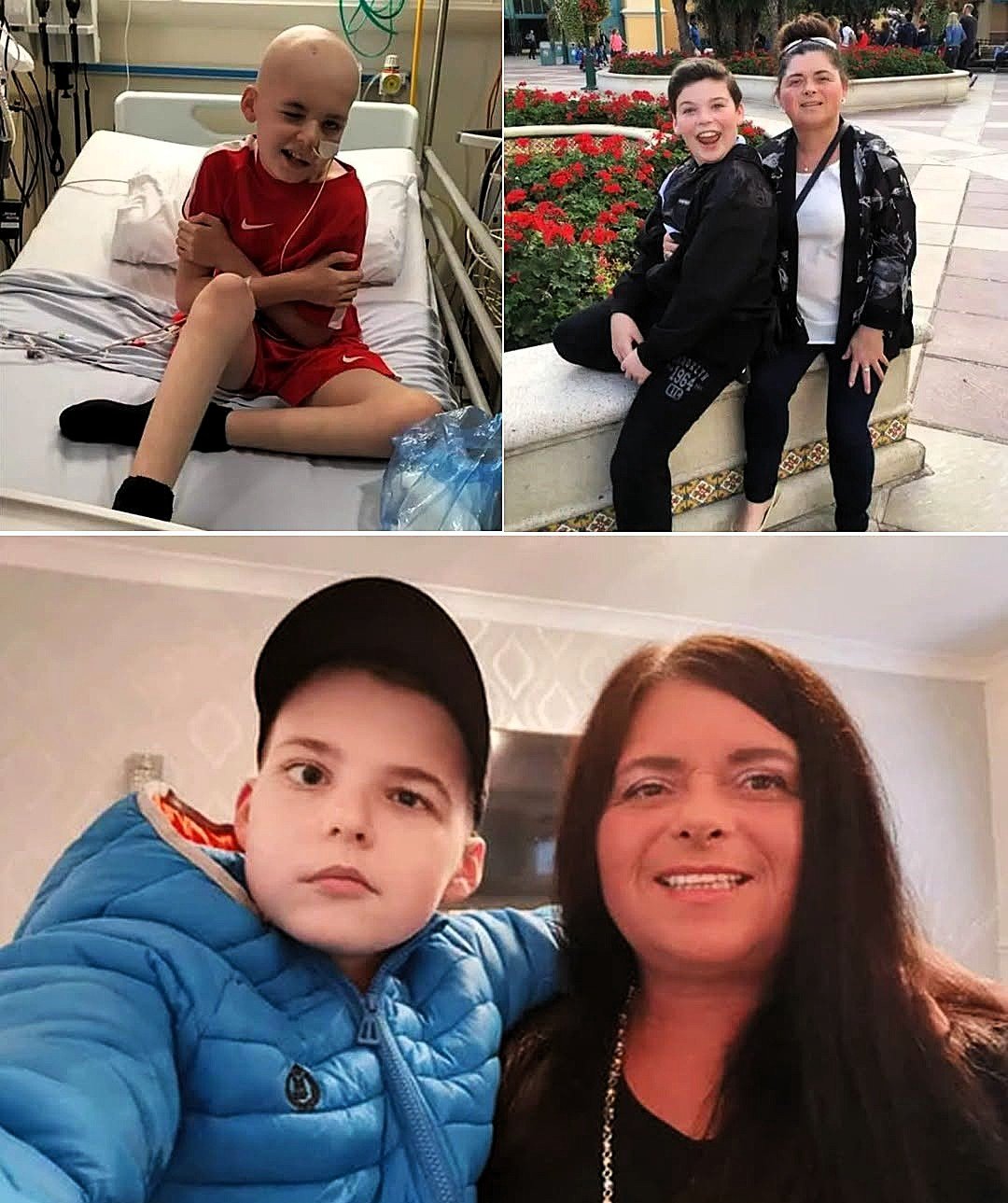
At the age of 12, doctors discovered that he had an aggressive form of brain cancer known as medulloblastoma. The disease had already affected more than one area, with additional tumours involving his brain and spinal region.
The largest tumour was removed during brain surgery.
But removing it was only the beginning.
Kieran then faced an exhausting course of chemotherapy and radiotherapy. His treatment was complicated by serious medical problems, including septic shock, and he required repeated blood transfusions.
He eventually spent approximately 35 weeks in hospital.
For a child, that is an enormous amount of time to spend away from ordinary life.
While other children were going to school, spending time with friends and growing up, Kieran was fighting simply to regain abilities that he had once used without thinking.
One of the consequences of his treatment was posterior fossa syndrome, a neurological condition that can occur after surgery involving the back of the brain.
Kieran temporarily lost the ability to do some of the most basic things people normally learn during childhood.
He had to learn how to walk again.
He had to learn how to talk again.
He had to learn how to eat again.
Every step forward required patience, determination and support from the people around him.
And slowly, progress came.
A Moment of Hope
By 2019, there was finally encouraging news.
Scans showed Kieran in remission.
For his family, it was a moment they had desperately needed.
After months of hospitals, treatment and uncertainty, they could begin imagining a future that was not completely dominated by cancer.
They had no reason to forget what had happened, but they had reason to believe that perhaps the hardest part of their journey was behind them.
Years passed.
Kieran grew older.
His childhood battle became part of his history rather than his everyday reality.
But cancer had not completely disappeared from the family’s story.
Seven years after his original diagnosis, everything changed again.
The Cancer Returned
Kieran suddenly began losing power in his legs.
The symptom was frightening, and medical tests soon revealed why.
The cancer had returned.
This time, doctors found a tumour on his spine measuring approximately six centimetres. Because of its location, the tumour was considered inoperable.
Kieran was now 20 years old.
And once again, the family found themselves facing the terrifying world of cancer treatment.
In December 2025, Senga said doctors told them that Kieran’s condition was terminal and that he could have only months to live.
After everything Kieran had already survived, the news was devastating.
But Kieran continued treatment.
And then came something nobody in the family had expected.
The MRI That Brought Unexpected Hope
Months later, Kieran underwent another MRI.
The family knew how important the scan was.
They had lived through enough scans to understand that a few images on a screen could change everything.
But this time, the news was astonishing.
By September 2026, the tumour had responded so dramatically to treatment that it was no longer visible on the MRI.
Senga said doctors at the Beatson Cancer Centre were “blown away” by Kieran’s response.
According to his mother, doctors indicated that the response was so unusual that they did not have a comparable case to use as a benchmark. His experience could potentially provide information for doctors studying similarly aggressive cancers in the future.
For a family that had once been told to prepare for the possibility of losing Kieran within months, seeing that tumour disappear from the scan was an extraordinary moment.
But it is important to understand what the scan does—and does not—mean.
Kieran has not been declared cancer-free.
His prognosis remains terminal because his cancer is extremely aggressive, and there is still a possibility that the disease could return or progress.
The family knows that another scan could bring difficult news.
So they are not pretending the uncertainty has disappeared.
Instead, they are choosing to appreciate what they have been given.
More time.
Making Memories Between the Scans
For Kieran and his family, life is now measured differently.
They live from scan to scan.
But between those appointments are moments that matter.
Earlier in 2026, Kieran, a lifelong Rangers supporter, had the opportunity to meet some of the team’s players—a memorable experience during a period when ordinary moments have become especially meaningful.
His mother, meanwhile, has spent years trying to turn the family’s painful experience into something that can help others.
She created the annual Warrior Ball, an event that raises money for Children’s Hospices Across Scotland.
The event has become another part of the family’s journey, transforming some of their hardship into support for other children and families facing difficult circumstances.
This year’s fifth event will be her last for a while.
After years of hospitals, fundraising, treatments and uncertainty, the family wants to step back and spend time together.
Sometimes, that is what matters most.
One Scan Cannot Predict the Future
Kieran’s story is not a simple story about a tumour disappearing.
It is a story about a young man who has spent nearly half his life confronting cancer.
At 12, he was fighting to survive an aggressive brain tumour and learning how to walk, speak and eat again.
At 20, he was facing an inoperable spinal tumour and a terminal prognosis.
At 21, he received a scan showing that the six-centimetre tumour doctors had previously seen was no longer detectable.
The future remains uncertain.
The next MRI could bring different news.
But today, Kieran has something his family once feared they might not have: time.
And perhaps that is why this particular scan means so much.
It does not promise that the cancer will never return. It does not erase the years of treatment or the fear that still follows every appointment.
But it gives Kieran and his family another opportunity to wake up together, make memories, laugh, celebrate milestones and experience moments that once seemed impossible.
After everything they have been through, they know better than most that life can change with a single scan.
For now, the tumour is no longer visible.
For now, Kieran is here.
And for a family that has spent years fighting for more time, that is more than enough reason to hold on to hope.
Sometimes hope is not about knowing what tomorrow will bring.
Sometimes it is simply looking at today’s good news and saying:
“Today, we have more time.”