
When the usual way doesn’t work for you, you don’t have to give up. You can create your own way. 🛹❤️
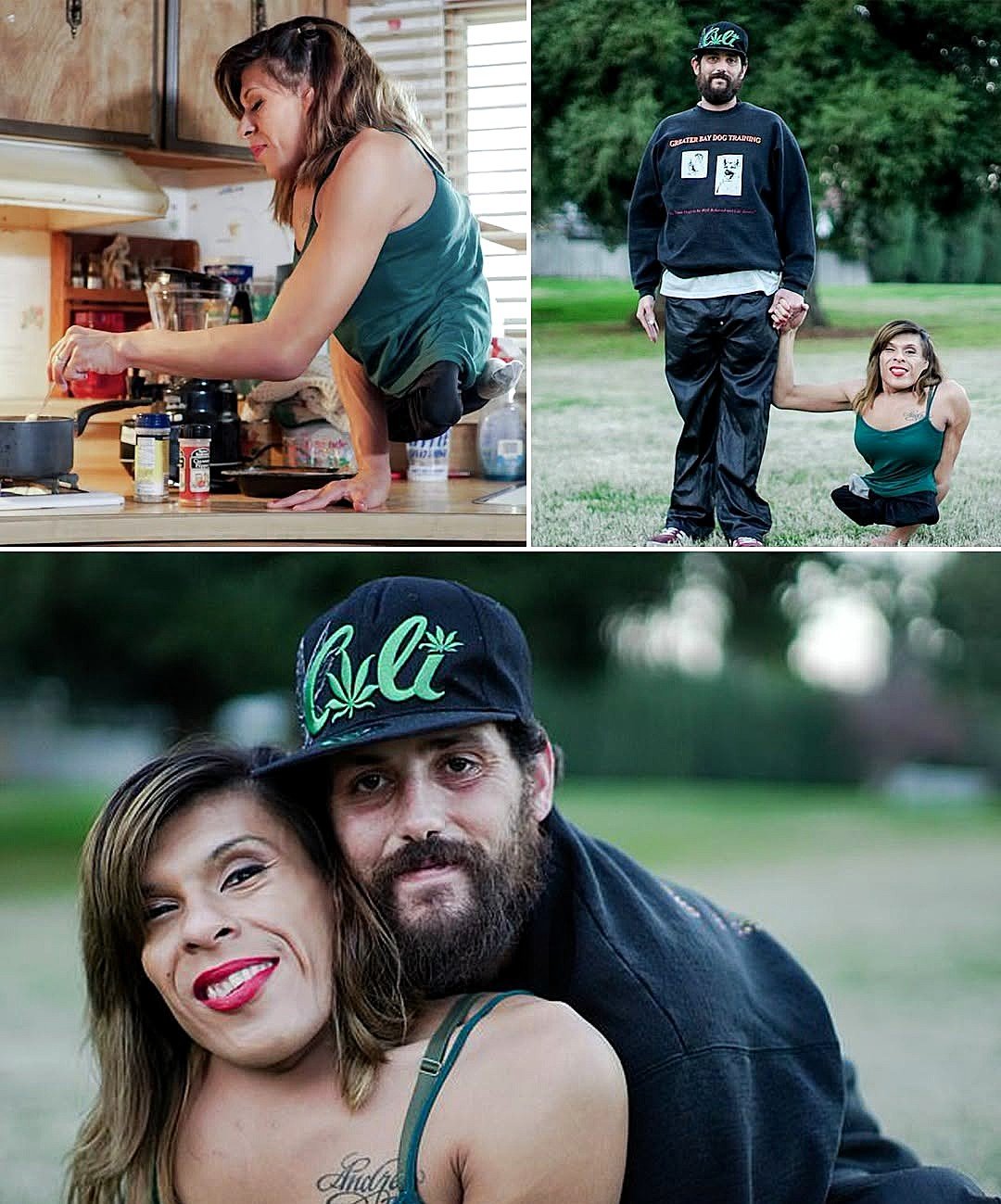
Piyah was born in Sacramento, California, in 1992 with caudal regression syndrome, a rare congenital condition that affected the development of her lower spine and legs.
Walking the way most people do was never part of her life.
So she adapted.
She learned to move with her hands. She used a wheelchair when she needed one. And in one of the most recognizable parts of her story, she discovered that a skateboard could become another way of getting around—allowing her to move quickly and independently close to the ground.
To someone watching for the first time, it might look unusual.
To Piyah, it is simply life.
Growing up, however, wasn’t always easy.
She has spoken about being bullied and feeling different from other children. The attention surrounding her body wasn’t always kind, and there were times when being noticed could hurt.
But instead of allowing those experiences to silence her, Piyah gradually became more comfortable taking up space and allowing people to see her for who she was.
Music became one of the ways she expressed herself.
She began singing, making videos and sharing her creativity online. Her personality, humor and determination attracted people who followed her journey—not because she tried to hide the things that made her different, but because she refused to let those differences define her limits.
Piyah is also a transgender woman, and she has spoken about understanding from a young age that she wanted to live openly as herself.
Her journey toward that life wasn’t necessarily simple.
But she continued moving forward.
Then came a moment that introduced her to an even larger audience.
In 2012, Piyah appeared on RuPaul’s Drag Race.
RuPaul had encountered Piyah’s online videos and invited her onto the show. A special mini challenge was created around her and the butterflies she used as a symbol for the community that had grown around her.
For someone who had spent childhood being reminded that she was different, suddenly having that difference placed in front of millions of viewers could have been overwhelming.
Instead, Piyah turned the spotlight into another opportunity to be herself.
Years passed, but she never stopped creating.
She continued making music, sharing videos and showing people what everyday life looked like from her perspective.
Then, in 2026, at age 34, Piyah appeared on TLC’s One Day in My Body, giving viewers another glimpse into the practical realities of navigating everyday life with a body that works differently from most people’s. 🎥
She cooks.
She creates.
She travels around independently.
She finds solutions.
And sometimes, the quickest way to get somewhere is to sit on a skateboard and push herself forward with her hands.
So that’s what she does.
There is something powerful about that simplicity.
Piyah doesn’t appear to spend her life asking why her body isn’t like someone else’s.
She knows the body she was born with.
She knows what it can do.
And she has spent years learning how to make it work for her.
Her story isn’t simply about overcoming a disability.
It’s about adaptation.
It’s about identity.
It’s about refusing to believe that there is only one correct way to live an ordinary life.
Most of us learn how to perform everyday tasks by watching the people around us. We walk, climb stairs, get into cars, cook meals and move through crowded places without giving much thought to how those things happen.
Piyah had to think differently.
She had to experiment.
She had to discover what worked.
And eventually, the things that might look unusual to someone else became completely ordinary to her.
Maybe that’s one of the most meaningful lessons in her story.
“Different” doesn’t always feel different when it’s simply the life you’ve always known.
A skateboard can become transportation.
A wheelchair can become independence.
Music can become a voice.
And a body that the world may describe as unusual can simply be home.
Piyah didn’t wait for the world to become perfectly designed for her.
She learned how to navigate the world as it was—and, along the way, showed other people that there can be more than one way to move, create, live and belong. 🦋❤️
If almost every ordinary task required you to invent your own method, perhaps eventually your method wouldn’t feel unusual at all.
It would just be your way.
And maybe that’s the part of Piyah’s story worth remembering.