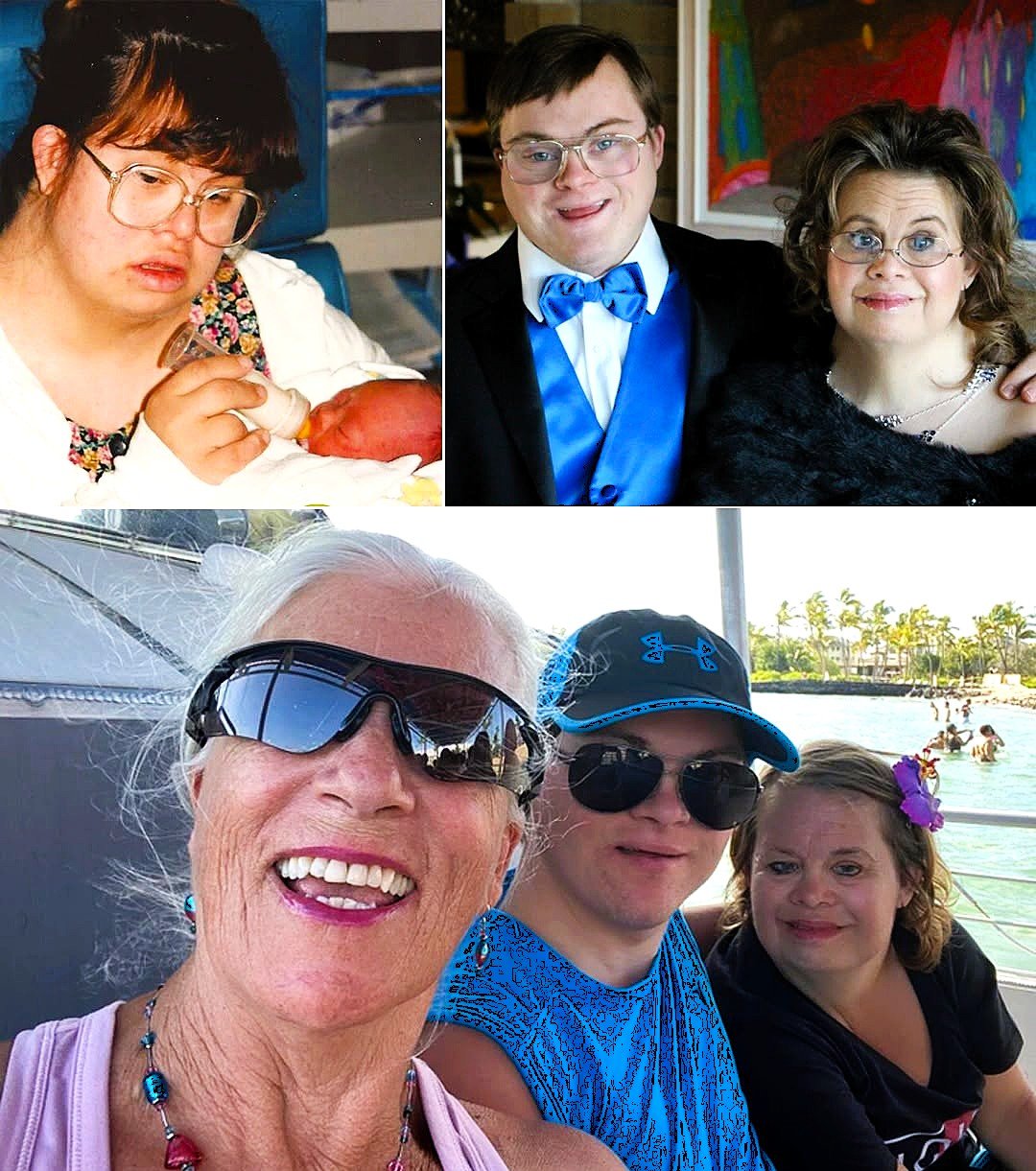
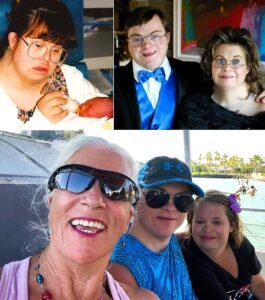
When Lisa discovered she was going to become a mother, she had a life-changing announcement to share with her family. She was 30 years old, living in her own apartment in Napa, California, receiving support services and working 32 hours a week. Now, she was preparing for a new chapter that would bring both extraordinary joy and important challenges.
Lisa has Down syndrome. Her son, Nic, does too. But their story is not simply about a mother and child sharing the same genetic condition. It is about love, family, determination, and the incredible difference that a strong support network can make in someone’s life.
Years later, Nic would describe his family in a way that captured the heart of their experience: “I’m lucky because I have two moms.”
Those words reflected the special relationship he shared with Lisa and his grandmother, Patti White, who played an important role in helping raise him.
The announcement that changed everything
In 1995, Lisa left her mother, Patti, a message with news that would change their family forever. She was going to have a baby, and Patti was going to become a grandmother.
For Lisa, the pregnancy marked the beginning of a journey filled with new responsibilities, hopes, and questions about the future.
Becoming a parent can be overwhelming for anyone. There are appointments to attend, preparations to make, and countless things to learn before a baby arrives. For a woman with Down syndrome, the journey could also involve confronting other people’s assumptions about what she could or could not do.
According to Patti, some people reacted negatively to Lisa’s pregnancy. Some families in their social circle reportedly distanced themselves because they worried that Lisa’s experience might encourage their own daughters to want children.
Those reactions were painful, but Lisa’s family did not allow other people’s fears to determine how they would approach the situation.
Instead, they focused on preparing for the baby’s arrival.
Patti and her husband, Norm, understood that supporting Lisa would require careful planning, patience, and practical assistance. They wanted to make sure that both mother and baby would have the resources they needed.
Their approach was not to pretend that there would never be difficulties. It was to recognize those difficulties early and work together to address them.
Preparing for motherhood, one step at a time
As Lisa’s pregnancy progressed, her parents began arranging support for pregnancy, childbirth, and the responsibilities that would follow.
They helped establish a network of people who could provide guidance and assistance when necessary. The goal was to give Lisa opportunities to participate actively in caring for her baby while making sure that the family had help available when challenges arose.
On February 10, 1996, Lisa and her boyfriend, Tim, welcomed their son, Nic. Tim also had Down syndrome.
The arrival of a newborn brought the familiar demands of early parenthood. Babies need to be fed, changed, bathed, comforted, and watched carefully. Their needs do not follow a predictable schedule, and even experienced parents can struggle with exhaustion and uncertainty.
Lisa began learning these responsibilities with support from her family.
She changed Nic’s diapers, prepared his bottles, and bathed him under supervision. These everyday activities gave her opportunities to participate directly in her son’s care and develop her parenting skills.
Patti also found practical ways to make things easier. She attached written reminders to Nic’s diaper bag so important information would be available when Lisa needed it.
A specialist helped Lisa learn how to select appropriate toys and interact with her growing baby through play.
Rather than expecting Lisa to master everything immediately, her support network broke responsibilities into manageable steps. With guidance, repetition, and encouragement, she could take part in the ordinary routines that help a child feel cared for and secure.
These details may sound small, but successful parenting often depends on precisely these kinds of everyday tasks.
A bottle prepared at the right time, a clean diaper, a familiar game, or a comforting interaction can become part of the foundation of a child’s early life.
For Lisa, learning to care for Nic was a journey she did not have to undertake alone.
A family that understood the importance of support
As Nic grew, Lisa’s parents recognized that raising a child involved more than helping with individual tasks. Children need consistent care, stable surroundings, and adults who can respond to their changing needs as they grow older.
Nic therefore grew up in Patti and Norm’s home, while Lisa remained closely involved in his life.
Their arrangement reflected a family effort to balance Lisa’s role as a mother with the practical support Nic needed. Patti and Norm took on substantial caregiving responsibilities, helping provide stability throughout his childhood.
Lisa continued participating in important parts of his development. She attended his early therapy sessions and shared everyday experiences with him, building a relationship through time spent together.
Motherhood was not limited to one person carrying every responsibility. Instead, several family members contributed what they could.
Patti offered experience, guidance, and hands-on assistance. Norm was part of the household that helped provide Nic with a stable upbringing. Lisa remained his mother, sharing affection, activities, and a meaningful bond with her son.
Their family life illustrates an important distinction: needing support does not automatically mean someone cannot have a meaningful parenting role.
Every family has its own circumstances, strengths, and challenges. Some parents rely on relatives, while others depend on community programs, childcare providers, specialists, or friends.
What matters is understanding the needs involved and creating a reliable arrangement that supports both the parent and the child.
For Lisa and Nic, the involvement of multiple family members became an important part of their shared story.
The special bond between a mother and her son
As Nic grew older, his relationship with Lisa developed through the ordinary moments that often become the most treasured family memories.
They enjoyed playing games together and going on walks. Lisa took pride in being Nic’s mother and happily told other people about her son.
In a 2023 interview, Nic described his mother as “loving and caring.”
His words offered a personal glimpse into their relationship. They suggested that, beyond the practical arrangements surrounding his upbringing, there was a connection built through affection, shared experiences, and the presence of someone who was proud to call him her child.
Nic’s description of having “two moms” also reflected the unusual but meaningful role Patti played in his life.
Patti helped raise him, while Lisa remained an important part of his family and emotional world. Their contributions were different, but both mattered.
The story is a reminder that love within a family does not always fit into a simple arrangement. Sometimes, children benefit from having several trusted adults who provide care in different ways.
For Nic, his childhood included a mother who enjoyed spending time with him and a grandmother who helped ensure that his daily needs were met.
Together, their involvement formed a support system that helped the family navigate the realities of parenting.
Looking beyond stereotypes about Down syndrome
Lisa’s story also challenges assumptions about people with Down syndrome and the roles they can play in society.
A diagnosis does not tell the whole story of an individual’s abilities, personality, ambitions, or relationships. People with Down syndrome have different strengths and support needs, just as people without the condition do.
Parenting requires responsibility, judgment, patience, and the ability to respond to a child’s needs. Some parents may need more assistance with particular tasks than others. The appropriate response is to consider each person’s circumstances individually rather than make assumptions based on a diagnosis alone.
Lisa’s experience demonstrates the importance of practical preparation and ongoing support.
Her family identified areas where guidance would be helpful, developed strategies for everyday tasks, and remained involved as Nic grew. They did not need to pretend that parenting was effortless in order to recognize the value of Lisa’s relationship with her son.
They worked with the circumstances they had.
Their experience also highlights why families need access to suitable services, clear information, and people who are willing to help without judgment. When support is available and thoughtfully organized, parents can have greater opportunities to participate in family life and strengthen their relationships with their children.
No single arrangement works for every household. But Lisa and Nic’s story shows why compassion and individualized support are so important.
What a strong support network can make possible
Looking back on their journey, the most striking part of this family’s experience is how many small contributions came together over time.
Patti and Norm helped prepare for the baby’s arrival. Written reminders made certain routines easier to manage. A specialist offered guidance on play and interaction. Family support helped provide Nic with stability, while Lisa remained involved in his life as he grew.
None of these actions alone tells the entire story. Together, they formed a network of practical assistance and personal connection.
That is often how meaningful support works.
It does not always involve one person solving every problem. Instead, it involves people recognizing what is needed, sharing responsibilities, and making sure that no one has to face every challenge alone.
A strong support network can help a parent build confidence, learn new skills, manage responsibilities, and maintain meaningful relationships with their children. It can also help children benefit from consistent care and a wider circle of trusted family members.
Most importantly, support should not erase the parent’s identity or relationship with the child. When thoughtfully provided, it can help strengthen that relationship.
Lisa’s life as a mother was shaped by her own efforts, her bond with Nic, and the people who stood beside them.
Their story is not a claim that love alone makes parenting easy. It is a reminder that love, combined with realistic planning and dependable assistance, can help families find ways forward.
Nic’s words about having two moms capture that lesson beautifully. His experience included the care of his grandmother and the affection of his mother, with each playing a meaningful part in his life.
Behind those simple words were years of shared responsibilities, everyday moments, and a family that chose to work together.
Sometimes, the strongest families are not the ones in which one person does everything alone. They are the ones in which people recognize each other’s needs, offer help without shame, and make room for love to grow.
Lisa and Nic’s story reminds us that a diagnosis does not define the entirety of a person’s capacity to love, connect, or contribute to family life. With patience, understanding, and the right support, families can build relationships that are meaningful in their own unique ways.
And sometimes, a son’s simple explanation of his family says more than a thousand words ever could.