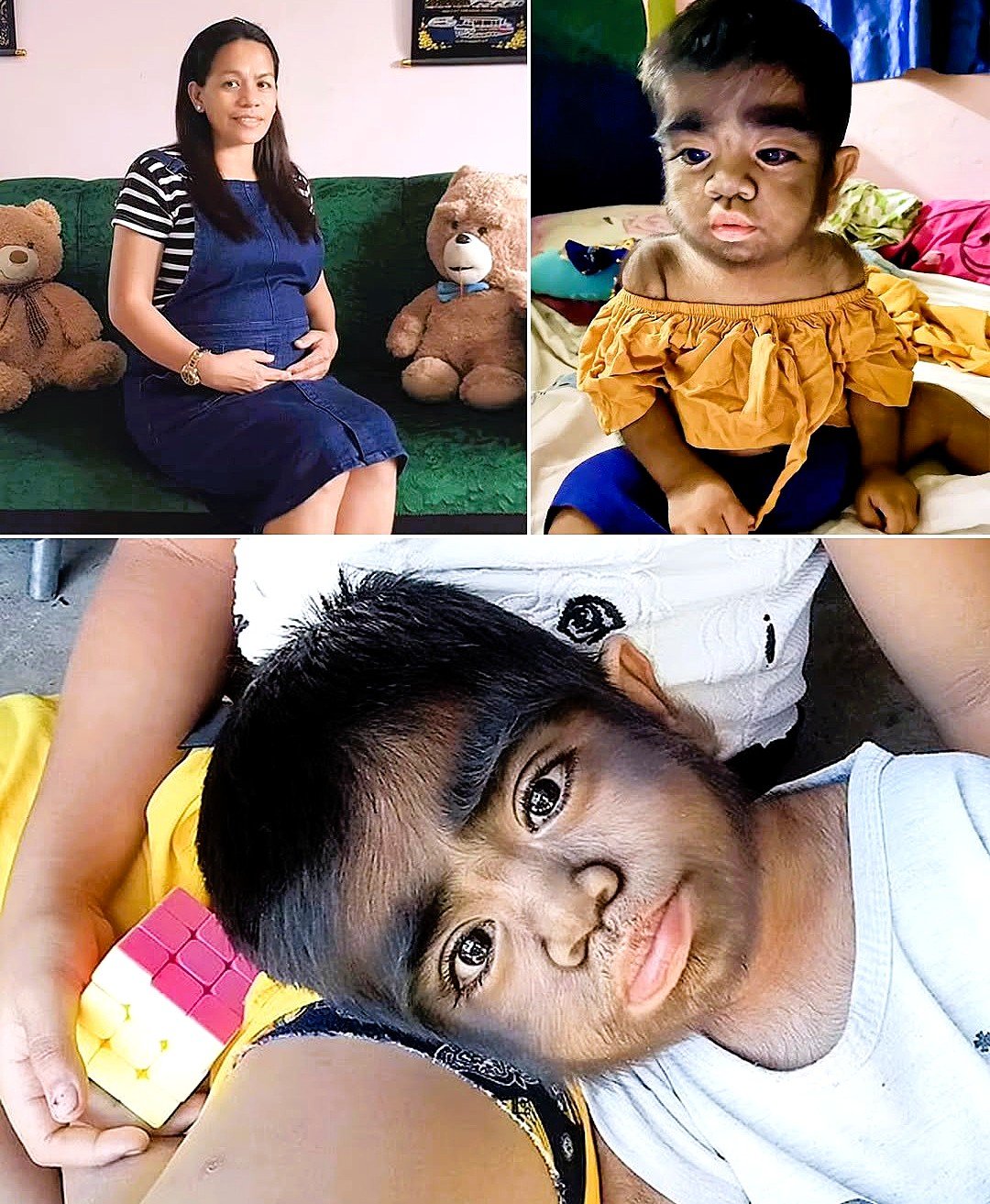
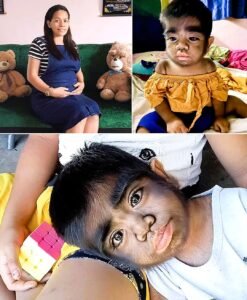
When Alma first held her newborn son, she could never have imagined the questions that would follow them throughout his childhood. Her little boy, Jaren Gamongan, was born with unusually thick hair covering parts of his face and body. As a mother, she wanted answers. More than anything, she wanted to understand why her child looked different and whether something she had done during pregnancy could have caused it.
Living in Conner, in the Philippine province of Apayao, Alma and her family faced uncertainty as they tried to understand Jaren’s condition. Like many parents confronted with something unfamiliar, she searched for an explanation. One particular memory from her pregnancy continued to trouble her: a strong craving for a wild animal locally known as musang.
She began to wonder whether that craving had somehow affected her baby’s appearance.
It was a question born from worry, not a lack of love. Alma wanted to know what had happened and whether there was anything she could do to help her son.
But the answer would come from medical professionals, not from the belief that had weighed on her mind.
A Mother Searching for Answers
For parents, pregnancy is often filled with hopes, preparations, and dreams about the child they will soon welcome. They imagine their baby’s first smile, first steps, and first day of school.
When something unexpected happens, those dreams can become mixed with fear and unanswered questions.
For Alma, Jaren’s thick facial and body hair was something she struggled to explain. She connected it to her pregnancy craving, wondering if she might somehow be responsible.
Such beliefs can be deeply distressing for parents, particularly when they do not have access to clear medical information about a rare condition.
Yet a child’s physical characteristics are not evidence that a mother did something wrong during pregnancy.
Jaren needed an explanation grounded in medicine, and his family needed reassurance that would help them understand his condition without blaming themselves.
Their search for answers eventually brought them an opportunity that could change how they viewed his future.
The Medical Visit That Changed Their Understanding
In April 2024, the team behind the Philippine television programme Kapuso Mo, Jessica Soho helped Jaren’s family arrange a visit to a dermatologist.
For the family, the consultation was an important step toward understanding something that had remained a source of uncertainty.
After examining Jaren, the dermatologist diagnosed him with congenital hypertrichosis, a condition characterized by excessive hair growth that is present from birth.
The diagnosis gave a medical name to the physical difference his parents had been trying to understand.
Congenital hypertrichosis is a rare condition, and its underlying causes can vary depending on the particular form. Genetic changes are associated with congenital forms of the condition, although the details are not identical in every case.
Importantly, there is no established medical evidence that Alma’s craving for musang caused Jaren’s condition.
That distinction matters.
A mother’s pregnancy cravings can sometimes become the focus of family stories or traditional explanations for a child’s appearance. But a craving should not be mistaken for a medically proven cause of a congenital condition.
For Alma, learning the diagnosis offered a path away from uncertainty and self-blame. Instead of wondering whether she had somehow caused her son’s appearance, the family could begin focusing on understanding his needs and seeking appropriate guidance.
A diagnosis cannot answer every question about a child’s future, but it can be an important beginning.
When Trimming the Hair Was Not the Answer
Before receiving the diagnosis, Jaren’s parents had tried trimming his hair in the hope of managing its appearance.
But the hair grew back.
For parents trying to find a solution, that experience could be frustrating. They wanted to help their son, yet the steps they tried did not provide the lasting result they hoped for.
The experience also illustrates why unusual physical characteristics should be assessed by qualified medical professionals rather than approached through guesswork alone.
Treatment for excessive hair growth depends on the individual, the underlying condition, the areas affected, and the person’s medical needs. A dermatologist can help families understand which options, if any, are appropriate and what their limitations might be.
For Jaren’s parents, professional guidance offered something more valuable than another uncertain attempt to change his appearance: a better understanding of the condition itself.
Their concern was not simply about hair. It was about their child’s well-being and the world he would eventually have to navigate.
The Worry That Followed Them Toward School
One of the family’s greatest concerns was Jaren’s future in the classroom.
School is often a child’s first major experience of spending time in a large group of people outside the family. It is where friendships begin, confidence develops, and children learn how to live alongside people with different personalities, abilities, backgrounds, and appearances.
But it can also be a place where differences attract unwanted attention.
Jaren’s parents worried about how other children might react when they saw him. Would they ask hurtful questions? Would they understand his condition? Would he be accepted, included in games, and invited to become part of their friendships?
These are difficult questions for any parent who fears their child might be teased or excluded.
Children do not always understand physical differences when they first encounter them. Sometimes, curiosity leads to innocent questions. At other times, unfamiliarity can become staring, unkind remarks, or bullying.
The difference often depends on what children learn from the adults around them.
A child who has been taught to approach differences with kindness may respond with curiosity and respect. A child who has never had that guidance may repeat hurtful behavior without understanding its impact.
Jaren’s appearance does not determine his personality, his intelligence, his interests, or the kind of friend he can become.
He is a child with his own future to discover, just like every other child preparing to enter a classroom.
His family’s concern reflects a hope shared by countless parents: that their children will be treated with dignity, regardless of how they look.
Teaching Children That Different Does Not Mean Less
Jaren’s story raises an important question for parents, teachers, and communities: How can we help children welcome a classmate whose appearance is unfamiliar to them?
The answer begins long before a child encounters someone different at school.
Parents can teach children that people naturally have different appearances. Some are born with birthmarks, unusual hair growth, visible disabilities, or other physical characteristics. These differences are not reasons to laugh, exclude someone, or assume that anything is wrong with the person as a human being.
Children can also be taught how to ask questions respectfully.
If they encounter something unfamiliar, they do not need to stare or make jokes. They can listen when an adult explains, and they can learn that another person’s body is not an invitation for unwanted comments.
Teachers have an equally important role. Classrooms should be places where students feel safe asking thoughtful questions while understanding that bullying and humiliation are unacceptable.
If a child like Jaren joins a class, educators can help create an atmosphere of acceptance without turning him into a spectacle or making him responsible for explaining his condition to everyone.
He deserves the same opportunity as his classmates to learn, play, make mistakes, and build friendships.
Above all, children should learn that kindness does not require them to understand every medical condition. They do not need to know the science behind another person’s appearance before treating that person with respect.
Sometimes, the most important lesson is simply this: everyone deserves to belong.
A Diagnosis Is Only the Beginning
Receiving a diagnosis can be an important turning point for a family, but it does not erase every challenge that may lie ahead.
Jaren and his parents may still need medical guidance, emotional support, and practical advice as he grows. His needs may change over time, and his family will need reliable information to make decisions about his care.
The goal should not be to make him feel that his worth depends on changing his appearance.
Instead, he deserves support that protects his health, respects his individuality, and helps him develop confidence in himself.
His parents can help by encouraging his interests, celebrating his achievements, and reminding him that his physical characteristics are only one small part of who he is.
They can also prepare him for questions from other children, helping him decide how much he wants to share about his condition. He should never feel obligated to explain personal medical information to satisfy someone else’s curiosity.
And when unkind behavior occurs, the responsibility belongs to those who choose to hurt him, not to Jaren for looking different.
His family’s love, together with informed medical care and a supportive community, can help him face the future with greater confidence.
A Story About Love, Understanding, and Acceptance
Alma began her search for answers with a troubling question about something she had experienced during pregnancy. She wondered whether her craving had somehow changed her son’s appearance, and that uncertainty left her searching for an explanation.
The medical consultation in April 2024 provided an answer: Jaren had congenital hypertrichosis, a condition involving excessive hair growth present from birth.
The diagnosis helped the family understand what they were facing, while also underscoring an important truth: a parent should not have to carry guilt for a congenital condition without medical evidence that they caused it.
Yet Jaren’s story is about more than a medical diagnosis.
It is about a mother who wants her son to be safe. It is about parents who worry that the world might judge their child before getting to know him. And it is about the responsibility adults share in teaching children to treat others with compassion.
As Jaren grows, he deserves the opportunity to experience the ordinary joys of childhood: learning new things, making friends, laughing during playtime, discovering his interests, and dreaming about the person he wants to become.
His appearance may be one of the first things strangers notice. But it should never be the only thing they see.
Because behind every physical difference is a human being with feelings, hopes, fears, and a life that deserves respect.