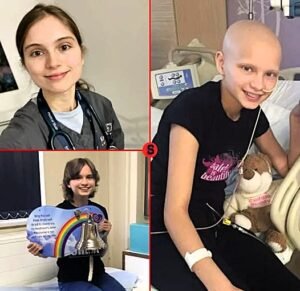
At just 13 years old, Ellie noticed something unusual that would eventually change the course of her life.
It started with a small lump in one of her buttocks.
At first, Ellie chose to ignore it.
Like many teenagers, she felt embarrassed discussing something so personal with another person, even her family. She hoped it would simply disappear on its own.
But it didn’t.
Instead, as the months passed, the situation became increasingly serious.
Ellie was an active teenager who loved sports and regularly stayed physically active. She enjoyed running and had no reason to believe that a small lump could be a sign of something life-threatening.
Then more lumps began appearing around her groin.
She also started experiencing intense pain in one of her legs, particularly when she was running.
What initially seemed like a minor problem was becoming impossible to ignore.
When the Symptoms Became Impossible to Dismiss
Eventually, Ellie visited a doctor.
At first, there was uncertainty about what was causing the lump. Doctors considered the possibility that it could be a muscle tumor.
Later, the lump was thought to possibly be an abscess, a collection of infected fluid that can sometimes develop beneath the skin.
Ellie was prescribed antibiotics.
But the treatment did not solve the problem.
Her symptoms continued, and her overall health began to deteriorate.
She started losing weight.
She became increasingly exhausted and had very little appetite. Activities that had once been normal became difficult. Eventually, she even began experiencing problems with urination.
The changes were happening gradually, making the situation even more frightening.
Approximately six or seven months after she first discovered the lump, Ellie was suddenly rushed to the hospital for emergency surgery.
The doctors expected that they were dealing with an abscess.
But when they operated, they discovered something very different.
Instead of finding the expected infection, they encountered abnormal tissue.
A sample was taken and sent for further testing.
The results would deliver devastating news.
A Rare and Aggressive Cancer
The tests revealed that Ellie had stage 4 alveolar rhabdomyosarcoma, a rare and aggressive form of soft-tissue cancer.
Rhabdomyosarcoma develops in tissues associated with muscles and can occur in children and young people. The alveolar subtype can be particularly aggressive.
By the time Ellie received her diagnosis, the disease had already reached an advanced stage.
Her parents were confronted with a reality no family expects to hear about their child.
Doctors estimated that Ellie had only about a 20% chance of surviving five years after her diagnosis.
For a teenager who had only recently been worrying about school, sports, friends, and everyday life, the diagnosis suddenly turned everything upside down.
The future she had imagined was replaced by hospital visits, medical treatments, uncertainty, and fear.
But Ellie began a fight for her life.
Eighteen Months of Treatment
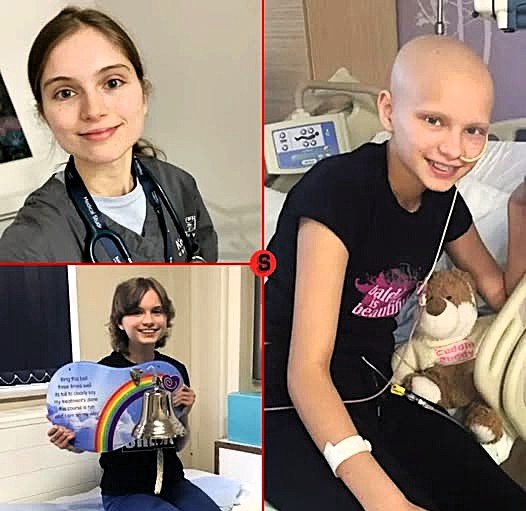
For approximately 18 months, Ellie underwent intensive treatment that included chemotherapy and radiation therapy.
The treatment itself was extremely difficult.
Chemotherapy can affect the entire body because it targets rapidly dividing cells, including cancer cells as well as some healthy cells. For Ellie, the treatment brought severe fatigue, weight loss, hair loss, and other difficult side effects.
There was also an enormous emotional burden.
Instead of spending her teenage years simply enjoying sports and growing up, she had to deal with hospitals, medical procedures, medications, and the constant uncertainty surrounding her health.
Every treatment brought its own challenges.
Every setback created another reason to worry.
Yet she continued.
Day after day, month after month, Ellie endured the treatment.
Her journey was not only a physical battle against cancer but also an emotional test of resilience.
The Cost of Surviving
Eventually, the treatment worked.
Ellie overcame the cancer and entered remission.
It was an extraordinary milestone after being given such a low estimated chance of surviving five years.
But surviving the disease came with permanent consequences.
The intensive treatment severely affected her fertility, leaving her infertile. Radiation also caused damage to her uterus, meaning she would not be able to carry a pregnancy to full term.
For Ellie, this was another painful part of her cancer journey.
Beating cancer meant gaining the chance to live, but it also meant accepting changes to the future she might once have imagined for herself.
Cancer had taken away more than a year of her teenage life.
It had also left lasting effects on her body.
Still, Ellie continued forward.
From Cancer Patient to Future Doctor
Years later, Ellie remains in remission.
And remarkably, the experience that once threatened to take away her future helped shape the person she wanted to become.
Her experience with cancer inspired her to study medicine.
Having spent so much time on the other side of the hospital bed, Ellie gained a unique understanding of what patients and families experience when they receive a frightening diagnosis.
She knows what it feels like to wait for test results.
She knows what it feels like to endure exhausting treatments.
She knows the fear that can accompany an uncertain prognosis.
And she knows how much compassion from medical professionals can matter during the darkest moments.
Her experience has therefore become more than a story of surviving cancer.
It has become part of the reason she wants to understand medicine and potentially help others facing illnesses of their own.
A Reminder to Listen to Your Body
Ellie’s story also highlights how easily concerning symptoms can sometimes be overlooked, particularly when a young person feels embarrassed about discussing them.
The first lump she noticed was small.
She initially ignored it because she felt uncomfortable talking about it.
But eventually, additional symptoms appeared: more lumps, significant pain, weight loss, exhaustion, loss of appetite, and difficulty urinating.
Her experience is a reminder that unusual or persistent changes in the body should not simply be ignored because they are embarrassing or uncomfortable to discuss.
Only qualified medical professionals can determine what a symptom means, but seeking medical attention early can be important when something unusual persists or changes.
For Ellie, the road from discovering that first lump to receiving a stage 4 cancer diagnosis was long and frightening.
Yet she survived.
Stronger Than She Ever Imagined
Looking back on everything she endured, Ellie says the experience taught her something deeply personal.
She discovered that she was much stronger than she had ever believed.
At 13, she could not have imagined spending 18 months fighting an aggressive cancer.
She could not have predicted the physical and emotional challenges that treatment would bring.
She could not have known that surviving would come with permanent consequences for her fertility.
But she kept going.
Today, her story is one of resilience, survival, and transformation.
The teenager who once hesitated to talk about a small lump went on to confront one of the greatest challenges of her young life.
She survived a cancer that doctors believed gave her only a limited chance of reaching five years.
She entered remission.
And rather than allowing the experience to define her only through what she lost, Ellie turned it into motivation for what she could become.
Her journey shows that strength does not always look dramatic. Sometimes, strength is simply getting through another treatment, another difficult day, another hospital visit, and choosing to keep moving forward.
Ellie survived cancer.
But perhaps even more importantly, she emerged from the experience with a new understanding of herself and a desire to use what she learned to help others.
Her story is a powerful reminder that even when the odds seem overwhelmingly difficult, hope can remain.
Read Next
- He Was Just a British Soldier in Bosnia—Until He Met a 4-Year-Old Boy Whose Face Needed Life-Changing Surgery. What He Did Next Changed That Child’s Life Forever.
- Ten Years After Cancer Took Away Her Walk, Aly Returned to the Same Hospital in High Heels
- born with a rare skull defect, liam faced an 11-hour operation at just six months old—and kept reaching new milestones