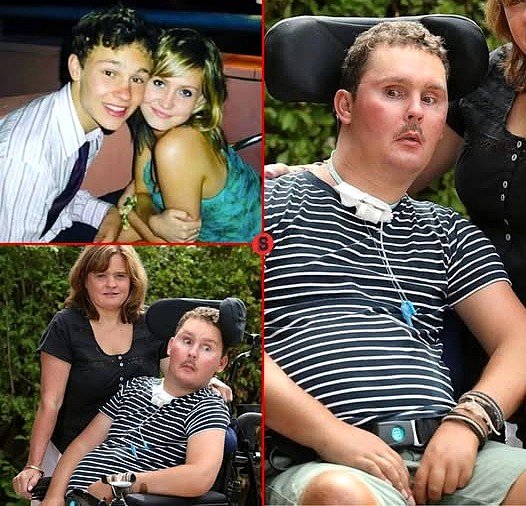
Sometimes, a decision that takes only a few seconds can change the course of an entire life. For Sam Ballard, a young Australian with a bright future ahead of him, that moment came during an ordinary gathering with friends in Sydney. What began as a seemingly harmless dare ended in a devastating medical crisis that left him with permanent disabilities and, years later, became a heartbreaking reminder of the risks hidden in unexpected places.
Sam was just 19 years old when he accepted a challenge to swallow a slug. It was the kind of reckless dare that can happen among young friends, when laughter, curiosity, and the desire to prove oneself can make a dangerous decision seem less serious than it really is.
No one could have imagined how dramatically that moment would affect Sam’s future.
The consequences were not immediate. But the slug carried a parasite capable of causing a severe infection in humans, setting off a chain of events that would change Sam’s life and deeply affect everyone who loved him.
A dare that seemed harmless at the time
As a teenager, Sam Ballard enjoyed spending time with his friends and living an active life. Like many young people, he had years of possibilities ahead of him, with opportunities to discover new interests, build relationships, and decide what direction he wanted his future to take.
During a gathering in Sydney, a challenge involving a slug became the turning point in his story.
Slugs may look harmless, and encountering one in a garden or on a damp pavement is usually an unremarkable experience. But certain slugs and snails can carry parasites that infect humans if the organisms enter the body.
Sam swallowed the slug as part of the dare.
At the time, it may have seemed like little more than a foolish joke among friends. There was no obvious warning that something so small could expose him to a potentially devastating illness.
Yet the risk was real.
The parasite associated with Sam’s case was Angiostrongylus cantonensis, commonly known as rat lungworm. It is a parasitic worm associated with rats and can be transmitted to humans through infected slugs or snails, or through contaminated food.
Humans are accidental hosts, and infection can sometimes lead to serious neurological complications.
Sam’s experience would become a tragic example of how an impulsive challenge can carry consequences far beyond what anyone expects.
When the first symptoms appeared
In the days and period that followed, Sam began experiencing troubling symptoms. He developed severe pain in his legs and suffered from nausea and dizziness.
What might initially have seemed like an unexplained illness soon became a much more serious medical concern.
Doctors investigated his condition, conducting tests to understand what was happening inside his body. The eventual diagnosis revealed that Sam had contracted an infection associated with rat lungworm.
The parasite can affect the central nervous system, including the brain and the tissues surrounding it. In some cases, infection can cause a form of meningitis known as eosinophilic meningitis, which involves an unusual accumulation of certain white blood cells in the cerebrospinal fluid.
Sam developed a severe neurological illness, described in accounts of his case as eosinophilic encephalitis.
His condition deteriorated dramatically.
For his family, what began as an unexpected health problem became a frightening struggle to understand the severity of his illness and what the future might hold.
A young man who had been enjoying life with his friends was suddenly facing a medical emergency that would require extensive treatment and long-term care.
More than a year in a coma
Sam’s illness was devastating. He spent more than a year in a coma, enduring a prolonged period of critical illness while his loved ones waited and hoped for improvement.
A coma is one of the most difficult situations a family can experience. Loved ones may spend days, weeks, or months beside a hospital bed, hoping for signs of recovery while struggling with uncertainty about what lies ahead.
For Sam’s family, the situation meant confronting the possibility that his life might never return to the way it had been before.
When Sam eventually regained consciousness, the challenges did not end.
The infection had caused extensive neurological damage. He was left with quadriplegia, a condition that severely affects movement in all four limbs, and he experienced significant difficulties with communication.
The young man who had once enjoyed an active social life now faced a future requiring substantial assistance with everyday activities.
His recovery was no longer simply about waking from a coma. It involved learning to live with the lasting consequences of a severe brain injury and adapting to a reality that neither Sam nor his family could have anticipated.
A family’s determination through years of hardship
Serious illness does not affect only the person receiving treatment. It changes the lives of family members, caregivers, and friends who must adjust to new responsibilities while dealing with fear, grief, and uncertainty.
Sam’s family remained an important source of support as he navigated the challenges that followed his illness.
His needs were extensive, and maintaining his quality of life required ongoing care and assistance. Daily routines that many people take for granted could become complicated when someone has limited mobility and difficulty communicating.
For families in similar situations, even small improvements can carry enormous meaning. A moment of comfort, a familiar voice, a shared memory, or a day without additional complications can become something to treasure.
Sam’s circumstances also highlighted the emotional and practical challenges faced by people living with severe neurological disabilities.
Recovery is not always a straightforward process, and medical treatment cannot reverse every form of brain damage. Rehabilitation and supportive care can help address individual needs, but outcomes vary depending on the nature and severity of the injury.
Despite the difficulties, Sam’s story was also a story of the people who continued to care for him.
Their support could not erase what had happened, but it helped him face the life that followed.
The hidden danger of rat lungworm
One of the most striking aspects of Sam’s story is the connection between a tiny animal and a serious neurological illness.
Rat lungworm is a parasite whose life cycle typically involves rats and mollusks, including certain slugs and snails. Humans can become infected when they accidentally consume the parasite, often through raw or undercooked infected mollusks or produce contaminated by them.
In many infected people, the illness may be mild or symptoms may resolve over time. However, some cases can lead to severe inflammation involving the brain or its surrounding tissues, potentially resulting in long-lasting neurological problems.
Symptoms can include headache, neck stiffness, nausea, vomiting, unusual skin sensations, and other neurological signs. The precise symptoms and severity vary.
Sam’s case should not be taken to mean that every accidental contact with a slug will result in serious illness. The risk depends on whether the animal or food is infected and whether the parasite enters the body.
Nevertheless, swallowing a wild slug is not a safe challenge.
People should avoid eating slugs or snails raw, wash produce carefully, and seek medical advice if they suspect they may have ingested a potentially infected animal. Anyone developing concerning neurological symptoms should receive prompt medical assessment.
The danger is not always visible, and an animal that appears ordinary may still carry an organism capable of causing illness.
A life changed by one moment
Sam continued living with the consequences of his illness for years. Despite the medical care and support he received, the neurological damage proved irreversible.
In 2018, Sam Ballard died at the age of 28.
His death brought a heartbreaking end to a life that had been transformed by an unexpected infection. For his family and those who followed his story, the loss was a reminder of how dramatically circumstances can change and how deeply a serious illness can affect an entire family.
Sam’s story continues to be shared because it raises important questions about peer pressure, risky dares, and the decisions people make when they are trying to impress their friends.
Young people can sometimes feel compelled to participate in dangerous activities because refusing might seem embarrassing. In the moment, the possibility of a serious consequence may feel distant or unlikely.
But a dare does not have to involve a weapon, a high place, or a speeding vehicle to be dangerous. Sometimes, the risk is hidden in something that looks completely ordinary.
A lesson worth remembering
The most important lesson from Sam’s story is not that young people should live in fear of every unusual experience. It is that no challenge is worth risking a person’s health or life simply to earn a laugh or prove courage.
Real friendship should never depend on someone doing something dangerous to gain acceptance. A person who refuses a risky dare is not weak, boring, or cowardly. Walking away from unnecessary danger can be a sign of sound judgment.
Friends also have a responsibility to look out for one another. Instead of encouraging reckless behavior, they can help create an environment where saying no is accepted and where safety matters more than temporary entertainment.
Sam Ballard’s experience remains heartbreaking because the consequences were so much greater than anyone could have imagined during that gathering in Sydney.
A single decision led to a severe infection, a prolonged coma, permanent disabilities, and years of challenges for him and his loved ones.
His story cannot change what happened, but it can encourage others to think carefully before accepting a dangerous challenge.
Sometimes, the most important decision is the one that prevents a tragedy before it begins.