Sometimes, the moments that change our lives forever begin with something so small that we barely give it a second thought.
For Max Armstrong, it was a burn on his thumb.
On December 2, 2024, the 40-year-old was camping with friends in Colorado. It was supposed to be a simple outdoor adventure filled with fresh air, friendship and time away from everyday life.
While moving a hot skillet from the fire to the table, Max accidentally touched it.
The contact was brief, but it left him with a burn on his thumb.
Like many people might have done, Max treated the injury and continued with his trip. At that moment, there was nothing to suggest that the small burn could become something much more serious.
But two days later, his body began sending him a warning.
Max noticed that his left ankle was swelling. He initially believed he might have twisted it while getting out of the camper. It seemed like a reasonable explanation, especially after spending time outdoors.
But the swelling didn’t simply disappear.
Instead, his condition continued to worsen.
The injury that had seemed so insignificant was becoming increasingly concerning. His wound deteriorated, and then he noticed that the color of his toenails had changed.
There were other signs, too.
Max began speaking incoherently while he was asleep, something that was completely out of character and deeply concerning.
What Max didn’t know at first was that his body was fighting a dangerous infection.
Eventually, his condition became serious enough that he needed emergency medical attention.
According to Max’s account, doctors diagnosed him with sepsis and believed that Group A Streptococcus had entered his body through the burn.
Sepsis is a life-threatening reaction that can happen when the body’s response to an infection causes serious damage to its own tissues and organs. What may begin as an infection in one part of the body can rapidly become a medical emergency.
For Max, the situation had already become critical.
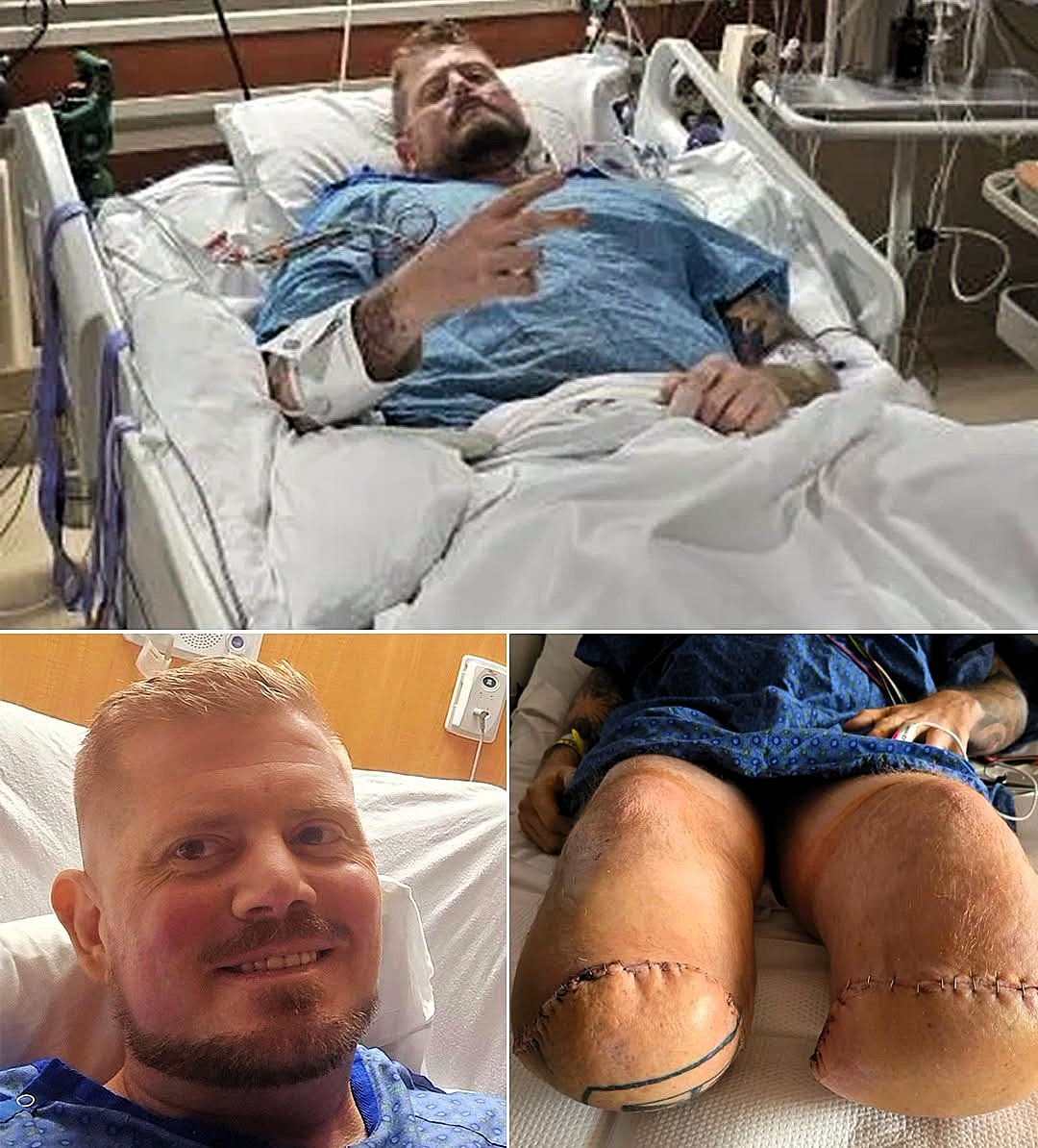
He was placed in a medically induced coma and spent six days in that state while doctors worked to save his life.
For his family and loved ones, those days must have felt unimaginably frightening. One moment, Max had been enjoying a camping trip. Soon afterward, his life was hanging in the balance.
Then, on December 13, Max woke up.
But waking up brought devastating news.
The infection had caused severe damage to the tissue in his feet.
There was no simple way to reverse what had happened.
Doctors eventually determined that both of his legs would need to be amputated below the knees.
On December 23, surgeons performed the amputations.
In just three weeks, Max had gone from an active man enjoying the outdoors to someone facing a completely different future.
The physical loss was enormous.
But so was the emotional adjustment.
He suddenly had to learn how to move through the world differently. A wheelchair became part of his daily life, and the road toward prosthetic legs and rehabilitation began.
Tasks that had once happened automatically could now require planning, patience and determination.
And yet, through all of it, Max held on to something important.
He wanted to keep moving forward.
Before the infection changed his life, Max was an experienced hiker who loved being outdoors. The mountains, trails and open spaces that had once been part of his everyday adventures suddenly seemed much farther away.
But he didn’t want the loss of his legs to mean the end of that life.
Instead, he began preparing for what would come next.
Prosthetics could eventually give him new possibilities. Rehabilitation could help him regain independence. And with time, patience and determination, he hoped to return to the outdoors that he loved.
His journey would not be easy.
There would be difficult days, frustrating moments and challenges that he had never imagined facing.
But surviving sepsis had already taught him something powerful: life can change in an instant, and every moment matters.
Max’s experience is also a reminder that infections should never be underestimated.
A small cut or burn may appear harmless, but bacteria can sometimes enter the body through damaged skin. If an infection develops and the person’s condition begins changing, waiting too long to seek medical attention can be dangerous.
Sepsis can produce a variety of warning signs.
Confusion or unusual behavior can be one of them. Difficulty breathing, extreme pain, fever or shivering, clammy skin and a rapid decline in overall health can also be warning signs of a serious infection.
That doesn’t mean every fever, cut or injury will lead to sepsis.
But when an injury begins getting worse instead of better, or someone suddenly becomes confused, extremely ill or has trouble breathing, it is important to take those changes seriously and seek urgent medical care.
For Max, the first sign was something that looked painfully ordinary: a burn from a hot skillet.
He could never have known where that injury would lead.
His story isn’t simply about losing both legs.
It’s about surviving an infection that nearly took his life and finding the strength to build a future afterward.
There is a difference between the life we imagine for ourselves and the life we eventually have to learn to live.
Max’s life changed dramatically in December 2024.
But his story did not end in that hospital room.
It continued with rehabilitation, a wheelchair, plans for prosthetics and the difficult work of rediscovering independence.
Most importantly, it continued with hope.
The trails he once walked may look different when he eventually returns to them. The way he experiences the outdoors may change. He may need new equipment, new techniques and more preparation than before.
But reaching those trails again could carry a meaning far greater than simply going for a hike.
It could represent everything he survived.
A reminder that a person can lose something incredibly important without losing their determination to live.
Max’s experience also leaves an important message for everyone: listen to your body.
If an injury is getting worse, if swelling appears unexpectedly, if the skin or nails begin changing color, or if someone suddenly develops confusion or other serious symptoms, don’t simply assume it will go away.
Sometimes the smallest injury can hide a much bigger problem.
And sometimes, recognizing that something isn’t right and getting help quickly can make all the difference.
Max’s story began with a tiny burn.
It nearly cost him his life.
Today, he is facing the future without both of his legs—but with the determination to keep moving forward.
His journey is a powerful reminder that losing part of your life does not mean losing all of it.
There can still be new goals.
There can still be new adventures.
And there can still be a path forward, one step—or one determined movement—at a time.
Have you ever experienced an infection that became much more serious than you expected? Share this story with someone who should know the warning signs of sepsis.
Read Next
- EVERY YEAR, A “CRIMINAL” IS LOCKED IN A CAGE AND LOWERED TOWARD AN ITALIAN RIVER — BUT THE TRUTH IS NOT WHAT THE VIDEOS MAKE IT LOOK LIKE.
- From a war zone to loving homes: the incredible journey of two rescued puppies
- They Told Her Parents There Was No Roadmap for Her Future — But Isla Kept Moving Forward