Sometimes, the greatest battles begin after the fighting has stopped. For Ukrainian soldier Ruslan Knysh, one of those battles began inside a bank, when a simple request for a photograph became an obstacle he physically could not overcome.
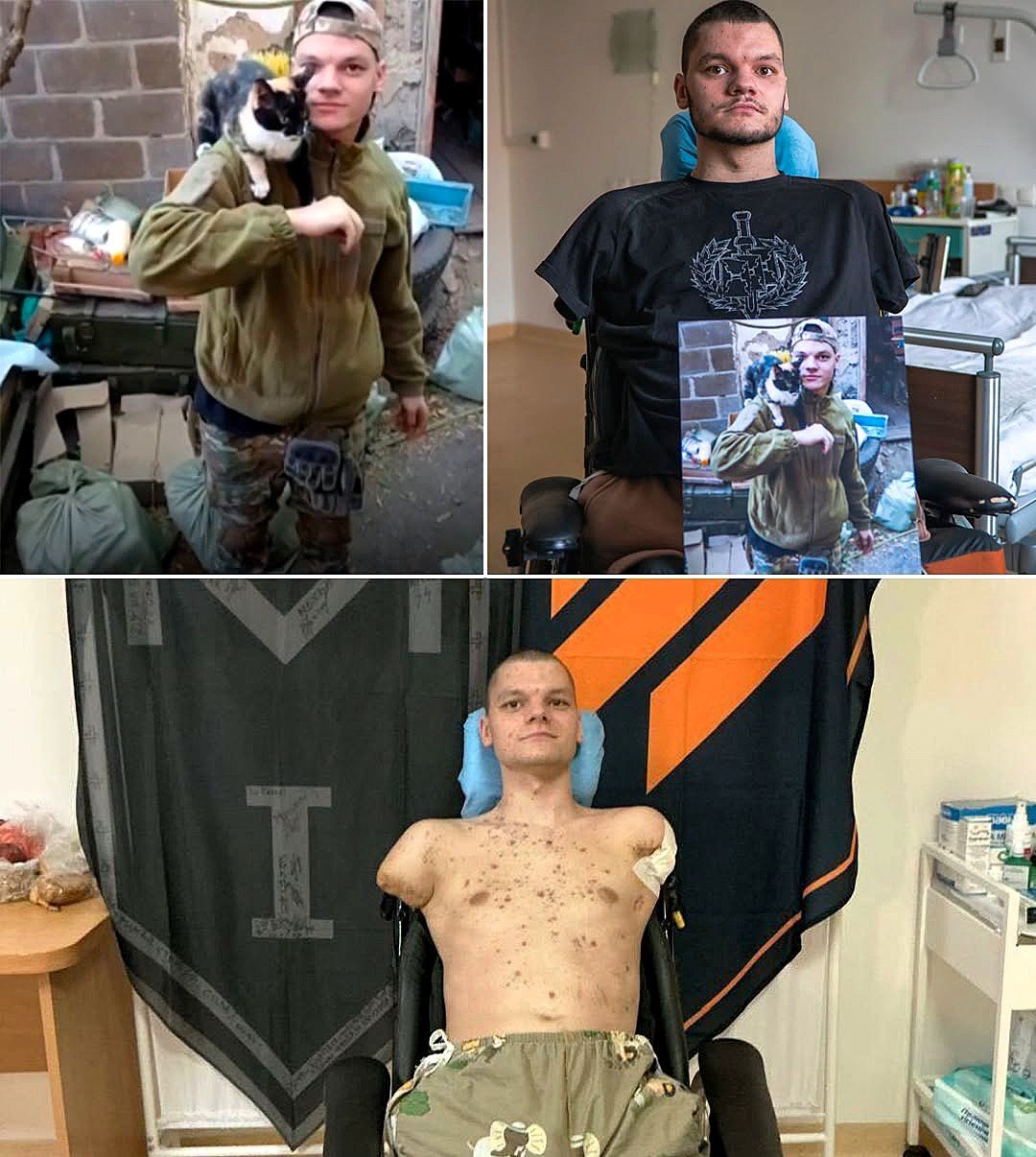
At just 20 years old, Ruslan had already sacrificed more than most people could imagine. He had lost both arms and both legs after a devastating drone attack during the war in Ukraine. He was learning to navigate a world that had suddenly changed forever, facing rehabilitation, adjusting to life without his limbs, and trying to rebuild his future one day at a time.
Yet, when he visited a bank to renew his payment card, he encountered a problem that should never have been so difficult to solve.
His story would eventually reach the country’s financial authorities, spark an apology from bank representatives, and lead to a moment that revealed something even more powerful about his character. Despite everything he had endured, Ruslan was determined to keep moving forward.
a simple bank visit became an unexpected struggle
In December 2025, Ruslan visited a branch of PrivatBank, one of Ukraine’s major banks. He was accompanied by Alina, a coordinator from the Angels support service associated with his military brigade.
The purpose of the visit was straightforward. Ruslan needed to renew the bank card through which he received government payments. It was an ordinary administrative task, something millions of people do without giving it a second thought.
But the procedure required him to hold his bank card beside his face for a photograph.
For Ruslan, that instruction was impossible.
He had lost all four limbs because of his wartime injuries. He could not lift his arms to position the card, much less hold it beside his face.
Alina tried to help by holding the card next to him. According to the account shared by his support service, however, the photograph still did not satisfy the bank’s requirements.
Ruslan recalled being told that he could receive his card once he had prosthetic limbs.
Imagine hearing those words when you are already struggling to adjust to a life transformed by war.
The card was not a luxury. It was connected to the money he depended on. Renewing it should have been a routine service, not another barrier standing between a wounded veteran and his financial independence.
The situation raised an uncomfortable question: if a person cannot perform a standard procedure because of a disability caused by defending their country, shouldn’t the institution find another way?
when a system fails to recognize a person’s needs
For people without disabilities, banking procedures can seem so ordinary that their difficulties are easy to overlook. A photograph, a signature, a fingerprint, or a simple instruction might appear insignificant.
But for someone who has lost the use of their limbs, even a small requirement can become an enormous obstacle.
Accessibility is not merely about installing ramps or making buildings easier to enter. It also means designing services that people with different physical abilities can actually use.
A procedure that works for most customers may still exclude someone who needs an alternative.
Ruslan’s experience highlighted precisely that problem. He was not asking for special treatment or an unnecessary privilege. He needed access to a basic financial service, and the standard method of verification did not accommodate his circumstances.
His story became public after the Angels support service shared the incident.
The reaction brought attention to a situation that might otherwise have remained an isolated and deeply frustrating experience for one injured soldier.
Soon, the issue reached people in positions of responsibility.
an apology and a long-overdue solution
Following the public attention, Ukraine’s central bank governor and representatives of PrivatBank visited Ruslan in hospital.
They apologized for what had happened and delivered his bank cards.
The visit was an important acknowledgment that the situation should have been handled differently. It also demonstrated how public attention can sometimes push institutions to confront problems that individual customers struggle to resolve on their own.
But the larger lesson went beyond one bank card.
A wounded veteran should not have to rely on a story becoming public before being able to access essential services. People living with disabilities should not need widespread attention, influential visitors, or public sympathy to receive reasonable assistance.
The real measure of an accessible institution is not how it responds after an incident becomes a national talking point. It is whether its systems are prepared to help people with different needs in the first place.
For Ruslan, the bank card issue was eventually resolved. Yet the experience left behind an important message about dignity, independence, and the responsibility institutions have toward the people they serve.
And his story did not end there.
the young soldier who chose to serve at 18
Ruslan had volunteered to join Ukraine’s Third Separate Assault Brigade when he was just 18 years old.
At an age when many young people are beginning university, starting their first jobs, or discovering what they want from life, he chose to serve in a war that would change his future in unimaginable ways.
A drone attack left him with catastrophic injuries. Both of his arms and both of his legs ultimately had to be amputated.
The physical consequences were immense. Everyday activities that most people perform automatically would now require new techniques, specialized equipment, assistance, and considerable patience.
Rehabilitation would demand time and determination. Adapting to a different way of living would involve challenges that outsiders could never fully understand.
But recovery is not measured only by physical progress.
It can also mean discovering new abilities, finding a renewed sense of purpose, building relationships, and identifying reasons to look toward tomorrow.
Through this difficult period, Alina and the brigade’s Angels support service helped Ruslan navigate rehabilitation and the practical challenges that followed his injuries.
Their support was an important part of his journey, reminding us that helping a wounded person rebuild a life requires more than medical treatment alone. It also requires compassion, advocacy, and people willing to stand beside them when ordinary systems become difficult to navigate.
Still, Ruslan had something of his own that he wanted to share with the world.
He kept writing.
a book born from a life changed by war
Even while adjusting to his injuries and undergoing rehabilitation, Ruslan continued developing his writing.
In August 2026, at the age of 21, he presented his first book, titled Me, You and the War.
The collection of prose offered readers a glimpse into his creative world and the experiences surrounding a generation whose lives have been profoundly affected by conflict.
For Ruslan, writing represented another way to participate in the world beyond the limits imposed by his physical injuries.
War can take away a person’s sense of security, separate families, destroy homes, and leave lasting physical and emotional scars. But a person’s thoughts, memories, imagination, and desire to communicate can still find ways to reach others.
Publishing a first book is a significant milestone for any aspiring writer. For someone navigating such a profound personal recovery, it carried an additional layer of meaning.
It showed that Ruslan was not allowing the circumstances of his injury to define the boundaries of his future.
He still had ideas to express, stories to tell, and experiences he wanted people to hear.
His identity extended far beyond the label of a wounded soldier.
He was also an author.
the signature that told a powerful story
One of the most striking moments from the book presentation came when Ruslan read to the audience and signed copies of his work.
Unable to hold a pen with his hands, he used a marker positioned between his teeth to sign the books.
People gathered to receive their copies and obtain his signature.
Consider the contrast between the two moments in his story.
In December 2025, he had struggled to complete a bank’s standard photographic verification procedure because he could not hold a card beside his face.
By August 2026, he was presenting his own book, reading his words aloud, and finding a way to sign copies for readers.
The difference was not that his physical circumstances had suddenly become easy. He was still living with the consequences of losing all four limbs.
What had changed was the setting, the task, and the way his abilities were being accommodated.
At the bank, a standard procedure had created a barrier. At his book presentation, he found a way to participate using the abilities and techniques available to him.
His determination deserves recognition, but the lesson should not be that disabled people must always find extraordinary ways to overcome every obstacle themselves.
They deserve institutions, workplaces, and communities that make participation possible without forcing them to fight unnecessary battles at every turn.
Ruslan’s signature was a testament to his perseverance. It was also a reminder that opportunity matters.
the real meaning of independence
Independence does not always mean doing everything without assistance.
Sometimes, it means having access to the right tools, receiving practical support, and being treated with the dignity to make one’s own choices.
For a person who has lost all four limbs, independence may involve specialized technology, accessible services, rehabilitation, and help from other people. None of those things diminishes their achievements or their right to participate in society.
In fact, removing unnecessary barriers can allow people to exercise more independence.
A bank should be able to offer an alternative verification process when a customer cannot complete a standard one. Public services should be designed with different abilities in mind. Organizations should recognize that disability does not eliminate a person’s need for financial security, personal goals, or ordinary daily activities.
These are not extraordinary demands.
They are practical requirements of a society that wants every person to have a fair opportunity to participate.
Ruslan’s experience illustrates why accessibility must be built into everyday systems rather than treated as an afterthought.
a story that asks something of all of us
There is no denying the courage it takes to rebuild a life after catastrophic injuries. Ruslan’s journey from a young volunteer to a wounded veteran and published author is a powerful example of determination in the face of extraordinary challenges.
But his story should not leave us thinking only about how strong one person can be.
It should also make us think about the responsibilities of the people and institutions around him.
How many others face similar barriers without having a support organization to speak on their behalf? How many people quietly abandon applications, delay payments, or struggle with essential services because the available procedures do not account for their disabilities?
And why should someone have to attract public attention before receiving a practical solution to an ordinary problem?
The answer should be simple: they shouldn’t.
Ruslan deserved access to his bank account before his story became public. He deserved to be treated with understanding the first time he explained his circumstances. Every other person living with a disability deserves the same consideration.
His book, Me, You and the War, represents more than a personal accomplishment. It is a reminder that a human being’s future cannot be understood solely through the injuries they have suffered.
A person can endure devastating loss and still create something meaningful. They can need assistance and remain independent in important ways. They can live with permanent disabilities and continue to dream, work, write, and contribute to their communities.
Ruslan’s story is not simply about losing his arms and legs. It is about what happens when a person continues to pursue life despite profound change—and what becomes possible when others offer the support and access he deserves.
No one should have to become a public story just to be treated with dignity.
A bank card should never have required a public controversy. Accessibility should never depend on sympathy. And a wounded veteran should never have to prove his determination before being given a fair chance to use an essential service.
Ruslan has already shown the world that his voice remains powerful.
Now, the responsibility belongs to society to make sure people like him do not have to fight unnecessary battles simply to live their lives.