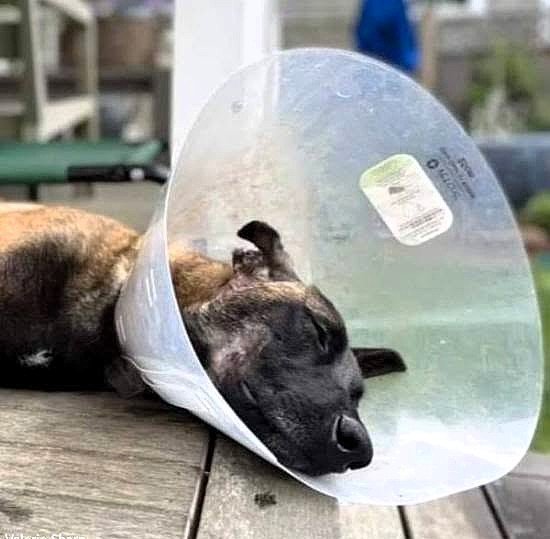
Petra was born in Serbia, carrying the strength and working-dog instincts of a powerful Eastern European Belgian Malinois bloodline. Before her story reached the person who would try to help her, she had already traveled a long way—from Serbia to the United States, passing through the hands of people who were supposed to care for her.
But behind her impressive lineage was a life no dog should have to endure.
Petra was purchased by a breeder and brought to the United States long before the person who would eventually become involved in her case met her. Much of her life was spent confined inside a crate. She was bred too young and too frequently, with little opportunity to experience the comfort, freedom, and companionship every dog deserves.
A dog may be strong in appearance, but strength does not mean an animal is immune to suffering.
Petra showed multiple signs of emotional neglect and inadequate socialization. The world beyond her confinement was not something she had been given enough opportunities to understand. Trust, companionship, and the ordinary experiences that help dogs feel secure had largely been missing from her life.
The physical evidence was heartbreaking, too. Most of her teeth were broken or badly worn. Veterinarians believed the damage was consistent with repeatedly trying to chew through the metal bars of her crate.
Imagine spending so much of your life in confinement that you repeatedly try to bite your way out, only to injure yourself in the process. We cannot know exactly what Petra experienced in those moments, but the condition of her teeth told a troubling story about the life she had lived.
And yet, even in a difficult situation, there were people who refused to stop caring.
On the small island community where Petra lived, several compassionate individuals tried repeatedly to find a way to help her. An animal control officer with a kind heart became involved. The local shelter tried to assist. Veterinarians, animal hospital staff, and other members of the animal-loving community also made efforts to improve her circumstances.
These were people who recognized that Petra needed help. They wanted to give her an opportunity for a better life.
But despite their repeated attempts, a successful resolution remained out of reach.
Sometimes, animal rescue is not a simple matter of finding a willing person or making a phone call. There can be complicated circumstances, difficult decisions, and obstacles that leave even experienced rescuers struggling to make progress.
For Petra, the situation became even more distressing when she was attacked by another female dog at the breeder’s home.
The injuries were so severe that the owner contacted someone for assistance. The person who became involved in her case was confronted with a situation too painful and graphic to describe in detail.
Petra had already endured years of confinement, repeated breeding, and signs of serious neglect. Now she was facing another crisis, one that required urgent attention and compassion.
Her story should never have reached this point.
A dog’s pedigree cannot tell us whether she has been loved. A strong bloodline cannot protect her from neglect. And a reputation for being powerful or resilient does not mean she can endure suffering without consequences.
Petra was more than a breeding dog. She was a living being whose needs extended far beyond food, shelter, and a place to sleep.
She deserved room to move, opportunities to explore, patient socialization, appropriate veterinary care, and the chance to experience a relationship built on trust rather than confinement.
Most importantly, she deserved to be treated as an individual—not simply as an animal valued for her lineage or reproductive potential.
The people who tried to help Petra remind us why animal welfare communities matter. Animal control officers, shelter workers, veterinary professionals, rescue volunteers, and ordinary neighbors can all play important roles in protecting vulnerable animals. Their efforts may not always lead to an immediate solution, but their willingness to keep trying can make a meaningful difference.
Petra’s circumstances also raise an uncomfortable question: How many animals suffer quietly behind closed doors before someone finally sees the full extent of their suffering?
Responsible breeding requires more than producing puppies. It requires protecting the health and well-being of the mother, providing appropriate veterinary care, allowing adequate recovery between litters, and ensuring that every dog receives humane treatment throughout her life.
When those responsibilities are neglected, the consequences can follow an animal for years.
Petra’s story deserves to be told with honesty and care, without turning her pain into a spectacle. The graphic details of her injuries are not necessary to understand the seriousness of her situation. What matters is that a dog who had already endured so much needed people willing to put her welfare first.
We may not be able to undo the years Petra spent confined. We cannot simply erase the damage to her teeth or pretend that her emotional struggles never happened. But compassion begins when we stop treating an animal’s suffering as something to overlook.
It begins when we listen to the people trying to protect animals, take credible concerns seriously, and demand humane standards from anyone entrusted with their care.
Petra’s story is a reminder that even dogs bred for strength need gentleness. Even working breeds need affection, enrichment, and freedom from unnecessary suffering. And every dog, regardless of age, breed, or past, deserves to have its welfare treated as something that matters.
She should never have had to struggle so hard just to receive the care she needed.
Please speak up for animals who cannot speak for themselves. Support responsible rescue organizations, report suspected cruelty to the appropriate authorities, and remember that behind every case of neglect is a living being who deserves protection.
Petra’s story is not just about what happened to one dog. It is about the responsibility people have when an animal’s life is placed in their hands.
Every dog deserves more than survival. Every dog deserves care, dignity, and the chance to live without fear.