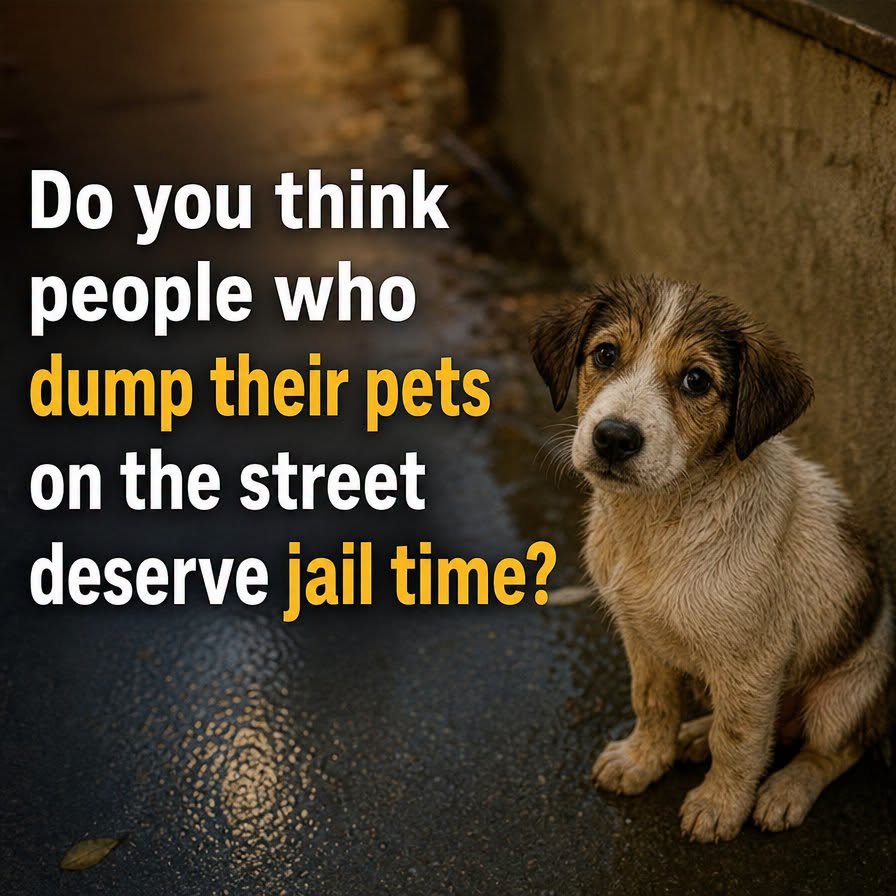

A tiny puppy sits alone on a cold, wet street, its little body covered in dirt and rain. Its eyes search the surroundings as if it is waiting for someone familiar to return. Every passing sound brings a moment of hope. Every approaching stranger might be the person it has been waiting for. But as the minutes turn into hours, the heartbreaking truth becomes harder to ignore: the person it trusted may never come back. 💔
This little one did not choose to be abandoned. It did not ask to be born into a world where survival could depend on finding shelter, food, and someone willing to show kindness. Like every other pet, it depended on humans for care, protection, and love. Yet somewhere along the way, that responsibility was forgotten.
And that raises a difficult but important question: Should people who deliberately abandon their pets on the street face serious legal consequences, including possible jail time?
A pet is a responsibility, not a temporary convenience
Bringing a dog or cat into a home is often an exciting experience. Families celebrate a new puppy, children choose names, and photographs capture the first days of a new friendship. A pet quickly becomes part of everyday life, waiting by the door, following its favorite person from room to room, and offering companionship without asking for anything in return.
But caring for an animal means accepting a responsibility that continues long after the excitement of bringing it home has faded.
Pets need regular meals, clean water, safe shelter, veterinary attention, patience, and affection. They can become sick, grow older, develop behavioral difficulties, or require more time and money than their owners originally expected. Responsible ownership means understanding these possibilities before making a commitment.
Unfortunately, some people treat animals as disposable possessions. When circumstances change, they may decide that the animal is no longer convenient. A move to another home, financial difficulties, a new relationship, or the simple loss of interest can become an excuse to walk away.
But an animal is not an object that can be discarded when it no longer fits someone’s plans. It is a living being capable of experiencing fear, discomfort, stress, and attachment.
What happens to a puppy left behind?
For a young puppy, abandonment can be especially dangerous.
A puppy that has spent its early life depending on people may have little experience finding food or protecting itself. The streets offer none of the security it once knew. Instead, it may face heavy traffic, extreme temperatures, hunger, dehydration, disease, and encounters with aggressive animals.
Rain can leave its small body cold and exhausted. Loud noises can send it running into dangerous places. Without proper nutrition and medical care, even a treatable illness or minor injury can quickly become a serious problem.
Perhaps the most painful part is that the puppy may not understand why it has been left behind.
Dogs form strong attachments to familiar people and routines. A frightened puppy may remain near the place where it was abandoned, responding to footsteps and voices in the hope that its owner will return. It may approach strangers because it is hungry or lonely, even when doing so puts it at risk.
The animal cannot explain its confusion. It cannot ask why the person who once fed it and offered comfort suddenly disappeared. All it can do is wait, search, and try to survive.
That is why abandoning a dependent animal is more than an irresponsible decision. When an owner knowingly leaves a pet exposed to danger without arranging safe care, the consequences can be devastating.
The emotional cost of betrayal
Animals may not understand human promises in the same way people do, but they learn to recognize the individuals who provide food, safety, and companionship.
A dog may wait beside the door when its owner leaves. It may become excited when it hears familiar footsteps or relax when a trusted person sits nearby. These everyday behaviors reflect the bond that can develop between people and their pets.
When that bond is broken through abandonment, the animal loses more than a place to sleep. It loses the familiar environment on which it depended.
Rescued animals sometimes need time and patience before they feel safe again. A frightened dog may hide, hesitate when someone reaches toward it, or struggle to trust unfamiliar people. With consistent care, many animals gradually learn that not every human will hurt or abandon them.
Their recovery can be a beautiful reminder of their resilience. But it should never be used as an excuse for the behavior that placed them in danger in the first place.
An animal’s ability to survive hardship does not make that hardship acceptable.
Should pet abandonment be punishable by jail time?
This is where the conversation becomes more complicated.
Many people believe that anyone who deliberately abandons a pet should face serious consequences. Their argument is simple: if an owner knowingly places a dependent animal in danger, the law should recognize the seriousness of that decision.
Financial penalties may be appropriate in some cases, but critics argue that a small fine might not be enough to discourage repeat offenders. For severe cases involving deliberate cruelty, extreme neglect, or abandonment that causes serious suffering, stronger penalties may be justified where the law permits them.
Possible consequences could include substantial fines, restrictions or bans on future animal ownership, mandatory animal-care education, and imprisonment in serious cases.
However, punishment should also reflect the circumstances. Someone who intentionally leaves a dog in a dangerous location without food or shelter is not necessarily in the same situation as a person facing an unexpected emergency who actively seeks help to place an animal safely.
The purpose of animal-protection laws should be to prevent suffering, hold irresponsible owners accountable, and discourage future abuse.
Laws also vary by country, state, and local jurisdiction. In some places, abandonment can already lead to criminal penalties, while the available consequences and enforcement procedures differ. Anyone seeking legal action should check the applicable local animal-welfare laws.
The central principle remains the same: people should not be allowed to treat a living animal as something they can simply throw away without accountability.
What if someone can no longer care for a pet?
Life can change unexpectedly. A family may lose its income, face a housing crisis, develop health difficulties, or discover that it can no longer provide the level of care an animal needs.
These situations deserve compassion, but abandoning a pet on the street is not the answer.
There are safer alternatives. Owners can contact local animal shelters, reputable rescue organizations, veterinary clinics, or trusted animal-welfare groups. They can ask friends or relatives to help, seek responsible rehoming options, or discuss available support with rescue volunteers.
Even when finding a solution takes time, making an effort to protect the animal can mean the difference between safety and suffering.
Responsible rehoming is not the same as abandoning an animal. The difference lies in whether the owner takes reasonable steps to ensure the pet has a safe place to go.
A person who recognizes that they can no longer provide proper care should seek help before the situation becomes dangerous.
Ordinary people can help change an animal’s future
Although preventing abandonment requires responsible ownership and effective laws, the community also has an important role to play.
Someone who discovers a frightened puppy on the street can contact a local rescue group or animal shelter. If it is safe to do so, they may provide temporary protection and clean water while arranging appropriate help. Injured or seriously ill animals should receive veterinary attention as soon as possible.
People can also support shelters through donations, volunteering, fostering, and responsible adoption. Sharing verified rescue information can help connect vulnerable animals with people who are prepared to care for them.
Perhaps just as importantly, families can teach children that animals deserve kindness and respect. Children who learn to treat pets gently may grow into adults who understand that caring for another living being is a commitment rather than a passing emotion.
Communities can encourage microchipping where available, identification tags, accessible veterinary services, sterilization programs, and public education about responsible pet ownership. These measures can help reduce the number of animals who become lost, unwanted, or abandoned.
Every act of compassion matters, especially to an animal that has nowhere else to turn.
This little puppy deserves more than sympathy
Look again at the puppy sitting alone in the rain. It did not make the decision that brought it to the street. It did not understand the reasons its owner might have had for leaving. It simply found itself in a frightening situation, depending on the kindness of strangers.
A photograph can make people stop scrolling for a moment. It can bring tears to their eyes or make them angry at the person responsible. But real change requires more than an emotional reaction.
It requires people to recognize that pet ownership carries a serious duty of care. It requires communities to support responsible rehoming, rescue organizations to receive help, and authorities to enforce animal-protection laws fairly and effectively.
Most of all, it requires us to remember that an animal’s life does not become less valuable when it becomes inconvenient to someone.
No puppy should have to learn what hunger feels like because a person lost interest. No loyal dog should be left wandering beside a dangerous road because its family decided it was no longer wanted. And no helpless animal should be forced to survive alone simply because the person it trusted failed to keep a commitment.
What do you think? Should people who deliberately abandon their pets face serious legal consequences, including jail time in severe cases? Or do you believe stronger fines and permanent bans on owning animals would be more effective?
Share your thoughts in the comments. Your voice can help raise awareness about responsible pet ownership and the importance of protecting animals who cannot speak for themselves.
And if you see an abandoned animal in need, remember that a little kindness can become the beginning of a completely different story.
Because this little one never chose to be left behind. It deserves safety, compassion, and the chance to find a loving home where it will never have to wonder whether someone is coming back. ❤️