There is a moment in every abandoned dog’s life that is almost impossible for humans to understand.
The car stops.
A door opens.
The person the dog has trusted for years steps out.
And then, somehow, that person drives away without them.
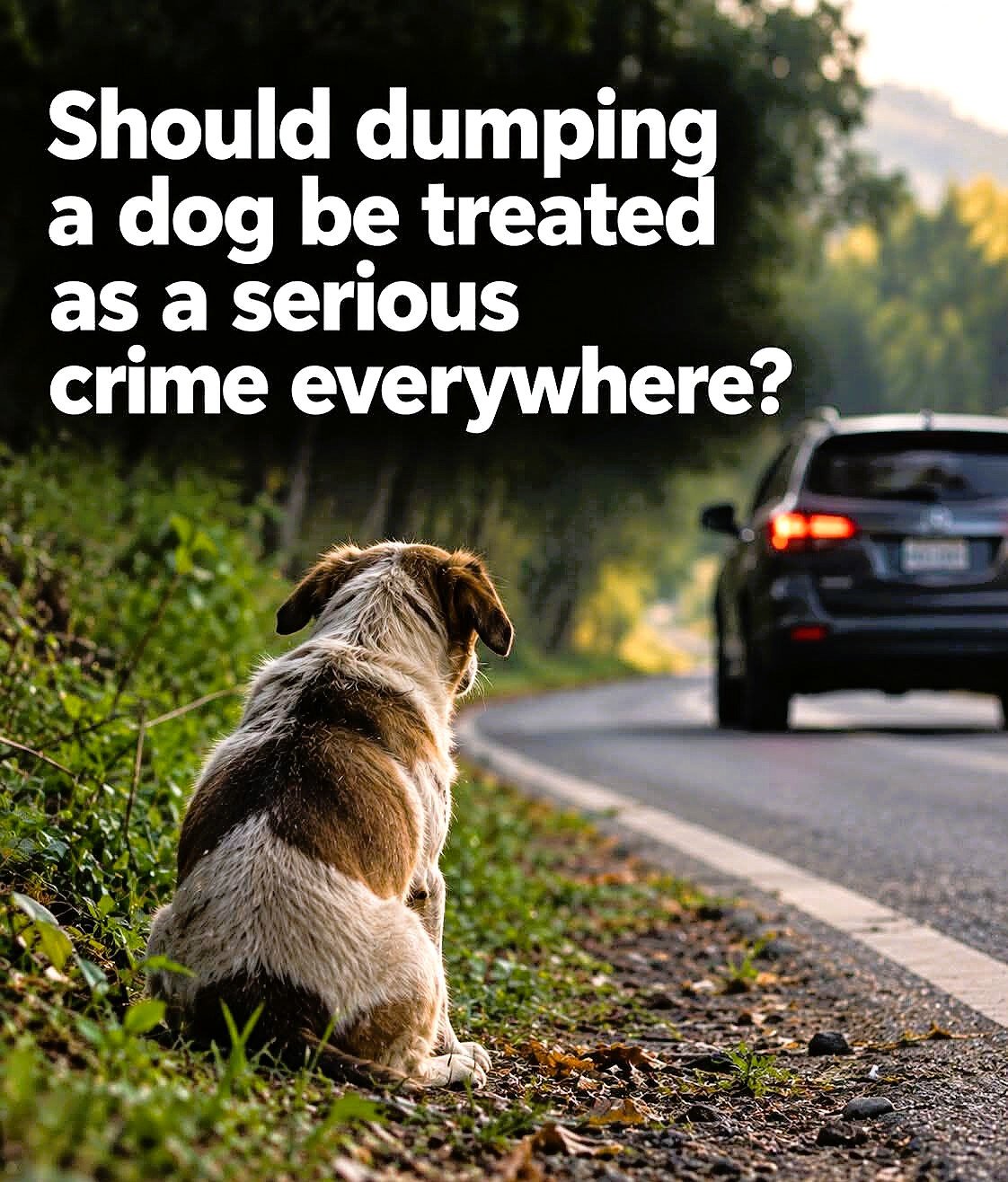
The dog may run after the vehicle. It may stand at the roadside, watching until the car disappears. It may wait for hours, convinced that the person it loves will eventually come back.
But sometimes, they never do.
For a dog, abandonment isn’t simply being left somewhere unfamiliar. It can mean losing everything it knows at once.
Its home is gone.
Its family is gone.
Its food and water are gone.
And the human who once represented safety and protection is suddenly nowhere to be found.
The dog doesn’t understand why.
It doesn’t understand what it did wrong.
It doesn’t understand why the person who once called its name, filled its bowl, opened the door and invited it onto the couch suddenly decided that it no longer belonged.
That confusion can be devastating.
Dogs don’t think about abandonment the way people do. They don’t understand that someone may have decided they were inconvenient, too expensive, too much work or simply no longer wanted.
They simply know that the person they depended on disappeared.
And now they have to survive.
A dog that has spent its life inside a home may have no idea how to survive on the streets. It may not know where to find clean water. It may be frightened by traffic, unfamiliar people and other animals.
Some abandoned dogs wander for days searching for the person they lost.
Others remain close to the place where they were left, waiting for a familiar face to return.
Some become injured.
Some become sick.
Some go hungry.
And some never survive long enough for anyone to find them.
This is why abandoning a dog should never be treated as a harmless decision.
Taking responsibility for an animal means understanding that the responsibility doesn’t disappear simply because caring for that animal has become difficult.
Dogs are living beings capable of forming deep bonds with people.
They experience fear.
They experience comfort.
They can become anxious when separated from the people they love.
They can become excited when someone they trust comes home.
And they can spend years giving affection without asking for much in return.
When someone brings a dog into their life, that dog has no choice in the decision.
It doesn’t choose its owner.
It doesn’t choose the home.
It doesn’t choose whether the family has enough time, money or patience.
The human makes that choice.
And with that choice comes responsibility.
Of course, life can become complicated.
Families can experience financial hardship. People can move somewhere that doesn’t allow pets. Owners can become unable to provide proper care because of illness, injury or other circumstances.
But facing a difficult situation does not mean abandonment is the only option.
There are shelters, rescue organizations, foster networks, veterinarians and animal welfare groups that may be able to help.
Responsible rehoming can give a dog a chance at another safe home.
Abandonment gives the animal no such guarantee.
It simply leaves the dog to depend on luck.
And luck should never determine whether a companion animal lives or dies.
Imagine being taken somewhere by the person you trust most.
You don’t know where you are.
You don’t know why you’re there.
You watch the person leave.
You wait.
Minutes become hours.
You keep looking down the road.
Every passing vehicle makes you wonder if they’re coming back.
Eventually, hunger and thirst begin to replace hope.
That is the reality many abandoned dogs can face.
Some dogs are discovered by kind strangers who stop to help. A rescuer may notice a frightened animal sitting alone near a road. Someone may leave food and water. Another person may contact an animal rescue organization.
Sometimes, those small acts of kindness become the beginning of a completely different life.
A dog that was once abandoned can eventually discover safety again.
It can learn that not every human will leave.
It can sleep peacefully indoors.
It can receive regular meals.
It can feel a gentle hand instead of fear.
But rescuers should not have to be the ones fixing a problem that responsible ownership could have prevented.
Communities can help by educating people about the responsibilities of pet ownership, supporting accessible veterinary care, encouraging sterilization and promoting responsible adoption.
And laws can play an important role as well.
The exact legal consequences for animal abandonment vary from one place to another. In many jurisdictions, abandoning an animal can already be treated as an offense, but the definitions, enforcement and penalties differ.
The broader question is whether knowingly leaving a dependent animal in danger should be taken seriously everywhere.
For many animal advocates, the answer is clear: a dog should not be treated like unwanted property that can simply be left behind.
A dog is dependent on people for its basic needs.
That dependence creates a responsibility.
When someone chooses to take an animal home, they should understand that they are accepting years of commitment—not just the happy moments.
Puppies grow.
Dogs get older.
Veterinary bills happen.
Behavioral problems can appear.
Homes change.
Schedules become complicated.
Life becomes unpredictable.
But the animal still deserves care.
The easiest moments aren’t the true test of responsibility.
The difficult moments are.
Anyone can love a dog when it is playful, healthy and easy to care for.
Real responsibility means continuing to protect that dog when things become difficult.
And if keeping the animal truly becomes impossible, finding a safe alternative is part of that responsibility.
A dog should never have to stand beside an empty road wondering why its family disappeared.
It should never have to sleep outside because someone decided it was no longer convenient.
It should never have to search through garbage for food after spending years trusting a human to feed it.
And it should never have to pay the price for a decision it had no part in making.
Dogs give people loyalty without conditions.
They greet us when we’re happy.
They stay close when we’re sad.
They can become our companions, our comfort and, for many people, a genuine part of the family.
They deserve that same commitment in return.
If someone can no longer care for a dog, the responsible choice is to seek help, contact a rescue or shelter, speak with a veterinarian, or find a safe and appropriate new home.
Leaving the animal behind should not be the solution.
Because somewhere out there, an abandoned dog may still be waiting.
Still watching the road.
Still hoping that the person who left will come back.
And perhaps the most heartbreaking part is that the dog may never understand that they were abandoned.
They may simply believe they were forgotten.
No dog deserves that.
Should knowingly abandoning a dog be treated as a serious crime everywhere?
And if someone can no longer care for their dog, what should the responsible alternative be?
Every abandoned dog deserves more than survival. It deserves safety, dignity and a second chance.