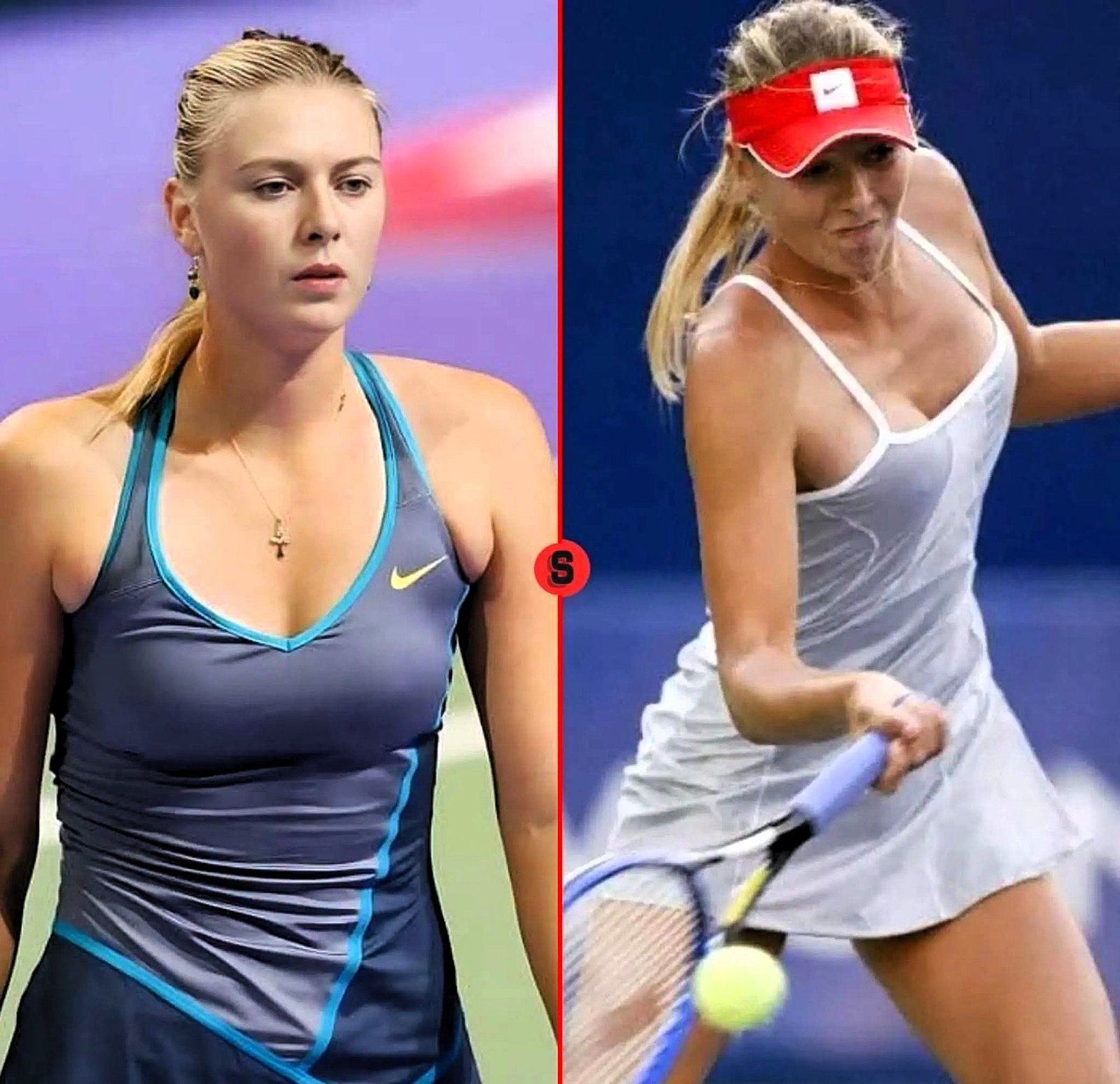

Maria Sharapova is more than just a name in the history of women’s tennis. She is a symbol of determination, ambition, resilience, and the relentless pursuit of excellence.
For millions of tennis fans around the world, Sharapova will always be remembered as the tall, powerful Russian athlete who walked onto the court with confidence, competed against the best players on the planet, and refused to back down from a challenge.
Her journey to becoming one of tennis’s most recognizable stars was anything but ordinary.
Born on April 19, 1987, in Nyagan, Russia, Sharapova moved to the United States as a young girl to pursue her dream of becoming a professional tennis player. She was only seven years old when she arrived in Florida with her father, Yuri, carrying an enormous dream but very limited resources.
The young Sharapova quickly attracted attention because of her unusual combination of height, athletic ability, determination, and competitive spirit. She trained relentlessly, spending countless hours on the tennis court while developing the powerful game that would eventually make her one of the most feared competitors in women’s tennis.
Her breakthrough came at the All England Club in 2004.
At just 17 years old, Sharapova shocked the tennis world by reaching the Wimbledon final. Standing across the net was defending champion Serena Williams, one of the most dominant players in the sport.
Many expected the experienced Williams to win.
Instead, Sharapova produced one of the greatest performances of her young career.
She defeated Williams in straight sets, becoming the first Russian woman to win the Wimbledon singles title. The victory instantly transformed her from a promising young athlete into an international superstar.
She was only 17.
That Wimbledon triumph became one of the defining moments of her career. But Sharapova was far from finished.
Over the next several years, she continued competing at the highest level of professional tennis. She won the U.S. Open in 2006, the Australian Open in 2008, the French Open in 2012, and another French Open title in 2014.
With those victories, Sharapova completed a career Grand Slam, joining the elite group of players who had won all four major singles championships.
Her success was not limited to trophies.
Sharapova became one of the most recognizable female athletes in the world. Her appearance, powerful style of play, intense competitiveness, and distinctive on-court personality helped turn her into a global sports icon.
She also became one of the highest-earning female athletes in the world.
Major sponsorship agreements and endorsement deals followed her success on the tennis court. She became associated with some of the biggest global brands and built a reputation that extended far beyond sports.
But behind the glamour and success was an athlete who constantly had to fight through physical challenges.
Professional tennis is extremely demanding. Players spend years placing enormous stress on their bodies, and Sharapova was no exception. Injuries repeatedly interrupted her career.
Still, she continued to return.
Perhaps one of the most difficult chapters came in 2016.
Sharapova announced that she had tested positive for meldonium, a substance that had recently been added to the World Anti-Doping Agency’s prohibited list. She accepted responsibility for taking the medication, saying she had used it for years and had not realized the regulatory change.
She was initially given a two-year suspension. After an appeal to the Court of Arbitration for Sport, the suspension was reduced to 15 months.
For an athlete who had spent her entire life competing at the highest level, the suspension was an enormous setback.
At that point, many wondered whether Sharapova would ever return to the level of tennis that had made her famous.
But quitting was never part of her personality.
In April 2017, Sharapova returned to competitive tennis after serving her suspension.
Her comeback generated enormous attention. Fans and media around the world followed her return, eager to see whether the former Grand Slam champion could once again compete against the best.
Although she never fully returned to the level she had reached during her prime, she continued fighting.
There were victories.
There were defeats.
There were more injuries.
And there were moments when the physical demands of professional tennis became increasingly difficult to overcome.
Eventually, Sharapova reached a decision that every professional athlete eventually has to face: when is it time to stop?
On February 26, 2020, Sharapova announced her retirement from professional tennis at the age of 32.
In her retirement announcement, she reflected on the physical pain and injuries that had increasingly made it difficult for her to compete at the level she expected from herself.
Retirement marked the end of one chapter, but certainly not the end of Sharapova’s story.
Long before she left professional tennis, she had already begun building a life and business career outside the sport.
One of her most recognizable business ventures is Sugarpova, a candy and chocolate brand that she launched in 2012.
The company was created as more than simply a celebrity-branded product. Sharapova became actively involved in the business and used her fame, creativity, and entrepreneurial instincts to develop the brand.
Sugarpova represented a different side of Sharapova.
On the tennis court, she was known for discipline, intensity, and fierce competition.
In business, she was able to explore creativity, branding, marketing, and entrepreneurship.
Her transition from professional athlete to businesswoman demonstrated that her ambitions were never limited to winning tennis matches.
Sharapova has also become involved in investments and other business ventures, continuing to develop her career beyond athletics.
That transition is particularly significant because professional athletes often face uncertainty after retirement. Their identities can become closely tied to competition, trophies, rankings, and championships.
Sharapova, however, had already begun preparing for life beyond tennis.
Her story is therefore not simply about winning five Grand Slam titles.
It is about reinvention.
It is about understanding that success can take different forms at different stages of life.
During her tennis career, Sharapova achieved nearly everything an athlete could dream of. She won five Grand Slam singles titles, completed a career Grand Slam, became the first Russian woman to win Wimbledon, reached the top of the world rankings, and built an enormous international following.
But her legacy also includes the setbacks.
The injuries.
The suspension.
The difficult comeback.
And ultimately, the courage to walk away when continuing at the highest level was no longer physically possible.
Those moments make her story more relatable.
Champions are often remembered for their victories, but the most revealing part of an athlete’s character can emerge during difficult times.
Sharapova experienced both extraordinary success and painful disappointment. Yet she continued moving forward.
Today, Maria Sharapova is remembered not only as a five-time Grand Slam champion but also as an entrepreneur and a businesswoman who successfully began building her identity beyond professional sports.
Her career offers an important lesson: success does not always mean staying in the same place forever.
Sometimes success means knowing when to fight.
Sometimes it means knowing when to adapt.
And sometimes it means having the courage to close one chapter and begin another.
Maria Sharapova’s tennis career may have ended in 2020, but the ambition that drove her from a young girl with a dream into a global sports superstar did not disappear.
It simply found a new direction.
From the Wimbledon courts to the world of entrepreneurship, Sharapova has continued to build a life defined by ambition and determination.
Her trophies remain an important part of her legacy.
Her five Grand Slam titles will forever be recorded in tennis history.
But perhaps her greatest achievement is the ability to reinvent herself after the spotlight of professional competition began to fade.
Maria Sharapova entered tennis as a determined young girl with an enormous dream.
She left the sport as a champion.
And she continues to build her legacy as something even bigger—a reminder that when one journey ends, another can begin.
Read Next
- The Robotic Exoskeleton Helping People Walk Again — And the Athlete Who Carried the Olympic Torch
- at 90, he won another bodybuilding title and still isn’t ready to stop
- Before Arnulfo Castorena became a four-time Paralympic champion, there were years when simply getting through the day was an achievement