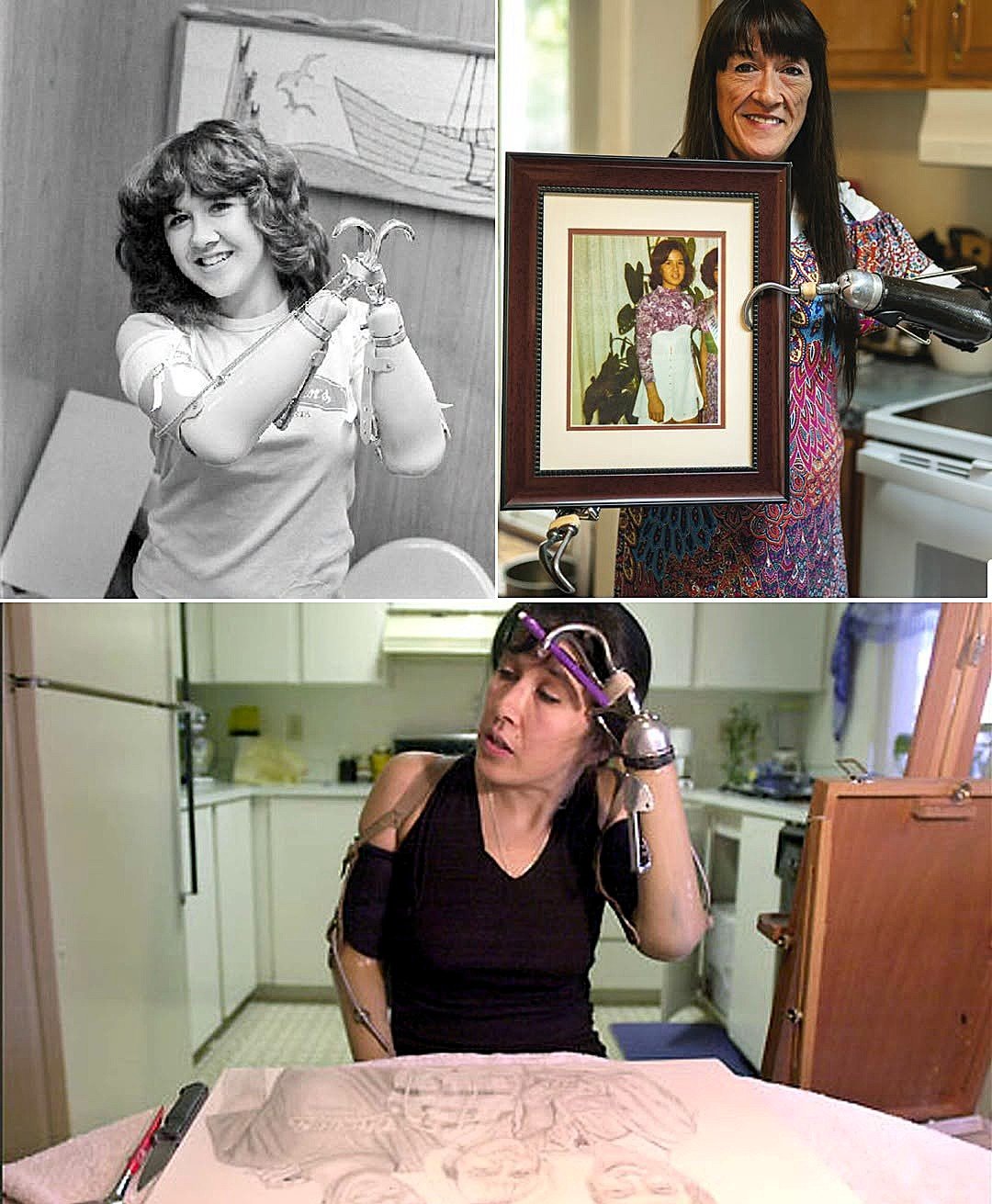
In the darkest moments of our lives, survival can sometimes come down to one simple decision:
Keep going.
For Mary Vincent, that decision came when she was only 15 years old.
She had been attacked, brutally injured, and left alone in an isolated California ravine. Her attacker believed the injuries he had inflicted would make survival impossible.
He was wrong.
Mary survived something no child should ever have been forced to endure. And in the years that followed, her story became more than a story of survival. It became a story about courage, resilience, justice, and the determination to rebuild a life after someone tried to destroy it.
A Ride That Became a Nightmare
In September 1978, Mary was hitchhiking in California when a 50-year-old man named Lawrence Singleton offered her a ride.
She accepted, believing she had found someone willing to help her get where she was going.
Instead, she was abducted and sexually assaulted.
Singleton eventually drove Mary to an isolated area near Del Puerto Canyon, far from the safety of other people.
What happened next would change her life forever.
According to accounts of the case, Singleton attacked Mary with a hatchet and severed both of her forearms below the elbows.
He then threw her into a ravine roughly 30 feet below the road and left.
He apparently believed that the injuries were so devastating that Mary could not survive—and that if she did survive, she would be unable to identify him.
But Mary was still alive.
And she was still conscious.
The Fight to Stay Alive
Imagine being 15 years old, severely injured, alone in an isolated place, and knowing that you could die if you stopped fighting.
Mary had every reason to believe that help might never come.
Yet she did something extraordinary.
She used the mud around her to help slow the bleeding from her injuries. Then, despite the unimaginable pain and weakness she must have been experiencing, she began trying to climb out of the ravine.
There was no guarantee that she would make it.
There was no promise that someone would find her.
There was only the next step.
And then another.
Somehow, Mary reached the top.
She then began walking.
She had no shoes.
She had lost both arms.
She was severely injured and covered in blood.
But she kept moving.
For miles, she continued searching for help.
At some point, a passing couple saw her and stopped.
That moment changed everything.
Mary was finally taken to safety and received emergency medical treatment.
She had survived.
The attacker had left her believing that she would never make it out of that ravine.
Instead, she had climbed out.
Facing Her Attacker
Surviving the physical attack was only the beginning.
Mary still had to live with what had happened to her.
She had to undergo medical treatment, adapt to life without her forearms, and face the emotional consequences of an attack that had occurred when she was still a child.
But she also had something important to do.
She had to tell her story.
Months after the attack, Mary entered a courtroom wearing prosthetic arms and faced Lawrence Singleton.
She was only 15 when he tried to leave her for dead.
Now she was standing in front of him.
Her testimony helped prosecutors secure his conviction on multiple charges, including attempted murder.
The judge imposed a sentence of 14 years and four months, the maximum available under the laws applicable at the time.
But the sentence would become another painful chapter in Mary’s story.
Singleton was released in 1987 after serving roughly eight years, with prison credits for good behavior and work.
His release generated widespread outrage.
Communities protested efforts to place him in their neighborhoods, and the case became part of a broader public discussion about how the justice system handled extremely violent crimes.
For Mary, however, the story was not over.
Turning Pain Into Purpose
Mary could have spent the rest of her life defined by what had happened to her.
Instead, she chose another path.
She became involved in victims’ rights advocacy and used her experience to speak on behalf of people who had also been affected by violent crime.
Her life demonstrated something important: surviving an attack does not mean the story ends when the ambulance arrives.
Sometimes, survival means learning how to live differently.
It means adapting to changes you never asked for.
It means finding a new identity after someone else tried to take your old one away.
And sometimes, it means speaking publicly about your experience so that others do not feel alone.
Mary did all of those things.
Then Came Another Tragedy
Nearly two decades after Mary’s attack, Lawrence Singleton appeared in the news again.
In 1997, he was arrested in Florida in connection with the murder of 31-year-old Roxanne Hayes.
The case brought Mary back into a painful chapter of her past.
Almost 20 years after she had first faced Singleton in court, Mary returned to testify during his murder trial.
The teenager who had once crawled out of a ravine to find help was now an adult confronting the same man once again.
Singleton was convicted and sentenced to death.
He died in prison in 2001.
For Mary, the passage of nearly two decades had not erased what happened.
But it had demonstrated something her attacker could never have predicted.
He had tried to end her life.
He had tried to prevent her from identifying him.
He had left her believing she would never escape that ravine.
Yet Mary survived.
She testified.
She rebuilt.
She advocated for others.
And decades later, she was still standing.
The Meaning of Mary’s Survival
Mary Vincent’s story is not powerful simply because she survived an extraordinarily violent attack.
It is powerful because of what happened afterward.
At 15, she was forced into a situation where survival seemed almost impossible.
She did not know whether anyone would find her.
She did not know whether she would ever walk again.
She could not know what her future would look like.
But in that moment, she apparently did not need to solve the rest of her life.
She only needed to survive the next few minutes.
First, she fought the bleeding.
Then she fought her way out of the ravine.
Then she walked.
Then she found help.
One decision at a time, she moved forward.
That may be one of the most profound lessons in her story.
Sometimes resilience does not look like fearlessness.
Sometimes it looks like being terrified, exhausted, injured and uncertain—and still taking another step.
She Was Supposed to Become a Victim’s Story
Mary’s attacker may have believed that leaving her in that ravine would make her disappear from his life forever.
Instead, Mary became the witness who helped bring him to justice.
He tried to take away her ability to identify him.
Instead, she identified him.
He tried to take away her future.
Instead, she built one.
He left her at the bottom of a ravine.
She climbed out.
And that image remains one of the most extraordinary parts of her story.
A 15-year-old girl, badly injured and alone, somehow found enough strength to make one more attempt at survival.
Then another.
Then another.
Until someone finally saw her.
More Than Survival
Mary Vincent’s life reminds us that survival is not always one dramatic moment.
Sometimes it is a series of tiny victories.
Opening your eyes.
Controlling the bleeding.
Finding a way out.
Taking another step.
Accepting help.
Learning to live with what happened.
Standing in court.
Speaking when your voice is needed.
And eventually discovering that the person who hurt you does not get to decide what the rest of your life will become.
Mary was 15 years old when she was thrown into that ravine.
She entered it as a frightened teenager fighting simply to stay alive.
She emerged not only as a survivor, but as someone who would spend years reclaiming her life and speaking for others.
Her story leaves us with a question that is difficult to answer:
What happens inside a human being when every reason to give up is present, yet something deep inside still whispers, “Keep going”?
Perhaps we will never fully understand what gave Mary the strength to climb that ravine.
But we know what happened next.
She kept going.
And that was enough to change everything.