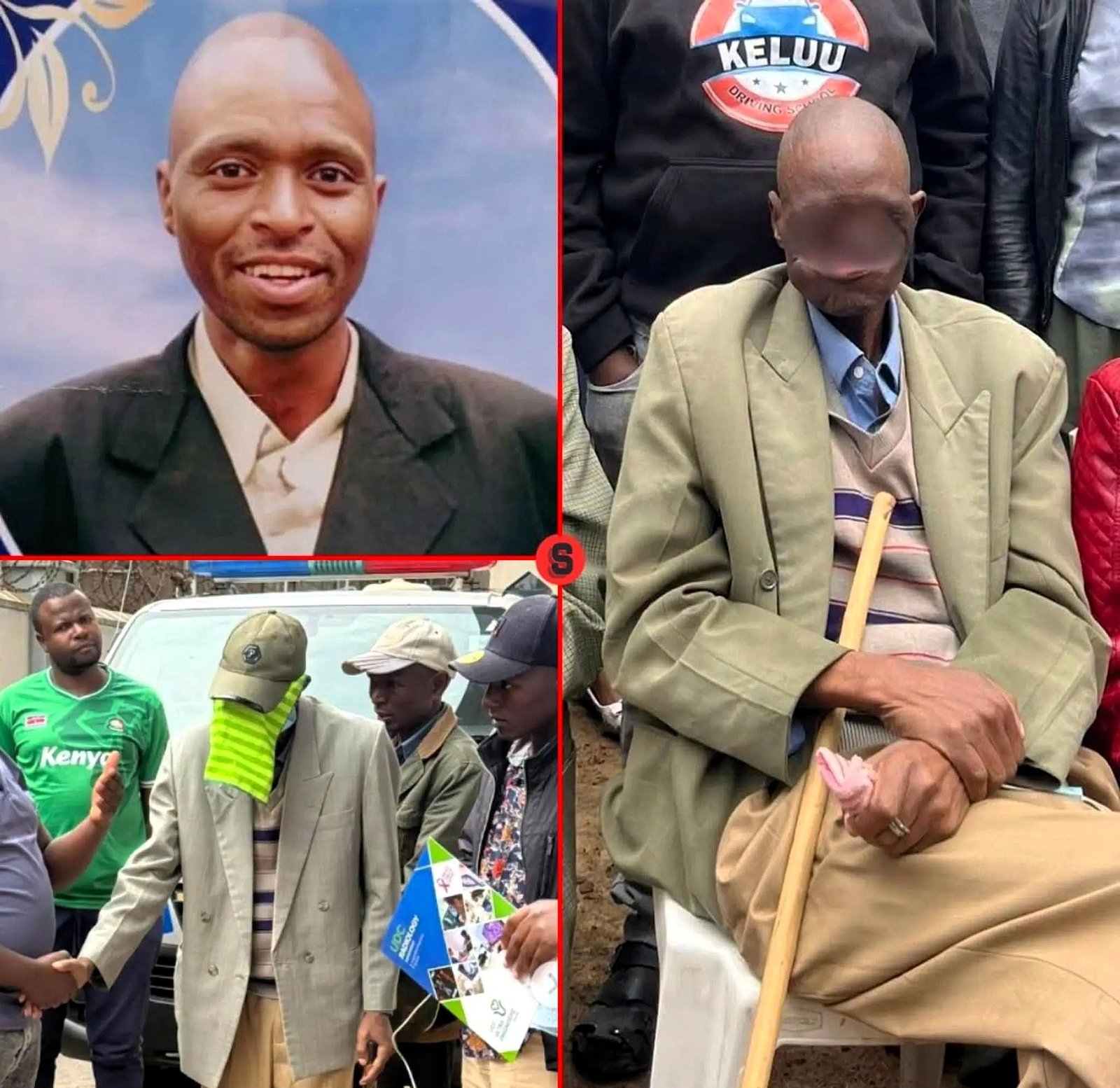
What began as what seemed like a minor illness slowly turned into a devastating 23-year struggle, changing nearly every part of Robert Mutai Chelogoi’s life. For more than two decades, the man from Chelemei village in Kenya endured a worsening medical condition that caused severe facial deformities, affected his upper jaw, and threatened his vision. Through years of pain, expensive treatments, and uncertainty, he continued fighting for a chance at a better life.
But his battle was never his alone. His family stood beside him, sacrificing what little they had to help him seek medical care. His wife remained a constant source of love and support, accompanying him through the difficult years when the future seemed increasingly uncertain.
As Robert’s condition worsened, the financial burden on his family became overwhelming. In their desperate effort to pay for treatment, they sold their belongings, giving up possessions that might otherwise have helped them maintain some stability. For a family already facing so much hardship, every medical expense brought another difficult decision.
Despite their sacrifices, finding the specialized care Robert needed remained a challenge. His story was not simply about a medical condition; it was also about the struggles families face when prolonged illness brings emotional suffering, financial hardship, and an uncertain future.
Eventually, his heartbreaking circumstances reached a much wider audience.
A wave of compassion began to grow online after his story was shared with the public. People who had never met Robert were moved by his suffering and by the determination of the family that continued to stand beside him.
Among those who helped mobilize support was content creator Arap Uria, who led solidarity efforts through the online community known as Team Strong. Rather than allowing Robert’s story to disappear into the endless stream of social media posts, the community organized campaigns to raise money and bring attention to his urgent medical needs.
The response demonstrated what can happen when ordinary people come together around a shared cause. Contributions came from people who wanted to help give Robert another opportunity to receive treatment. Through these collective efforts, nearly two million Kenyan shillings were reportedly raised.
For Robert and his family, the fundraising offered something they desperately needed: hope.
The financial support helped make it possible for him to be transferred to Kenyatta National Hospital, where he could receive specialized medical attention and continue his treatment. After years of struggling with a condition that had progressively changed his life, this development represented an important opportunity.
Behind the fundraising figures were countless individual acts of kindness. Every contribution represented someone who had taken a moment to care about a stranger. Every message of encouragement helped bring attention to a family whose suffering might otherwise have remained largely unknown.
Supporters also appealed to Kenya’s President William Ruto for assistance, hoping that additional intervention could help Robert access the care he needed.
Yet, even as people rallied around him, his long medical battle continued.
Sadly, the outcome was not what his supporters and loved ones had hoped for. Despite the fundraising campaign, public attention, and efforts to secure specialized treatment, Robert Mutai Chelogoi passed away at Longisa Hospital.
His death brought an end to a struggle that had lasted 23 years, leaving his family, supporters, and the people who had followed his story mourning a life marked by extraordinary hardship.
For those who had contributed to his treatment, the loss was especially painful. They had come together believing that their support might help change his circumstances, and many had hoped to see him recover or at least find meaningful relief from his suffering.
Although money can help open doors to medical treatment, not every illness has a happy ending. Robert’s story is a painful reminder that access to care, financial assistance, and community support can make a difference without always being able to prevent a tragic outcome.
Perhaps the most heartbreaking part of his story is the thought of the wife who remained beside him throughout his illness. While the wider public learned about Robert during the fundraising campaigns, she had lived through the struggle far longer. She witnessed the difficult days, the uncertainty, the sacrifices, and the hopes that accompanied his search for treatment.
Losing a loved one after years of illness means losing not only the person but also the future that two people may have imagined together. For his wife, the memories of their shared journey will remain long after the public attention surrounding his case fades.
Her commitment stands as a powerful example of the devotion that can sustain people through their darkest moments. Even when circumstances become overwhelming, having someone who refuses to walk away can provide a kind of comfort that money alone cannot offer.
Robert’s story also revealed the extraordinary strength of community solidarity. Team Strong and the many people who contributed showed that compassion does not always require knowing someone personally. Sometimes, hearing about another person’s suffering is enough to inspire people to act.
Their efforts helped bring Robert’s needs into public view and supported his journey toward specialized treatment. Even though the outcome was heartbreaking, the kindness shown to him and his family should not be forgotten.
His story also raises important questions about the challenges faced by people living with long-term medical conditions, particularly those who struggle to afford specialized treatment. Families should not have to sell everything they own simply to pursue medical care for someone they love. Greater access to treatment, stronger support systems, and timely medical assistance can be crucial for people facing similarly difficult circumstances.
Robert Mutai Chelogoi’s life was marked by a battle he never chose, sacrifices his family shouldered together, and a final chapter that brought sorrow to many who had hoped for a different ending.
He may be gone, but the compassion his story inspired remains meaningful.
In the end, his journey was not only about illness and loss. It was also about a wife’s unwavering devotion, a family’s determination, and a community that chose to respond to suffering with kindness.
Sometimes, people cannot change the ending of another person’s story. But they can help ensure that the person does not have to face the journey entirely alone.
Rest in peace, Robert Mutai Chelogoi. May your family find strength and comfort, and may the kindness shown to you inspire others to stand beside people facing hardship.