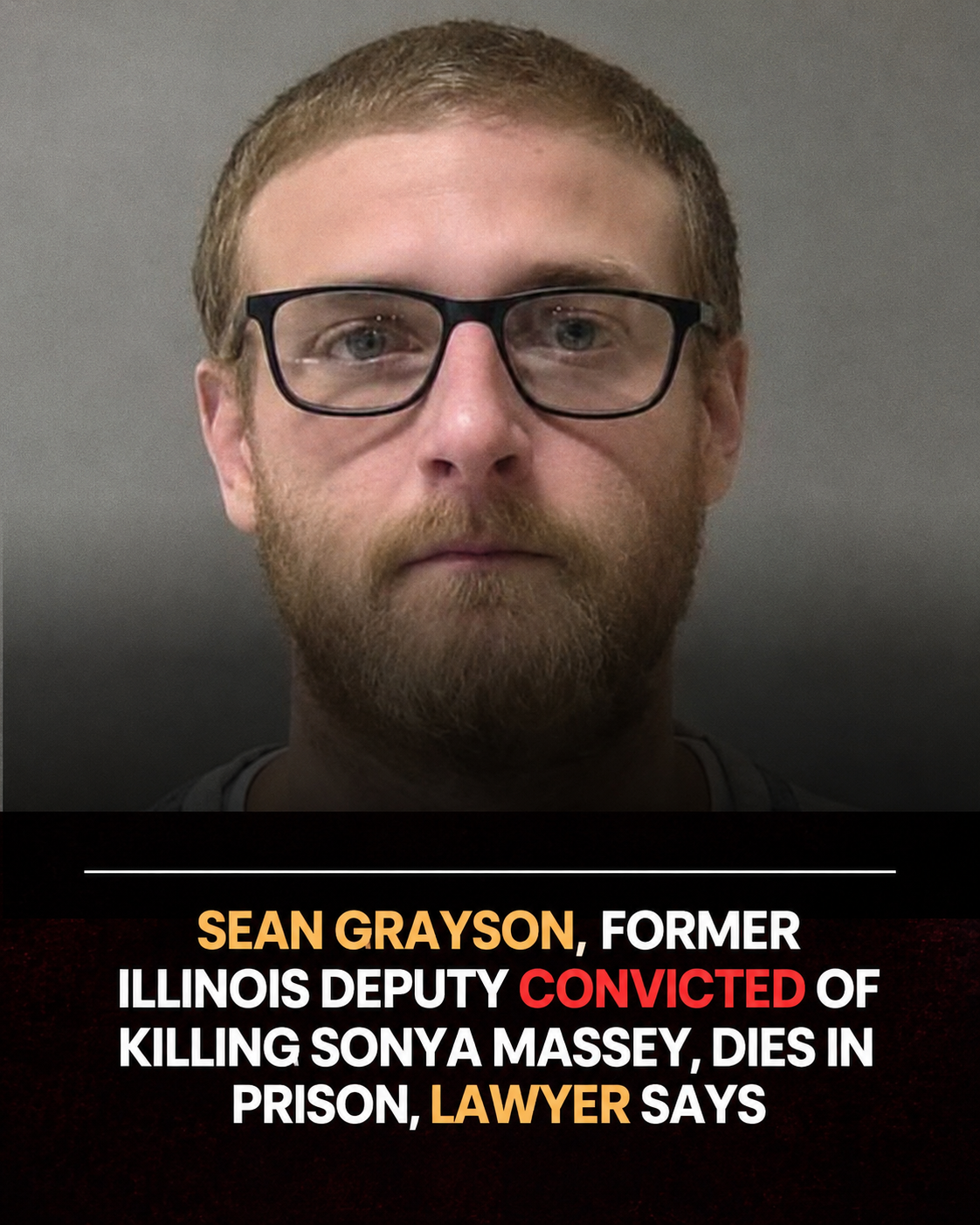
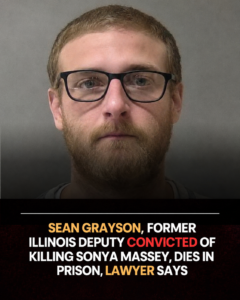
Sean Grayson, Former Illinois Deputy Convicted in Sonya Massey Killing, Dies While Serving Prison Sentence
Former Sangamon County Sheriff’s deputy Sean Grayson, who was convicted of second-degree murder in the fatal 2024 shooting of Sonya Massey, has died while serving a 20-year prison sentence. Grayson was 32 years old.
Grayson’s attorney confirmed his death after he had spent roughly six months in custody. He had been sentenced to the maximum 20 years in prison in January 2026 after an Illinois jury found him guilty of second-degree murder for killing Massey inside her home in July 2024.
The circumstances surrounding Grayson’s death have drawn renewed attention to a case that became one of the most closely watched police-shooting cases in Illinois in recent years. Although Grayson had been seriously ill with advanced cancer, authorities had not immediately released an official determination of the exact cause of death. Reports said his cancer had progressed from an earlier diagnosis to advanced disease involving his liver and lungs.
Grayson’s death came only weeks after Illinois officials rejected his request for an early medical release from prison. The Illinois Prisoner Review Board voted unanimously against the application in July 2026. His legal team had sought release because of his worsening medical condition, but the request was denied.
The decision had been closely watched because Illinois law allows certain seriously ill prisoners to seek medical release under specific circumstances. Grayson’s case became particularly contentious because he was serving a sentence for the killing of Massey, whose death had generated national outrage and widespread calls for changes in law enforcement practices.
Attorneys representing Massey’s family opposed Grayson’s release. The family had spent the years since Sonya’s death seeking accountability and emphasizing the lasting effect of her killing on her children, relatives and community.
Grayson’s death does not change the legal outcome of the case. He had already been convicted and sentenced after a highly publicized trial. In October 2025, jurors rejected the most serious first-degree murder allegations but found him guilty of the lesser offense of second-degree murder. A judge later imposed the maximum 20-year prison sentence allowed under the conviction.
The case began on July 6, 2024, when Massey, a 36-year-old Springfield-area woman, called 911 because she believed someone might be outside her home. Grayson and another deputy responded to the call.
What happened next was captured by police body-camera footage and became central to the investigation and subsequent trial.
According to evidence presented in court, the encounter escalated inside Massey’s kitchen after Grayson instructed her to move a pot containing hot water. Massey picked up the pot, and Grayson reacted by drawing his weapon. He then fired multiple shots, fatally striking Massey.
The shooting generated immediate public anger after the body-camera footage became public. Protesters, civil-rights advocates and members of Massey’s family questioned why a woman who had called police for assistance ended up being killed by one of the responding officers.
Grayson was subsequently fired from the sheriff’s department and charged with murder. His defense argued that he believed he faced a threat during the confrontation. Prosecutors disputed that interpretation and argued that the shooting was unjustified.
The jury ultimately found Grayson guilty of second-degree murder rather than first-degree murder. The verdict ended a trial that had received national attention and intensified an already heated debate over police use of force, officer training and the treatment of people experiencing behavioral-health crises.
At sentencing in January 2026, the judge imposed the maximum 20-year sentence. The court also ordered two years of mandatory supervised release following the prison term.
The sentence was viewed by Massey’s family as an important measure of accountability, although the family had originally sought a conviction for first-degree murder.
Now, with Grayson’s death, the case has entered another chapter. His medical condition, his unsuccessful attempt to obtain early release and the circumstances of his death are likely to remain part of the broader discussion surrounding the Massey case.
The death of Sonya Massey was more than an individual criminal case. It became a national discussion about policing, accountability and how officers respond when someone calls 911 for help.
Massey was a 36-year-old mother who had contacted emergency services because she believed there might be a prowler near her home. Instead of receiving the help she expected, she was fatally shot during the police response.
The release of body-camera footage dramatically changed public awareness of the incident. The footage allowed investigators, journalists and the public to examine the interaction that preceded the shooting and became a central piece of evidence in the criminal case against Grayson.
The case also prompted questions about how police departments recruit and evaluate officers. Officials and advocates examined whether agencies had adequate systems for reviewing an officer’s previous employment history, disciplinary records and other warning signs before hiring.
Those concerns contributed to legislative action in Illinois. The Sonya Massey Act was enacted to strengthen background and employment-history checks for law enforcement hiring, reflecting concerns that information about an officer’s previous history should not be overlooked when an agency considers bringing that person onto its force.
The case also contributed to broader reforms involving the Sangamon County Sheriff’s Office and emergency responses to people experiencing behavioral-health challenges. A federal agreement later called for changes in policing practices, training and crisis-response procedures in the county.
For Massey’s family, however, policy changes could not undo the loss.
Her death left behind children, relatives and friends who continued to live with the consequences of what happened that night. During the sentencing proceedings, members of Massey’s family spoke about the emotional impact of losing her and the continuing pain caused by her death.
The case also became part of a larger national debate over police accountability. Across the United States, incidents involving officers and civilians have repeatedly raised questions about when deadly force should be used and how departments should respond when someone is experiencing a crisis.
Grayson’s defense maintained that he believed Massey posed a danger to him. Prosecutors and Massey’s supporters rejected that justification, pointing to the circumstances of the encounter and the evidence presented at trial.
The jury’s second-degree murder verdict ultimately established the criminal responsibility that led to Grayson’s 20-year sentence. His death while incarcerated means he will not serve the remainder of that sentence.
Yet his death does not bring the Massey case to an emotional conclusion for her family.
For those who knew Sonya Massey, the central issue remains the loss of a woman who called 911 expecting assistance and never returned to the life she knew. Her name has since become associated with changes in Illinois law and continuing conversations about police accountability.
Grayson’s death also highlights the complicated intersection of criminal punishment and serious illness. His medical condition became an important part of the final months of his life, particularly after his application for early medical release was rejected. The Prisoner Review Board’s unanimous decision meant he remained subject to his original sentence until his death.
Officials have not publicly established a definitive cause of death in the reports currently available, although Grayson had been battling advanced cancer that had spread to other organs.
The Sonya Massey case will likely continue to be referenced whenever Illinois lawmakers, law enforcement agencies and civil-rights advocates discuss police hiring standards, use-of-force policies and crisis intervention.
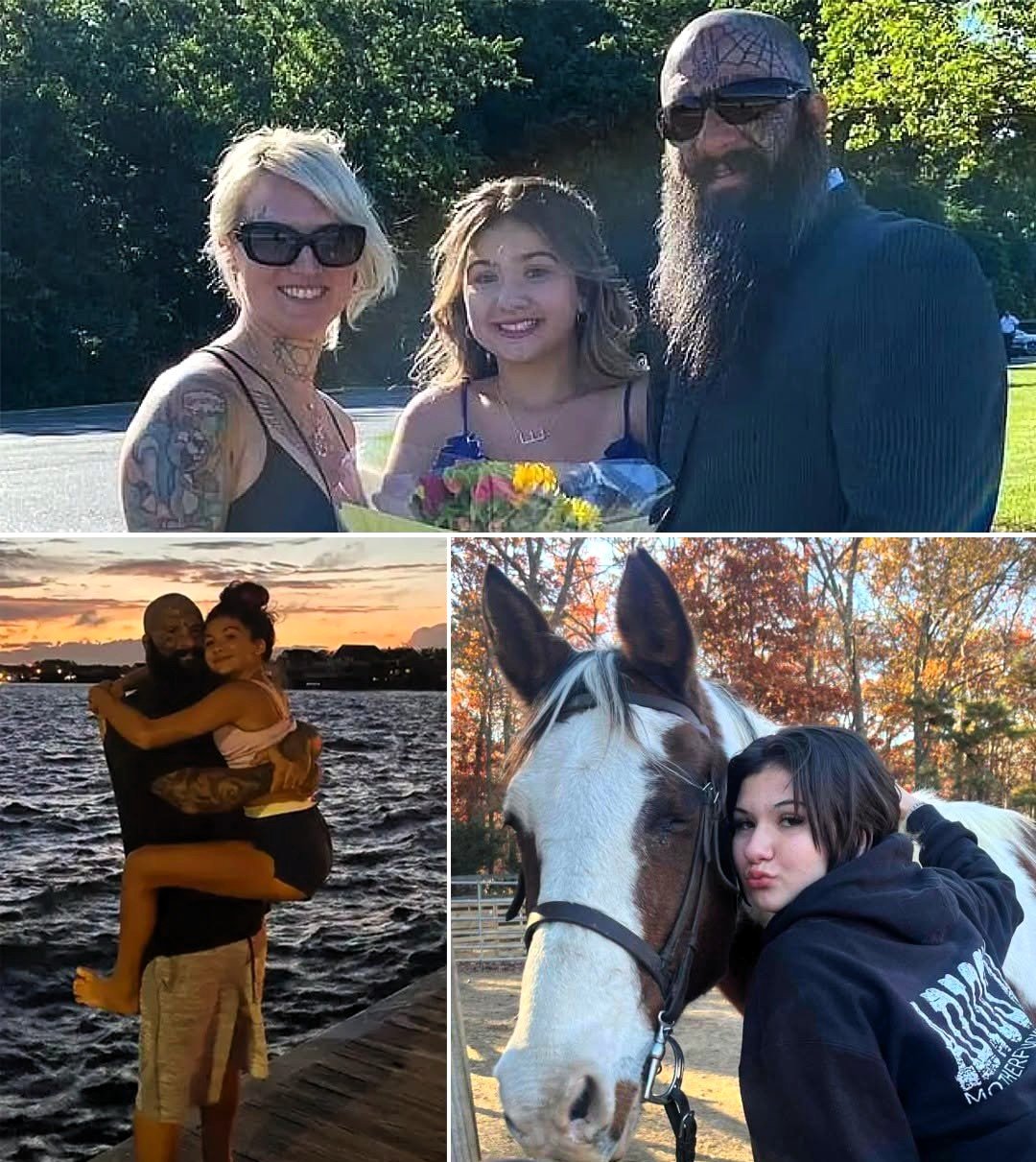
For Massey’s loved ones, however, the reforms are only part of the legacy. The most important memory remains Sonya herself — a mother, daughter and member of her community whose life ended during a police response that was supposed to provide protection.
As Illinois continues to examine the lessons of the case, the circumstances surrounding Massey’s death and the subsequent conviction of Sean Grayson remain a powerful reminder of the consequences that can follow when a routine emergency call escalates into deadly force.
The case has already produced a criminal conviction, a prison sentence, legislative changes and renewed scrutiny of police practices. Grayson’s death adds another unexpected chapter to a tragedy that began with a simple request for help and continues to influence conversations about justice, accountability and public safety.