For most children, playing is one of the simplest parts of growing up.
A game with friends.
A run across a playground.
A hug from someone they love.
A careless jump, a fall, or a playful bump that is forgotten within minutes.
But for 12-year-old Leo García, those ordinary moments can carry a very different meaning.
Sometimes, playing means being afraid.
Sometimes, getting dressed means preparing for pain.
And sometimes, something as simple as a hug can become a decision that has to be carefully considered.
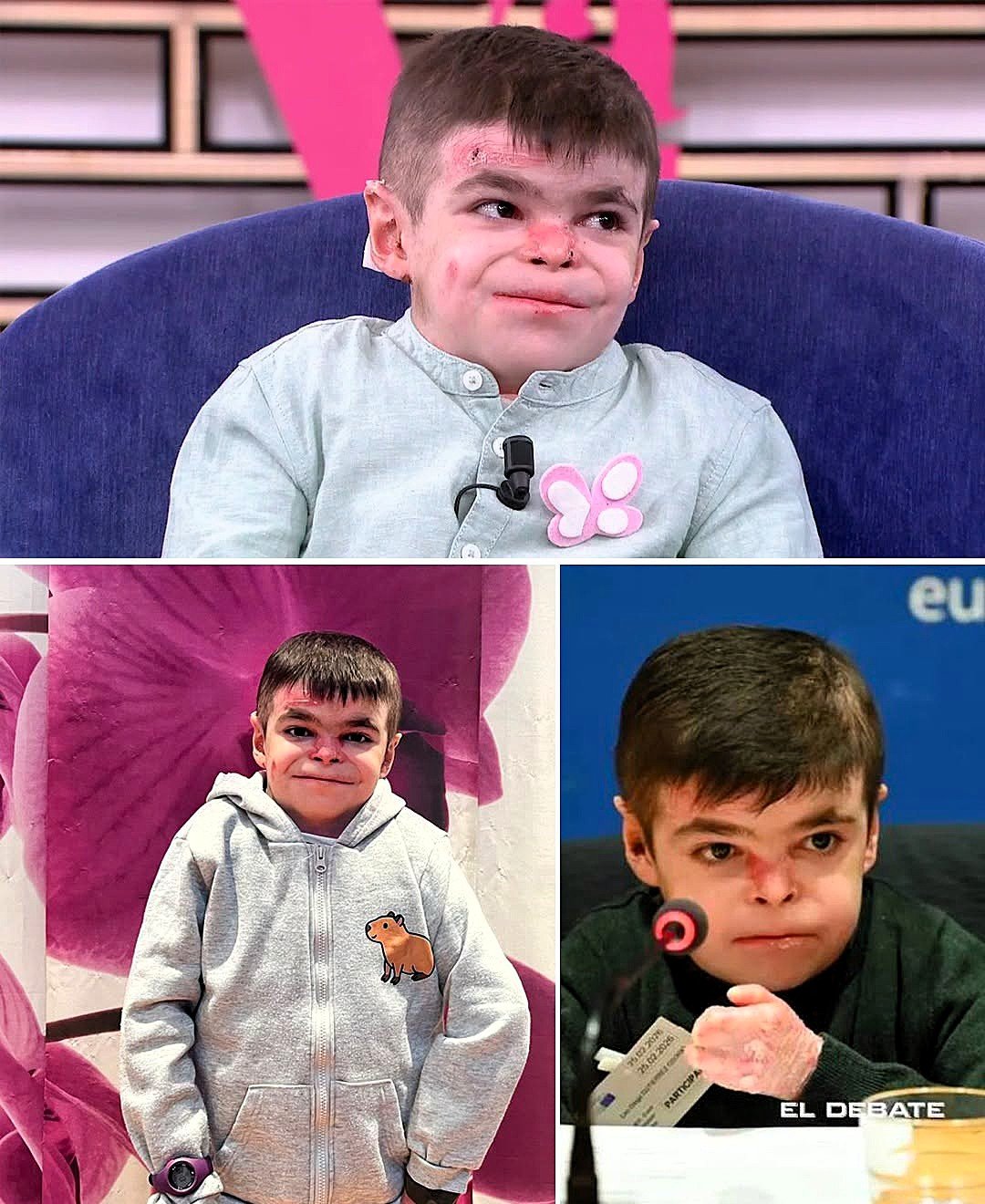
Leo lives in Seville, Spain, with dystrophic epidermolysis bullosa, a rare genetic condition often described as “butterfly skin.”
The nickname comes from the extreme fragility of the skin. Like the delicate wings of a butterfly, it can be vulnerable to damage from friction and minor physical contact.
But behind that gentle name is a reality that has shaped nearly every part of Leo’s childhood.
His skin can develop painful wounds from things that most people never have to think about.
A small bump.
A little friction from clothing.
An ordinary movement.
For Leo, these can have consequences.
His day often begins long before he is ready to think about school, friends or playing.
Around 7 a.m., wound care begins.
For more than an hour, attention must be given to the injuries and fragile areas of his skin before the rest of the day can truly begin.
While many children his age are still waking up, eating breakfast or deciding what they will wear, Leo may already be dealing with pain.
Getting dressed can become a careful process.
Every movement matters.
Every piece of clothing has to be considered.
And even after the morning routine is finished, the challenges do not simply disappear.
Eating can also be difficult.
The condition can affect areas inside the body, including the mouth and esophagus, making something as basic as having a meal more complicated than it is for most children.
Then there is school.
There are friendships.
There are conversations.
And, perhaps most importantly for a 12-year-old, there is the desire to play.
Children are supposed to run.
They are supposed to laugh loudly.
They are supposed to chase one another without constantly calculating whether the next movement could hurt them.
Leo knows that kind of freedom exists.
He simply cannot experience it in the same way.
That reality became the center of an important moment in March 2026.
Leo traveled from Spain to Brussels, where he spoke before the European Parliament.
He stood in a room filled with adults and explained something that is difficult for many people to imagine.
He explained what it is like to live in a body where ordinary childhood activities can cause injury.
He did not stand there simply as a child with a rare medical condition.
He stood there as someone who wanted people to understand.
There is a powerful difference between knowing that a disease exists and understanding what living with it actually means.
People can hear statistics.
They can read medical definitions.
They can learn the name of a condition.
But listening to a child describe why he is afraid to play can make the reality much more personal.
Leo’s message was not simply about pain.
It was about everything pain can take away.
Spontaneity.
Freedom.
Comfort.
The feeling that you can move through the world without constantly worrying about what might happen next.
For many children, the question before playing is, “What should we play?”
For Leo, there can be another question first:
“Will this hurt?”
That is a question no child should have to carry so often.
Yet Leo has learned to speak about it.
He has learned to put his experience into words so that people who have never lived with the condition can begin to understand.
His story also highlights something easy to overlook when people think about rare diseases.
A condition does not have to affect millions of people to completely transform a person’s life.
For families living with epidermolysis bullosa, the challenges are not occasional.
They can become part of everyday life.
Morning wound care.
Pain.
Dressings.
Medical appointments.
Careful movements.
Difficult meals.
Constant attention to the skin.
And the emotional burden of knowing that an activity other children consider harmless could result in another injury.
For Leo, childhood has had to include all of these calculations.
Yet there is something especially striking about his story.
He is still a child.
Behind the medical condition is a 12-year-old boy who wants many of the same things other children want.
He wants to play.
He wants to enjoy ordinary moments.
He wants to move without fear.
He wants a childhood that is not constantly defined by pain.
Those wishes are not extravagant.
They are incredibly ordinary.
And perhaps that is what makes them so heartbreaking.
Leo did not ask for a life without challenges.
He spoke about wanting less pain and more freedom.
He wanted to experience the kinds of moments that many people never stop to appreciate because they have always been available to them.
Running outside.
Playing with friends.
Getting dressed without worrying about injury.
Eating without discomfort.
Being hugged without hesitation.
For someone living with fragile skin, these simple experiences can represent something much bigger.
They can represent freedom.
His appearance before the European Parliament also gave him an opportunity to bring attention to people who may rarely have the chance to tell their stories in such a public setting.
Rare conditions can be difficult to understand precisely because so few people encounter them in everyday life.
That can make awareness especially important.
When people understand what patients and families experience, they may better recognize why research, specialized care, medical support and practical assistance matter.
But perhaps the most memorable part of Leo’s story is not the medical terminology.
It is the image of a 12-year-old standing before adults and explaining something that many adults might struggle to understand.
He was telling them that fear can exist in places where other people see only fun.
A playground can look exciting.
To Leo, it can also represent risk.
A hug can look comforting.
For him, it may require caution.
A shirt can look completely ordinary.
For him, putting it on can be painful.
A meal can look routine.
For him, eating can sometimes be difficult.
The world has not necessarily changed.
His relationship with the world has.
And yet Leo continues to speak.
That matters.
Because children living with rare diseases deserve more than medical attention.
They deserve to be heard.
They deserve to have their experiences understood.
And they deserve opportunities to imagine a future that includes more than managing pain.
Leo’s story reminds us that childhood is made up of countless small moments that many people never recognize as privileges until someone shows them what life looks like without those freedoms.
Playing without fear.
Moving without hesitation.
Eating comfortably.
Wearing clothes without pain.
Receiving a hug without worrying about what might happen afterward.
These are ordinary things.
But ordinary does not mean insignificant.
For Leo, they can represent everything he hopes to experience more freely.
And perhaps that is the message he carried with him to Brussels: sometimes the greatest thing a person can ask for is not something extraordinary.
It is simply the chance to experience an ordinary day.
A day where getting dressed does not hurt.
A day where breakfast is easy.
A day where playing feels like playing.
A day where a hug is just a hug.
A day where fear does not have to decide what a child is allowed to do.
Leo is only 12.
Yet his words have the power to make adults pause and reconsider how much they take for granted.
Because sometimes, the things we call “ordinary” are actually extraordinary gifts.
And for a child like Leo, one completely ordinary day without pain could mean everything.