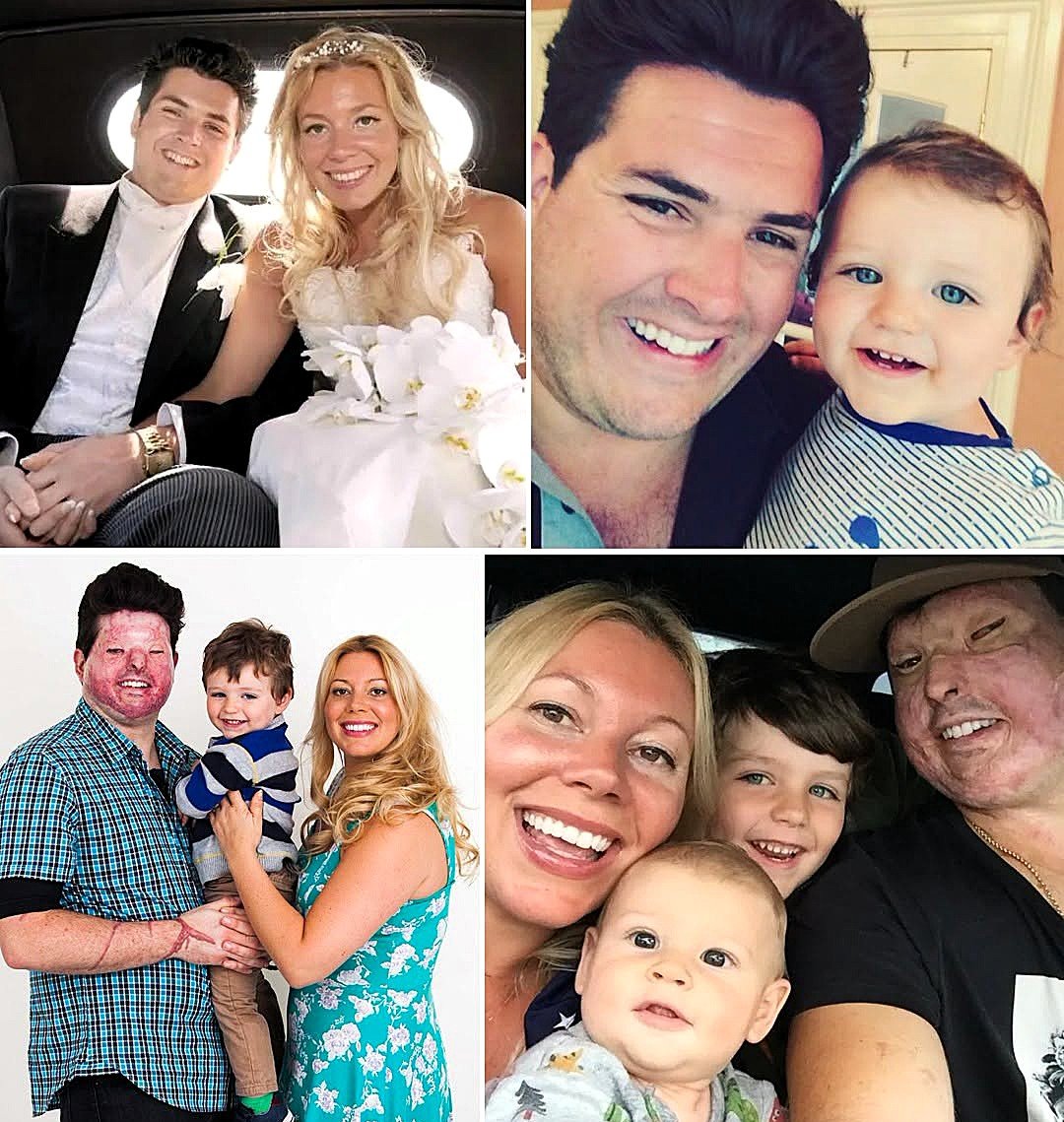
On a December afternoon in 2014, Andreas Christopheros was at home with his wife and young son in Truro, England.
It was an ordinary day.
Like many people at that time of year, Andreas had no reason to believe anything unusual was about to happen. Christmas was approaching, and life inside his home was centered around his family and the simple routines of everyday life.
Then someone knocked on his front door.
Andreas went to answer it.
He had no idea that the stranger standing outside had not come for him at all.
The man at the door was David Phillips, who had travelled hundreds of miles looking for another person. He was seeking revenge, but somehow he had been given the wrong address.
Andreas was completely innocent.
He had never expected to become involved in someone else’s dispute.
But within moments, an ordinary afternoon became a nightmare that would permanently change his life.
Phillips attacked Andreas with a corrosive substance, leaving him with devastating injuries.
The attack was sudden and unimaginably cruel.
Andreas survived, but survival came with consequences that he would have to carry for the rest of his life.
One of his eyes was left without sight. His vision in the other eye was severely affected. His face and body suffered serious injuries, and the road to recovery became long, painful and uncertain.
Instead of simply returning to the life he had known before, Andreas found himself entering a world of hospitals, operations, rehabilitation and medical appointments.
There were surgeries.
There were setbacks.
There were moments when the future must have seemed impossible to imagine.
And beyond the physical injuries, there was another reality that survivors of devastating attacks often face: the emotional consequences.
A person can leave a hospital, but that does not necessarily mean the trauma is over.
The memories remain.
The scars remain.
And everyday things that most people take for granted can suddenly become difficult.
For Andreas, the attack had taken away something as basic as being able to see the world normally.
But it did not take away his determination.
Instead of allowing what happened to define the rest of his life, Andreas eventually made a decision that would take extraordinary courage.
He would use his experience to try to protect other people.
Rather than remaining silent, he began speaking publicly about corrosive substance attacks and the devastating impact they can have on victims.
His message was simple but powerful: the consequences for survivors can last for decades.
An offender may eventually leave prison, but a victim may continue living with physical injuries, emotional trauma and medical complications for the rest of their life.
In 2017, Andreas continued campaigning for stronger laws and tougher consequences for people who use corrosive substances as weapons.
He wanted lawmakers and the public to understand that these attacks were not simply violent incidents that ended when the attacker was arrested.
For the victim, the story could continue for years.
Sometimes, it could continue for an entire lifetime.
Andreas became part of a wider national conversation in the United Kingdom about the availability and misuse of dangerous corrosive substances.
His story helped put a human face on an issue that could otherwise be discussed only through statistics and legislation.
Behind every number was a person.
A family.
A future that had been changed.
A life that had been divided into two parts: before the attack and after it.
Over time, Britain introduced stronger restrictions relating to corrosive substances, including measures intended to make it harder for dangerous substances to be misused.
For Andreas, legal reform was never just about politics.
It was personal.
He knew exactly what could happen when someone decided to turn a corrosive substance into a weapon.
He also understood something that many people never have to think about: preventing one future attack could mean saving another family from experiencing the nightmare his family had endured.
His campaigning eventually brought him into contact with government officials and others involved in shaping policies designed to protect the public.
But Andreas’s work did not stop with legislation.
The man who had once needed extensive reconstructive treatment himself also became involved with Face Forward International, an organization that helped support his recovery.
Rather than keeping that help to himself, he began using his platform to raise awareness and support for other people living with devastating injuries.
That part of his story may be the most remarkable.
Andreas could have chosen to focus only on rebuilding his own life.
Nobody could have blamed him.
After everything he had experienced, simply trying to recover would have been more than enough.
But he chose another path.
He decided that his suffering could become a source of purpose.
His scars could become part of a warning.
His experience could become a reason for change.
And his voice could help people who had not yet found their own.
The circumstances of the attack were almost painfully senseless.
A man travelled more than 300 miles seeking revenge against someone else.
He arrived at the wrong home.
He opened the wrong door.
And an innocent man paid the price.
There was nothing Andreas could have done to predict what was coming.
He could not have known that answering his front door would change his eyesight, his appearance, his health and his future.
He could not undo what happened.
No amount of campaigning could erase the day itself.
No law could restore the life he had before the attack.
But Andreas discovered something else.
Although he could not change the past, he could influence what happened next.
He could speak.
He could campaign.
He could meet decision-makers.
He could support fellow survivors.
And he could remind society that behind every horrific statistic is a human being who has to live with the consequences.
His journey is therefore not simply a story about violence.
It is a story about what a person chooses to do after violence has changed everything.
It is a story about resilience.
It is a story about turning pain into purpose.
And perhaps most importantly, it is a reminder that sometimes the strongest response to something terrible is not revenge, but prevention.
Andreas Christopheros did not choose what happened to him.
He did not choose the scars.
He did not choose the surgeries.
He did not choose to lose the sight in one eye or live with limited vision in the other.
But he did choose what he would do with the life that remained.
A stranger arrived at his home because of one terrible mistake.
That mistake could never be corrected.
But Andreas refused to let the story end there.
Instead, he transformed one of the darkest experiences of his life into a reason to fight for others.
His story leaves us with a difficult question:
If something completely senseless changed your life forever, would you be able to turn that pain into a reason to protect people you may never even meet?
Sometimes, we cannot choose what happens to us.
But we can choose what we do afterward.
And Andreas chose to use his voice.