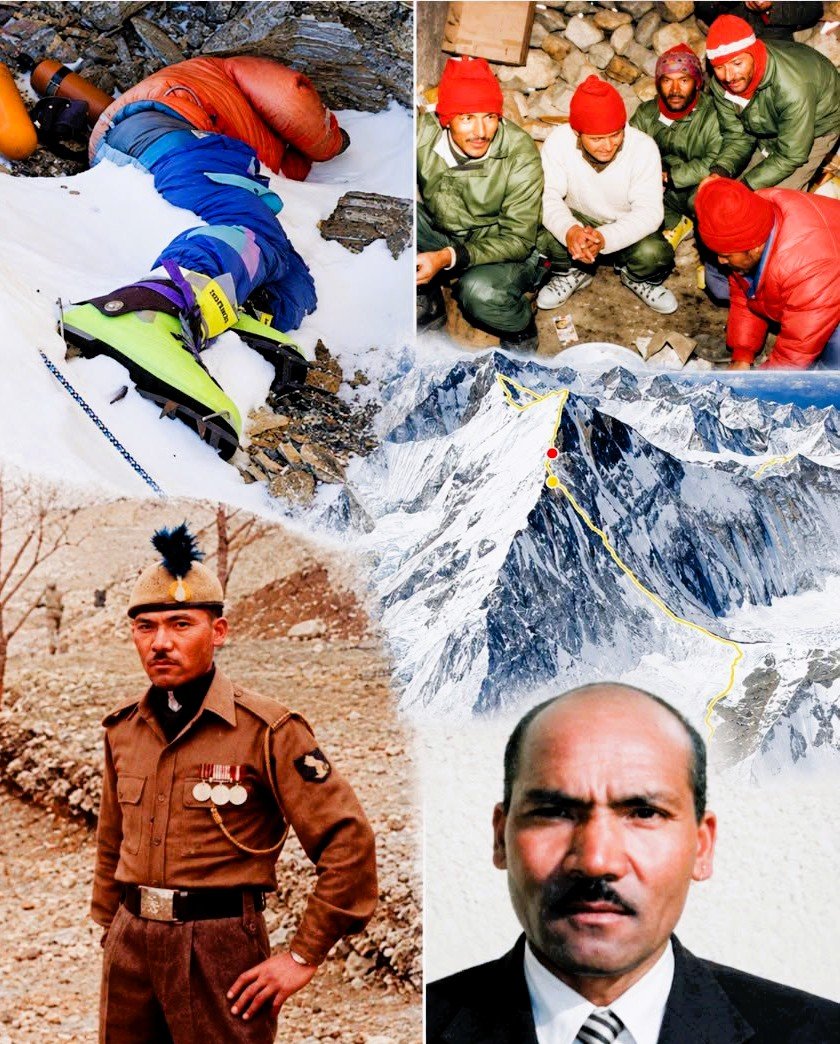
For decades, one haunting image has remained etched into the history of Mount Everest: a motionless climber wearing bright green boots, resting inside a small rocky cave high above the clouds. Known around the world as “Green Boots,” the unidentified figure became one of the mountain’s most recognizable and unsettling landmarks.
Now, renewed interest in identifying climbers who never returned from Everest has brought fresh attention to the mystery surrounding the person behind the name. But despite years of speculation, important questions about his identity and final moments remain unresolved.
For many years, the climber was widely believed to be Tsewang Paljor, an Indian mountaineer who died during the disastrous 1996 Everest climbing season. His distinctive green boots became the defining feature that helped other climbers recognize his body as they passed through a rocky shelter along the mountain’s northeastern route.
At nearly 28,000 feet above sea level, Everest enters what climbers call the death zone. The air contains so little oxygen that the human body struggles to function normally. Temperatures can plunge dramatically, violent winds can sweep across exposed slopes, and even simple movements can become exhausting.
In that environment, a small mistake can have devastating consequences.
How Green Boots Became a Landmark on Everest
Mount Everest attracts climbers from around the world, but reaching its summit requires far more than physical strength. The mountain demands careful preparation, favorable weather, technical skill, and decisions made under extraordinary pressure.
For climbers approaching the summit from the north, the rocky overhang associated with Green Boots became a familiar point along the route. The body inside the shelter was visible to mountaineers making their way through one of the world’s most dangerous environments.
Over time, the bright green footwear became a grim identifier.
Unlike a conventional landmark, Green Boots represented a human life cut short. Climbers who passed the location were reminded that the mountain’s challenges were not merely theoretical. People had attempted the same journey before them and never made it home.
The nickname spread through mountaineering accounts, photographs, documentaries, and online discussions. Eventually, Green Boots became one of the most widely recognized symbols of Everest’s dangers.
Yet behind that nickname was a person with a life, a family, and aspirations that existed long before the mountain became his final resting place.
The Connection to Tsewang Paljor
Tsewang Paljor was an Indian mountaineer from the Ladakh region who was part of an Indian expedition attempting Everest in May 1996.
That month became infamous in mountaineering history after multiple climbers died amid severe weather, delays, and dangerous conditions near the summit.
Paljor and members of his expedition encountered the mountain during this deadly period. Because of the circumstances surrounding his disappearance and death, many accounts subsequently identified him as the climber remembered as Green Boots.
However, the identification has long been based on circumstantial evidence and widely repeated accounts rather than an unequivocal public confirmation. The precise identity of the body has therefore remained a subject of discussion.
That distinction matters. A story repeated for decades can become accepted as fact even when some of its central details have never been conclusively established.
The mystery surrounding Green Boots is not simply about a pair of brightly colored shoes. It is also about the difficulty of establishing the identities and circumstances of climbers who die in one of the most inaccessible places on Earth.
Why Bodies Can Remain on Everest for Years
Recovering a body from Everest is not comparable to a rescue operation on an ordinary hiking trail.
At extreme altitude, rescuers face severe oxygen deprivation, unpredictable weather, steep ice, unstable snow, and the constant risk of falling. Moving an unconscious or deceased person can require a team of experienced climbers, specialized equipment, and conditions safe enough to attempt the operation.
In some circumstances, a recovery attempt could put additional lives at risk.
As a result, some climbers who die on Everest remain on the mountain for years. Their locations may become known to expedition teams, but retrieving them is not always possible or considered safe.
The extreme cold can slow decomposition, while ice and snow may preserve remains for long periods. Changing weather and shifting snow can also expose bodies that were previously covered.
For climbers passing through these areas, the experience can be deeply unsettling. They must continue making decisions about their own safety while confronting visible reminders of people who lost their lives attempting the same ascent.
Green Boots became especially well known because of his location along a frequently traveled route and the distinctive appearance of his footwear.
The Human Story Behind the Mystery
It is easy to remember Green Boots as a symbol of danger, but doing so risks overlooking the person behind the nickname.
Tsewang Paljor, if the widely circulated identification is correct, was more than a figure on a mountainside. He was a mountaineer who undertook a demanding expedition and became part of a tragedy that affected families and fellow climbers.
For loved ones left behind, a climber’s disappearance is not a mysterious landmark or an internet story. It is a personal loss that can remain painful long after the headlines fade.
The renewed interest in identifying Everest’s dead also raises broader questions about how mountaineering history remembers those who never returned. Names, records, photographs, and accounts from fellow climbers can help restore a person’s identity, but gaps in the historical record may be difficult to close.
Every confirmed identification can matter to families seeking answers and to historians trying to establish what happened during past expeditions.
Has the Mystery Finally Been Solved?
Despite headlines suggesting that the mystery may finally be over, it is important to distinguish renewed attention from a confirmed breakthrough.
The long-standing association between Green Boots and Tsewang Paljor remains widely discussed, but a definitive public confirmation of the body’s identity would require reliable evidence. Likewise, claims that the mystery has been solved should be supported by specific, verifiable information about what has changed.
Without such confirmation, the most accurate conclusion is that Green Boots remains an enduring part of Everest’s history, with questions about his identity and circumstances still requiring careful treatment.
The story illustrates how easily uncertainty can persist in extreme environments, particularly when recovering evidence is difficult and the people who might have provided firsthand accounts are no longer available.
A Reminder of Everest’s Extraordinary Risks
Mount Everest continues to inspire people with its immense beauty and the challenge of reaching the world’s highest summit. For many climbers, the journey represents years of preparation and a deeply personal ambition.
But Green Boots remains a reminder that ambition cannot eliminate risk.
At extreme altitude, weather can change rapidly, oxygen deprivation can impair judgment, and a delayed descent can turn a successful summit attempt into a life-threatening emergency. Experience and preparation reduce certain dangers, but they cannot remove every uncertainty.
For decades, climbers have passed the rocky shelter associated with Green Boots. The image has become inseparable from the mountain’s darker history, reminding each new generation that the summit is only part of the journey—and that returning safely is what ultimately matters.
Whether future evidence conclusively establishes the climber’s identity or not, the story deserves to be remembered with care.
Behind the green boots was a human being. Behind the nickname was a life that mattered.
And behind the enduring mystery is a sobering truth about Mount Everest: some people who set out to conquer the mountain never get the chance to return home.