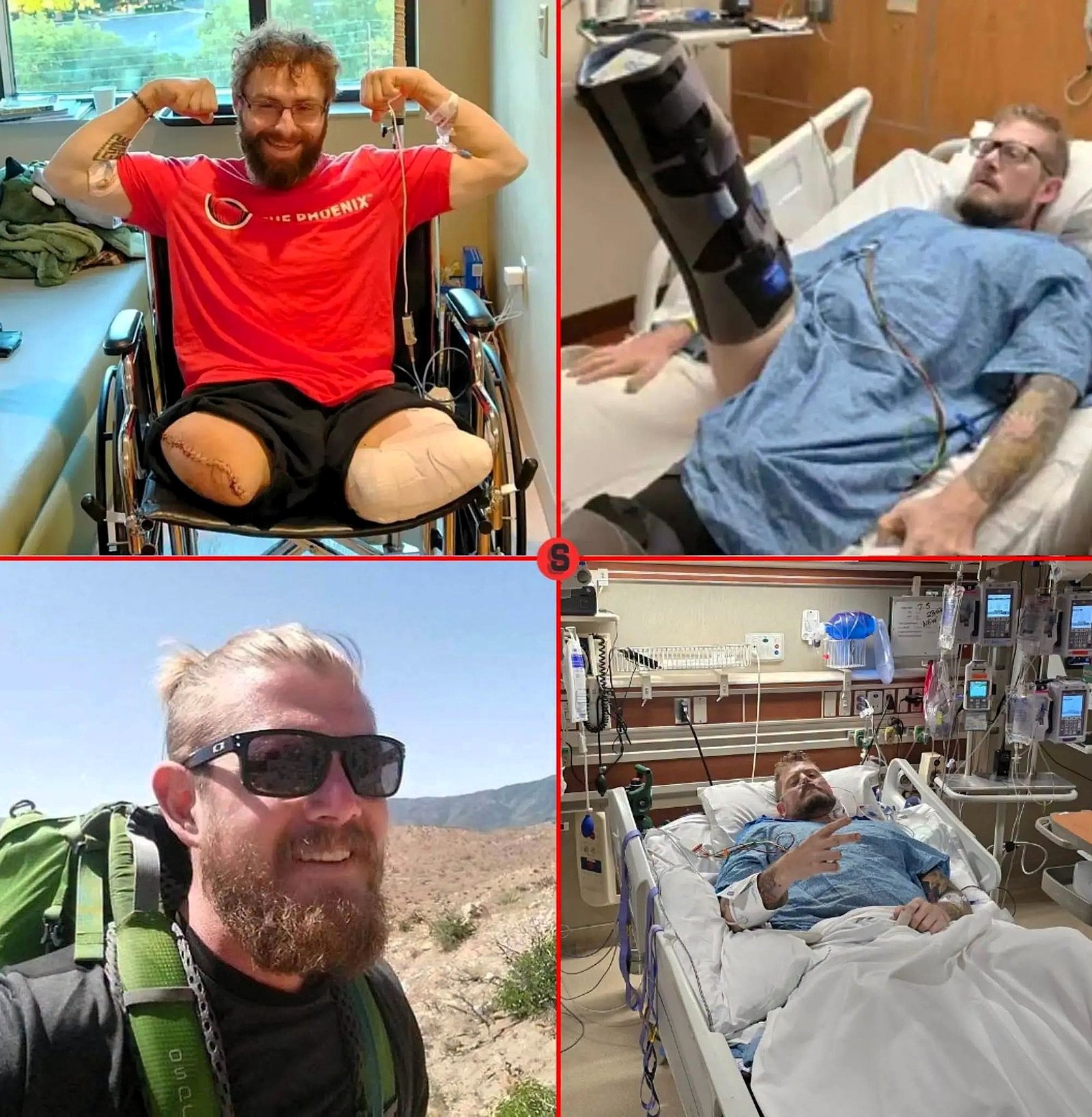
For Max Armstrong, the mountains have always represented freedom, adventure, and the feeling of being truly alive. At 40, he never imagined that a seemingly minor burn while camping with friends would change his life forever. Yet after losing both legs below the knees, Max is determined to return to the mountains, walk with prosthetic legs, and rediscover the adventures he once loved.
His story is a powerful reminder that life can change in an instant, but even the most devastating setbacks do not necessarily have to end our dreams.
Max was no stranger to physical challenges. He had spent years exploring the outdoors, pushing his limits, and embracing the unpredictable nature of adventure. In 2016, he completed an extraordinary journey on foot, walking for 151 days from Mexico to Canada. That experience taught him patience, endurance, and the importance of continuing forward even when the journey became difficult.
Over the years, minor cuts, bruises, and other outdoor injuries had become familiar inconveniences. He understood that spending time in the wilderness sometimes meant dealing with unexpected discomfort. But nothing could have prepared him for what happened in December 2024.
The Campfire Accident That Changed Everything
On December 2, 2024, Max was camping with friends when he accidentally burned his big toe while moving a pan from the campfire to a table.
At first, the injury seemed insignificant. It was the kind of accident many people might expect to heal with basic first aid. Max cleaned the burn and applied antibiotic treatment, believing that he could manage the injury himself.
However, the days that followed brought worrying changes.
Two days after the accident, his left leg had become noticeably swollen, and the burn was not improving. What initially appeared to be a small, manageable injury was becoming something far more serious.
His condition began to deteriorate in ways that were difficult to explain. He reportedly started talking strangely while asleep, and his toes began turning purple. Recognizing that something was seriously wrong, Max decided to seek emergency medical attention.
During the journey to the hospital, he learned that his symptoms could indicate sepsis, a life-threatening condition that occurs when the body’s response to an infection causes damage to its own tissues and organs.
What followed was a medical emergency that would test his body and change the course of his life.
A Fight for Survival
Max’s condition worsened rapidly after he reached medical care. He developed toxic shock syndrome and became critically ill, eventually requiring doctors to place him in an induced coma.
For several days, his life hung in the balance.
The danger was no longer limited to the original burn. The infection-related complications had triggered a devastating chain of events, and his body was struggling to survive.
For Max and those who cared about him, the situation was frightening and uncertain. A man who had once spent months walking across vast stretches of wilderness was suddenly fighting for his life in a hospital bed.
When Max woke from the coma on December 13, he faced a reality that was difficult to comprehend.
His feet had turned black, and he was experiencing intense pain. The tissue damage had become so severe that doctors were concerned about extensive necrosis, the death of body tissue. The possibility of amputation was becoming increasingly difficult to avoid.
For someone whose life had revolved around movement and outdoor exploration, the prospect of losing his legs was devastating.
Initially, Max resisted the idea of amputation. It is understandable that he would struggle to accept such a life-changing decision, especially when the original injury had seemed so small.
But as doctors assessed the damage, it became clear that his legs could not be saved.
He was facing a choice no one would ever want to make: accept the loss of his legs or risk allowing the damage to progress further.
The Decision That Saved His Future
On December 23, 2024, surgeons amputated both of Max’s legs below the knees to prevent the severe tissue damage from progressing further.
The operation marked a painful turning point in his life.
In a matter of weeks, Max had gone from camping with friends to surviving a critical illness and undergoing a double amputation. The transformation was almost impossible to imagine.
Yet the surgery also represented a chance to move forward.
Although accepting the loss of his legs was undoubtedly difficult, Max began approaching recovery as a new chapter rather than the end of his story.
His life would require adjustments he had never anticipated. Everyday activities would involve new challenges, and returning to the wilderness would demand extensive preparation, rehabilitation, and specialized equipment.
But Max had already demonstrated that he possessed remarkable determination.
Walking from Mexico to Canada had required months of persistence. Now, he faced another long journey, one that would involve learning new skills, rebuilding his strength, and discovering what was possible with prosthetic legs.
This time, the challenge was not simply about reaching a destination. It was about reclaiming the independence and experiences that had always mattered to him.
His Dream of Returning to the Mountains
Today, Max is focused on rebuilding his life and working toward a goal that might seem impossible to some: returning to the mountains he loves.
He hopes to walk again with prosthetic legs and eventually reach summits at elevations of approximately 4,267 meters, or 14,000 feet.
For experienced mountaineers, reaching such heights can be demanding even without a disability. The terrain, steep inclines, unpredictable weather, and physical strain can make high-altitude hiking a formidable undertaking.
For Max, the journey will involve additional obstacles. He will need to adapt to his prostheses, develop new techniques for navigating uneven ground, and carefully prepare his body for the demands of mountain travel.
Progress may be slow, and some days may be harder than others. Nevertheless, he remains determined to pursue the dream that has given him a reason to look toward the future.
His ambition is not simply about proving that he can accomplish something extraordinary. It is also about preserving a meaningful part of his identity.
Max has always been someone who finds joy in exploring the natural world. The mountains offer him more than beautiful scenery. They represent independence, possibility, and the freedom to keep moving forward.
Losing both legs has changed how he will experience those places, but it has not erased his connection to them.
Rebuilding a Life, One Step at a Time
Returning to the outdoors requires more than determination alone. Prosthetic equipment, rehabilitation, and practical adjustments will all play important roles in Max’s recovery.
A fundraising campaign has been launched to help cover the cost of prosthetic legs and make necessary modifications to his home and vehicle.
These resources could help him regain greater independence and make daily activities more accessible while supporting his longer-term goal of returning to outdoor adventures.
For many people recovering from a major medical crisis, the financial burden can become another difficult obstacle. Specialized prostheses and accessibility modifications can be expensive, making community support an important part of the journey.
For Max, the assistance could help turn a distant dream into a practical plan.
Every improvement in mobility, every rehabilitation milestone, and every opportunity to regain confidence can bring him closer to the life he hopes to rebuild.
His recovery will not happen overnight. There will likely be frustrations, physical challenges, and moments when progress feels slower than he would like. But his determination to keep trying remains central to his plans.
The Simple Dream That Means Everything
Although Max hopes to climb mountains again, one of his most meaningful goals is much simpler.
He wants to take long walks with his dogs.
It is an ordinary pleasure that many people rarely think twice about. Walking a familiar trail, enjoying fresh air, and spending time outdoors with a beloved animal can seem like small parts of everyday life.
But after everything Max has endured, those moments carry a different meaning.
They represent freedom, companionship, and the possibility of returning to routines that once felt natural.
His story also highlights how quickly a medical emergency can develop from an injury that initially appears harmless. Sepsis can become life-threatening, and warning signs such as rapidly worsening symptoms, unusual skin discoloration, swelling, or confusion require urgent medical attention. A minor-looking wound should never be assumed to be safe when the person’s condition is deteriorating.
Max’s experience is a reminder of the importance of taking unexpected symptoms seriously, particularly when an injury is not healing as expected.
Yet his story is about more than the frightening circumstances that led to his amputations.
It is about what comes afterward.
At 40, Max is rebuilding his future after surviving a critical illness that took both his legs. He is learning to navigate a different world, preparing for life with prosthetics, and setting goals that demand courage, patience, and determination.
The mountains he dreams of returning to will not become less challenging. His path toward them may look different from the one he imagined before December 2024. But he continues to believe that another adventure is possible.
Sometimes, resilience is measured by extraordinary accomplishments. Other times, it is found in the willingness to begin again after life has taken an unexpected turn.
For Max Armstrong, both are part of the same journey.
He once walked for 151 days from Mexico to Canada. Now, he is preparing for a different kind of journey, one step at a time, with the hope of standing among the mountains again and walking beside his dogs.
His legs may be gone, but his dreams are still alive.