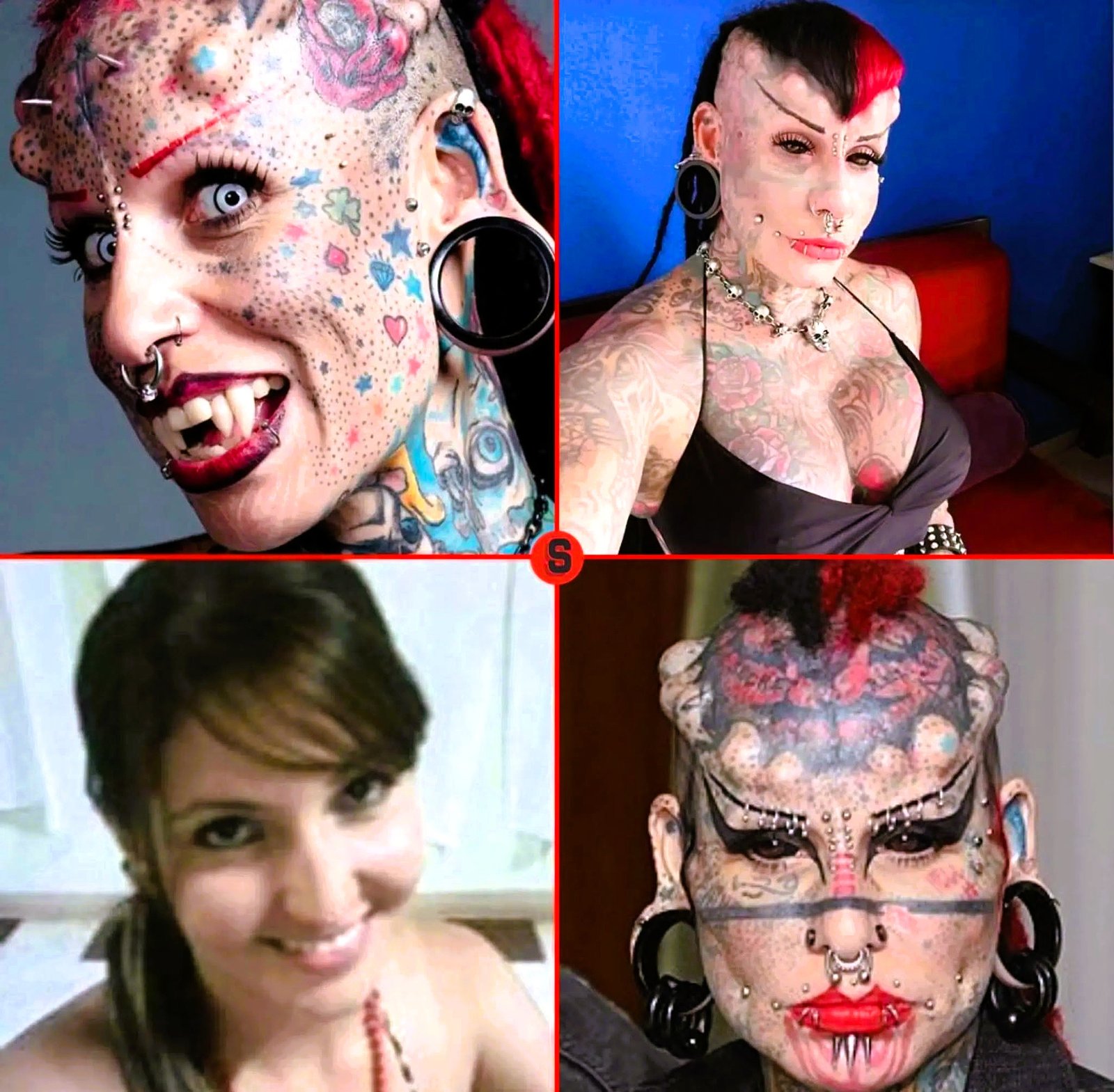
At first glance, María José Cristerna’s extraordinary appearance may capture everyone’s attention. With tattoos covering nearly 96% of her body, modified teeth, multiple piercings, and implants beneath her skin, the Mexican woman has become internationally known as “La Mujer Vampiro,” or “The Vampire Woman.”
But behind her striking appearance lies a deeply personal story of survival, transformation, and the determination to reclaim control over her own life.
Born in Guadalajara, Mexico, María José Cristerna became a well-known figure in the world of body modification. Her appearance challenges conventional ideas about beauty and self-expression, making her recognizable far beyond her home country. Yet her journey is about much more than tattoos and physical changes. It also reflects a woman’s effort to rebuild her identity after experiencing domestic violence.
For Cristerna, transforming her body became a way to express her individuality and regain a sense of personal strength.
Her body art includes extensive tattoos, facial piercings, sharpened teeth designed to resemble fangs, and subdermal implants that alter the contours of her head. Each modification contributes to the distinctive appearance that has made her a subject of international curiosity.
Although many people may struggle to understand her choices, Cristerna has continued to embrace her identity without allowing public opinion to determine who she should be.
Her transformation did not happen overnight. It developed over time, as she explored different forms of body modification and created an appearance that reflected her own sense of self.
Reports have also linked Cristerna to a Guinness World Records title related to extensive body modification. However, record categories and holders can change, so claims about her current record status should be treated carefully.
Despite the attention surrounding her appearance, Cristerna has a professional background that extends beyond the body-art community. She studied law and has also been described as a businesswoman, demonstrating that her interests and abilities cannot be understood simply by looking at her tattoos.
Perhaps the most significant part of her story is the connection between her transformation and her experiences with domestic violence.
Cristerna has spoken publicly about surviving abuse, describing a difficult chapter of her life that helped shape her journey toward independence. For her, changing her appearance became one way of expressing the strength she was working to recover.
Of course, body modification means different things to different people. For some, it is an artistic passion. For others, it is a form of identity, cultural expression, or personal empowerment. In Cristerna’s case, her physical transformation has become closely associated with her story of reclaiming herself.
Her experience also highlights an important truth about survivors of abuse: healing does not look the same for everyone.
Some people find strength through therapy, education, supportive relationships, or rebuilding their careers. Others discover meaning through creative expression and making choices about their own bodies. There is no single appearance, lifestyle, or path that defines recovery.
Cristerna’s story is particularly striking because her appearance often attracts attention before people learn anything about her life. Yet the person behind the tattoos has professional knowledge, personal experiences, and ambitions that cannot be reduced to a nickname.
She has used her public visibility to participate in discussions about personal freedom, self-expression, and the challenges faced by women who experience abuse. Her story can also help encourage conversations about recognizing domestic violence and supporting people who are trying to rebuild their lives.
Domestic abuse can leave survivors struggling with fear, isolation, and a loss of control. Leaving an abusive situation and rebuilding a life afterward can require enormous courage, practical support, and time. Survivors deserve to be heard and treated with dignity, regardless of how they look or how they choose to express themselves.
Cristerna’s appearance may not fit traditional beauty standards, but that does not diminish her worth, intelligence, or professional capabilities.
People do not need to understand or personally embrace every form of body modification to recognize someone’s right to make choices about their own appearance. Respect begins with understanding that outward differences do not tell the whole story of a person’s character.
The woman widely known as La Mujer Vampiro has become a reminder of how quickly society can form judgments based on appearances. Some people see her tattoos and implants and stop there. Others become curious about the experiences, decisions, and determination behind her transformation.
Looking beyond the surface reveals a more complicated and human story.
María José Cristerna’s journey illustrates that personal identity cannot be measured by conventional standards of beauty. Her body is a canvas for her self-expression, but her experiences, knowledge, and actions are equally important parts of who she is.
Ultimately, her story invites us to reconsider how we treat people who look different from us. A person’s appearance may be the first thing we notice, but it should never be the only thing we are willing to see.
Because no tattoo, piercing, scar, or physical modification can tell us everything about a person’s heart, abilities, or life story.
And sometimes, the most meaningful transformation is not simply the one we can see on the outside, but the journey someone takes to reclaim their voice, their independence, and their right to live on their own terms.