But as Shirvani grew older, that innocent dream became something she was almost too embarrassed to say out loud.
She wanted to become a model.
Yet she had never seen a woman with skin like hers represented on a fashion runway. The images she encountered in the beauty industry rarely reflected her own appearance or the challenges she faced every day. Without someone who looked like her to look up to, it was difficult to imagine that there might be a place for her in that world.
What Shirvani could not have known was that her dream would one day become part of a much bigger mission: helping other women and girls understand that their differences do not make them less deserving of confidence, opportunity, or visibility. ❤️🦋
A childhood marked by extraordinary challenges
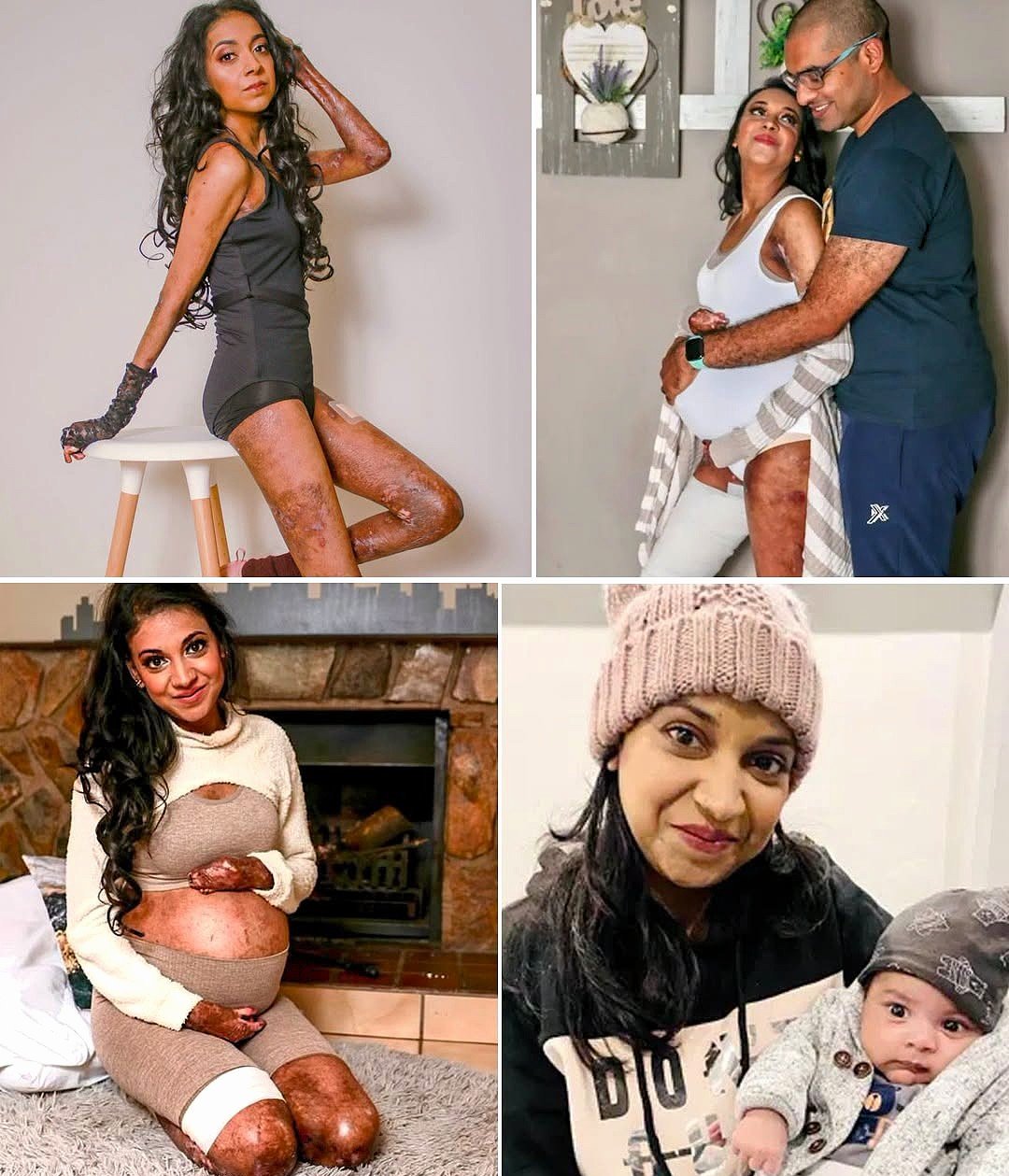
Shirvani was born in South Africa with dystrophic epidermolysis bullosa, a rare inherited condition that makes the skin extremely fragile. People living with this condition can develop painful blisters and wounds from friction or even minor physical contact.
For Shirvani, the difficulties began shortly after birth.
Even the hospital identification tags irritated her delicate skin around her wrists and ankles. Something as ordinary as wearing a small band could cause discomfort and damage.
Her parents faced an unimaginable uncertainty as doctors reportedly warned them that she might survive for only six months.
For any family, hearing such a prediction about a newborn child would be devastating. Yet Shirvani’s life continued beyond those frightening early expectations, and she grew into a woman whose story would eventually reach far beyond her own community.
Her condition never simply disappeared as she got older. It remained part of her everyday reality, influencing how she moved, cared for herself, and approached even the most routine activities.
Bathing and changing dressings can take around four hours. Friction can injure her skin, and she has described experiencing blistering in her throat—even swallowing water can be painful.
The challenges are not always visible to other people. An activity that takes someone else a few seconds may require Shirvani to think carefully about pain, safety, and the possibility of another wound.
Still, her life has never been defined by medical challenges alone.
She has dreams, relationships, responsibilities, and a family of her own.
Becoming a mother while living with fragile skin
One of the most meaningful chapters of Shirvani’s life has been motherhood. Despite the difficulties associated with her condition, she became a mother of three children. 🦋
Motherhood can transform a person’s life, filling ordinary days with affection, responsibility, laughter, and countless small tasks. But for someone whose skin is easily damaged, some of those seemingly simple moments can require additional care.
In an interview, Shirvani spoke about the practical barriers she experiences while caring for her children. Holding a baby’s bottle or catching a ball can be difficult when the skin on her hands is vulnerable to injury.
These are everyday activities many people perform without a second thought. For Shirvani, they can require adaptations and careful consideration.
She has also spoken about wanting products designed with hands like hers in mind—a reminder that accessibility is not only about ramps, buildings, or public spaces. It is also about creating ordinary products that accommodate people whose bodies and needs differ from what designers traditionally expect.
Her experiences raise an important question: Why should people with disabilities have to work around products that were never designed with them in mind?
Inclusive design can make daily life easier, preserve independence, and allow more people to participate in the activities that matter to them.
Shirvani’s perspective brings a personal dimension to that conversation. She is not simply asking others to understand her condition. She is highlighting the practical changes that could help people like her live more comfortably.
And through all of this, she has continued to embrace her role as a mother while holding on to a dream she once struggled to share.
The childhood dream that refused to disappear
Years passed, but the little girl who played beauty pageants with her cousins never completely disappeared.
Her desire to become a model remained somewhere inside her, waiting for an opportunity to emerge.
Then Shirvani discovered Mrs Globe South Africa.
The competition’s inclusive entry criteria encouraged her to consider applying. For someone who had rarely seen women with similar skin conditions represented in the beauty world, this offered a chance to imagine a different future.
She could do more than dream about standing on a stage. She could step forward and participate.
Her motivation was about more than personal achievement. Shirvani wanted other women and girls with disabilities to see someone like themselves taking part in a space where they might never have expected to belong.
Representation matters because the images people see around them can influence what they believe is possible. When a young girl never sees anyone who shares her visible differences represented in fashion, entertainment, or beauty, she may begin to assume those opportunities are meant for everyone except her.
Seeing someone challenge that assumption can open a door in the imagination.
Suddenly, the question is no longer, “Could someone like me ever do this?”
It becomes, “Why shouldn’t I have the chance?”
For Shirvani, stepping into the world of pageantry offered an opportunity to reclaim a childhood ambition while bringing greater attention to the experiences of people living with disabilities and rare conditions.
The dream that once felt too embarrassing to mention had become a platform for something meaningful.
Beauty beyond conventional expectations
The fashion and beauty industries have traditionally promoted narrow ideas about what a model should look like. Although representation has gradually broadened, many people with visible disabilities and rare medical conditions continue to see few examples of themselves in mainstream campaigns and on runways.
Shirvani’s advocacy challenges that limited picture.
Her story asks people to look beyond the surface and recognize that beauty does not require a particular skin texture, physical ability, or medical history.
She does not need to hide her condition to have ambitions. Nor should she have to wait for the world to become comfortable with her appearance before pursuing them.
By sharing her experiences, she helps make visible a reality that many people rarely encounter. She also creates space for conversations about accessibility, inclusion, and the importance of listening to people who understand these challenges firsthand.
Her message is especially meaningful for young people who are growing up feeling different.
A child who has never seen someone like herself represented may need more than encouragement to believe in her future. She may need evidence that people with similar experiences can pursue their interests, participate in public life, and be recognized for their talents and individuality.
Sometimes, representation begins with one person deciding to be seen.
The challenges did not disappear—but neither did her ambitions
It would be easy to tell Shirvani’s story as though entering the world of pageantry somehow erased the difficulties she faces. But her reality is more complicated, and that is precisely what makes her journey meaningful.
Her skin still needs careful attention. Wound care still takes hours. Ordinary tasks may still bring discomfort or require adjustments.
Pursuing a dream does not mean a person suddenly stops experiencing pain, disability, or practical barriers.
Courage is not the absence of those challenges. It can mean continuing to make room for hope and ambition while acknowledging them honestly.
Shirvani’s story also reminds us that inclusion should not depend entirely on individual determination. People with disabilities deserve accessible opportunities, thoughtfully designed products, and environments where they can participate without having to fight for every accommodation.
Her voice contributes to that wider conversation, encouraging the fashion and beauty industries to consider who is missing from their images and why.
The little girl who once imagined herself in a beauty pageant with her cousins has grown into a mother of three and an advocate for broader representation.
She is helping others see that a dream does not become less worthy simply because the path toward it looks different.
Perhaps the most important part of her journey is not the stage itself. It is the possibility that another young girl, watching from somewhere in the world, might see Shirvani and feel less alone.
That girl might have a visible disability, a rare condition, scars, or a body that rarely appears in the pictures she sees around her.
She might be carrying a dream she is afraid to speak aloud.
And perhaps seeing Shirvani will help her find the courage to say it.
Because sometimes, the first step toward believing in yourself is discovering that someone like you belongs in the picture, too.
How many dreams become easier to voice when we finally see someone like ourselves represented? 💗📸
Read Next
- Proud Mama Couldn’t Wait to Show Her Family Her Newborn Puppy
- when a beloved pet becomes a memory, an entire family grieves
- A great white shark nearly took Rodney Fox’s life But instead of spending the rest of his life fearing or hating the animal that nearly killed him, Rodney chose a very different path.