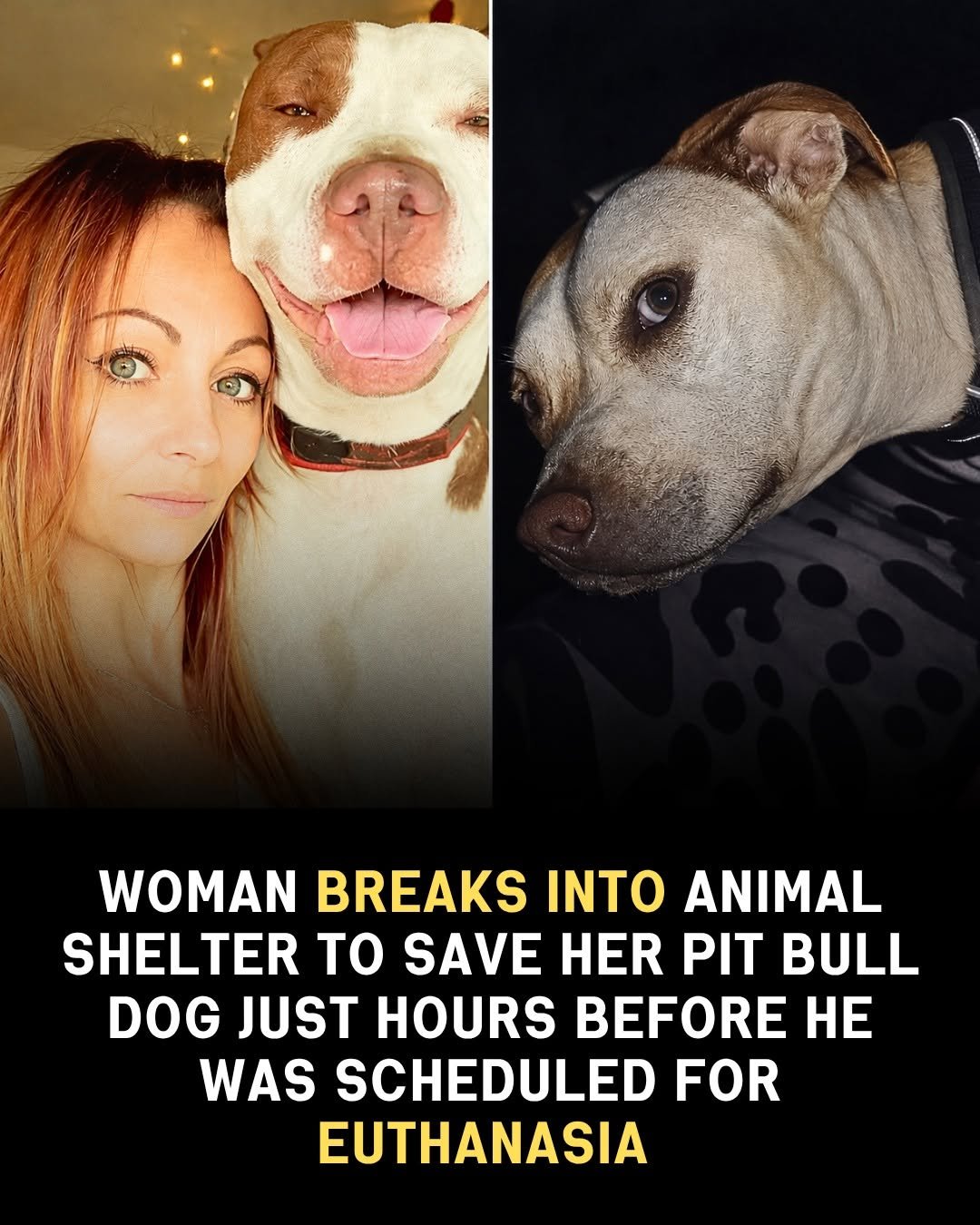

She had raised him from the time he was barely more than a tiny puppy.
He wasn’t simply her dog.
He was the one who stayed.
During the hardest chapters of her life, when she had little stability and nowhere that truly felt like home, he was there beside her. He slept near her when she had nowhere else to go. He stayed close when she cried. He offered the kind of quiet companionship that asks for nothing in return.
He never judged her.
He never walked away.
And, in her mind, she could never walk away from him either.
Then everything changed.
After a reported bite incident and a fight involving another dog, the Pit Bull was taken to an animal shelter and reportedly labeled dangerous.
According to the story, euthanasia was scheduled.
For his owner, the thought was unbearable.
She reportedly begged for more time. She wanted another opportunity for him to be evaluated. She hoped someone might consider training, rehabilitation or another solution.
But she believed the answer remained no.
As the hours passed, her fear grew.
She imagined him sitting alone inside a kennel, surrounded by unfamiliar sounds and smells, with no understanding of why the person he trusted most wasn’t coming through the door.
And that night, desperation took over.
According to the account, she returned to the shelter and broke through a window.
She climbed inside and began moving through the rows of kennels, searching for the dog she had loved for years.
She whispered his name.
Then she found him.
He recognized her.
His tail began to thump.
His eyes appeared to brighten.
And he pressed his face toward the bars as if he couldn’t believe she had actually come back.
For a moment, the shelter, the accusations and the looming deadline seemed to disappear.
There was only the two of them.
She reportedly opened his kennel, pulled him into her arms and escaped with him into the night.
For a brief moment, they were together again.
Back at home, she sat on the floor with him, holding him close and crying into his fur.
Perhaps she knew she had broken the law.
Perhaps she knew there would be consequences.
But in that moment, she felt as though she had rescued a member of her family.
She had spent years believing that he would never abandon her.
And she wasn’t willing to abandon him.
The escape, however, did not remain a secret.
The shelter reported the break-in, and law enforcement began looking for her.
Within days, she was reportedly located and arrested.
The story quickly divided people.
Some viewed the break-in as reckless and unacceptable. Others focused on the bond between a woman and the dog who had remained beside her through some of the most difficult moments of her life.
And beneath the argument was a much bigger question:
What should happen to a shelter animal after it is labeled dangerous?
A bite can have serious consequences. A dog involved in an attack may pose genuine safety concerns, and shelters have a responsibility to protect people and other animals.
But advocates for rehabilitation often argue that behavior should be carefully evaluated rather than reduced to a single label. Factors such as the circumstances surrounding an incident, the dog’s history, medical condition, environment and response to professional assessment can all matter when determining what happens next.
Every case is different.
And that is what makes this story so emotionally complicated.
The woman reportedly broke into the shelter.
That action was illegal, and the consequences were real.
But emotionally, she believed she was doing something else entirely.
She believed she was saving the animal who had once helped save her.
The dog didn’t know about shelter paperwork.
He didn’t understand a dangerous-dog designation.
He only knew the voice calling his name.
He only knew the person standing outside his kennel.
And when she appeared, he responded the way dogs often do—with recognition, excitement and the desperate desire to be close to the person they trust.
Whatever someone thinks about her decision that night, the story forces us to confront something uncomfortable about the bond between people and animals.
For some people, a dog is a pet.
For others, a dog is family.
And when that family member is frightened, facing an uncertain future and unable to speak for himself, the human who loves him may feel an almost overwhelming responsibility to fight for him.
Sometimes that fight is appropriate and lawful.
Sometimes, as this story illustrates, desperation can lead someone across a line they should not cross.
But perhaps the most important lesson is that difficult cases deserve careful evaluation, responsible ownership and humane solutions whenever safely possible.
Because behind every kennel door is an animal whose life may depend on the decisions people make.
And behind every rescued animal may be a person who believes that bond is worth fighting for.
She broke into a shelter.
She was arrested.
But before any of that, she was a woman who looked at the dog who had stood beside her through the darkest moments of her life and simply couldn’t accept leaving him behind.