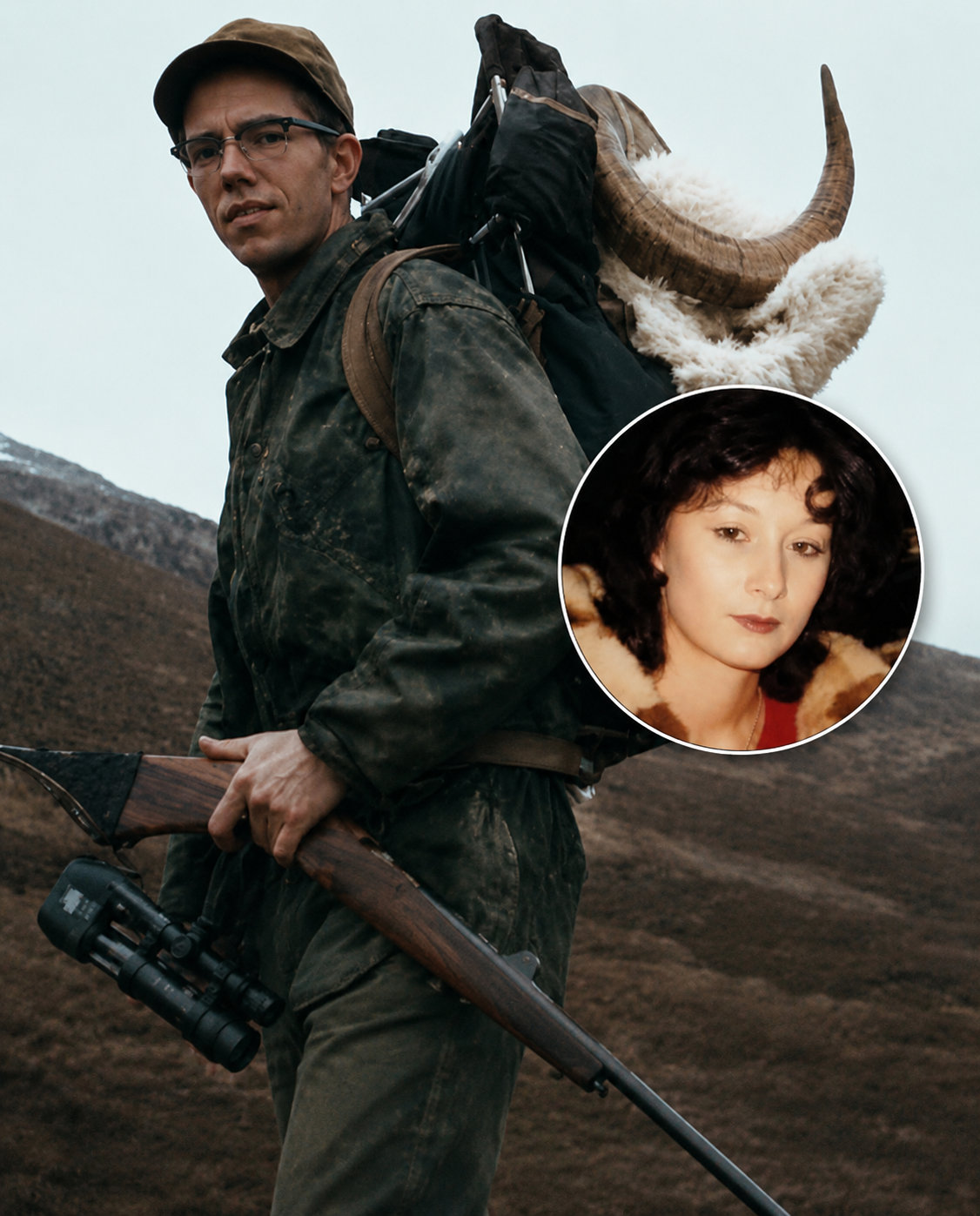
For years, Robert Hansen appeared to be an ordinary man living a quiet life in Anchorage, Alaska. He owned a successful bakery, was married, and raised a family. To neighbors and customers, he did not appear to be someone who would become one of Alaska’s most notorious serial killers.
But behind the image of a hardworking businessman was a terrifying secret.
Investigators would eventually discover that Hansen had spent years targeting women, abducting them, and taking some of them into the remote Alaskan wilderness. An experienced hunter and pilot, he used his knowledge of Alaska’s isolated landscape to commit crimes that remained hidden for years.
His case became one of the most disturbing criminal investigations in Alaska’s history.
A Seemingly Ordinary Life
Robert Hansen lived in Anchorage and owned a bakery that helped him maintain the appearance of a normal, respectable life. He was a husband and father, and few people around him could have imagined the crimes investigators would later connect to him.
However, Hansen had a darker history that stretched back years. He had previously been convicted of crimes involving arson and theft, but those offenses did not prepare authorities for what would later be uncovered.
As women began disappearing or turning up dead in Alaska, investigators struggled to find connections between the cases. Some of the victims were involved in prostitution or lived unstable lives, making it more difficult for authorities to immediately recognize a pattern.
But a pattern was there.
Women were disappearing, and some of their bodies were eventually found in remote areas.
For years, the person responsible remained hidden.
The Alaskan Wilderness Became Part of the Crime
Alaska’s enormous and isolated landscape played a major role in Hansen’s crimes.
Much of the state consists of rugged wilderness, mountains, forests, and areas that can only be reached by aircraft or difficult travel. Hansen was familiar with this environment. He was an experienced hunter and pilot who owned an aircraft and understood how to travel into remote areas far away from roads and populated communities.
According to investigators and Hansen’s later confession, he used these skills to transport victims away from Anchorage.
The isolation of the wilderness made escape extremely difficult.
Authorities said that in several cases, women were taken into remote areas and released. Hansen then hunted them.
The horrifying allegations earned him the nickname “The Butcher Baker.”
For years, the victims had little connection to one another in the eyes of investigators. Some disappeared without immediate answers. Others were later discovered in isolated locations.
But one teenager would eventually survive an encounter with Hansen and provide investigators with information that changed everything.
Cindy Paulson’s Escape
In June 1983, 17-year-old Cindy Paulson escaped from Hansen.
Her escape would become a turning point in the investigation.
Paulson told authorities that she had been abducted and restrained. She described the man responsible and explained that he had planned to transport her somewhere by aircraft.
However, because Hansen appeared to be an ordinary businessman with a stable family life, initial efforts to connect him to the wider investigation were difficult.
Paulson’s account nevertheless provided investigators with critical information.
Her description of Hansen, his vehicle, and the circumstances surrounding her abduction eventually helped authorities focus their attention on him.
The case also gained the attention of investigators who believed that Alaska’s missing and murdered women might be connected to a single offender.
As police began examining Hansen more closely, disturbing pieces of evidence started to emerge.
The Investigation Closes In
Authorities eventually obtained a search warrant connected to Hansen and his property.
What they discovered strengthened suspicions that he had been hiding a terrible secret.
Investigators found jewelry and other personal belongings connected to victims. They also discovered evidence that helped link Hansen to locations where women had disappeared or where bodies had been found.
One of the most significant discoveries was a map containing markings connected to remote areas of Alaska.
The map became an important part of the investigation.
Authorities believed the markings corresponded with locations associated with victims and burial sites. Hansen’s familiarity with Alaska’s wilderness had allowed him to use the landscape to conceal evidence for years.
But as investigators gathered more information, the evidence against him became increasingly difficult to deny.
The quiet bakery owner was now at the center of one of the largest serial murder investigations in Alaska.
Hansen’s Confession
Facing the growing evidence, Robert Hansen eventually confessed to investigators.
He admitted responsibility for numerous attacks and killings.
Hansen ultimately confessed to killing 17 women, although investigators believed the total number of victims could potentially be higher.
His crimes stretched across several years.
The confession helped investigators locate additional evidence and understand how Hansen had operated. He described selecting victims, abducting them, and taking some of them to isolated locations.
His knowledge of aviation and hunting had given him abilities that most criminals did not possess. He could transport victims far away from the city and into areas where discovery was unlikely.
For families of the victims, Hansen’s arrest finally provided answers to disappearances that had remained mysteries for years.
However, the investigation also revealed the horrifying reality that the killer had been living openly in the community.
Customers had visited his bakery.
Neighbors had seen him as a family man.
Yet investigators said he had been living a double life.
The Trial and Sentence
Hansen eventually entered guilty pleas related to his crimes.
He received a sentence of life in prison, along with hundreds of additional years.
The sentence ensured that he would spend the rest of his life behind bars.
The case shocked Alaska and attracted national attention. The idea that a seemingly ordinary businessman had allegedly used his skills as a pilot and hunter to terrorize women in the wilderness was almost impossible for many people to comprehend.
The story later inspired books, documentaries, and films.
One of the most haunting elements of the case was the contrast between Hansen’s public image and his private actions.
He did not fit the image that many people expected when they imagined a serial killer.
He was not living as a fugitive.
He was not hiding in an abandoned building.
Instead, he operated a business, had a family, and interacted with people in the community.
That contrast became one of the reasons the case remains so disturbing decades later.
A Dark Legacy
Robert Hansen died in custody in 2014.
But the story of his crimes continues to be remembered as one of the darkest chapters in Alaska’s criminal history.
His case also raised important questions about how victims were treated during investigations. Several of Hansen’s victims came from vulnerable backgrounds, and some of their disappearances did not initially receive the attention they might have received under different circumstances.
The case demonstrated how dangerous assumptions about victims can delay investigations.
Cindy Paulson’s survival was especially important. Her determination to tell authorities what had happened provided investigators with information that helped expose Hansen.
Without her escape, it is impossible to know how long his crimes might have continued.
Today, Robert Hansen remains infamous as the “Butcher Baker,” a man whose ordinary appearance concealed an extraordinary level of violence.
His story serves as a chilling reminder that dangerous individuals do not always appear suspicious. Sometimes, they live ordinary lives in ordinary communities, surrounded by people who have no idea what is happening behind closed doors.
For years, Robert Hansen successfully maintained that illusion.
But eventually, one victim escaped.
And that escape led investigators down a path that uncovered the horrifying truth hidden behind the doors of a quiet Anchorage bakery.