When Supatra Sasuphan was 10 years old, millions of people around the world learned her name for a reason she had never chosen.
People noticed her appearance before they noticed her personality.
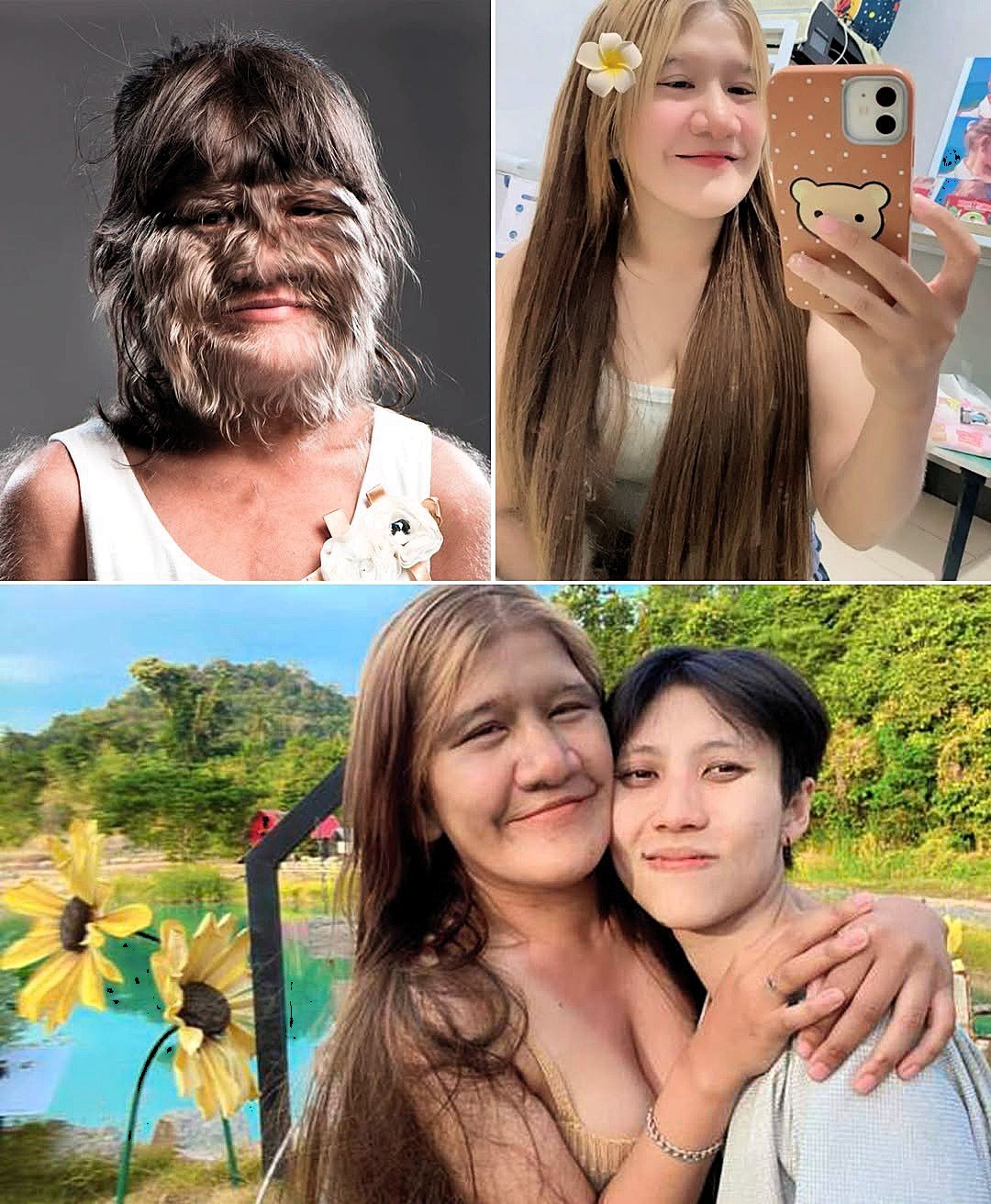
They noticed the thick hair covering much of her face and body.
They noticed something unusual.
And, unfortunately, some people decided that being different gave them permission to be cruel.
But Supatra—better known as Nat—had already learned something far more important than what strangers thought of her.
She had learned that she was more than the way she looked.
Nat was born in Bangkok, Thailand, with an extremely rare condition called hypertrichosis, specifically a form known as Ambras syndrome.
The condition caused unusually thick hair to grow across areas of her body, including her face, ears, arms, legs and back.
For a young child growing up surrounded by other children, being visibly different was not always easy.
Some children gave her hurtful nicknames.
They called her “wolf girl.”
Others used even crueler words to describe her face.
Those comments could have broken a child’s confidence.
But Nat refused to let other people’s words become the definition of who she was.
She went to school.
She made friends.
She enjoyed dancing.
She loved swimming.
She laughed and played like other children.
And when people asked her about her appearance, she did not describe herself as someone who was less than everyone else.
She simply saw herself as a girl.
“I don’t feel any different to anyone else,” she said as a child.
That simple attitude became one of the most remarkable parts of her story.
While the world focused on her unusual condition, Nat focused on living.
Then, in 2010, her life changed in another unexpected way.
At just 10 years old, Nat traveled outside Thailand for the first time and appeared on the Italian television program Lo Show dei Record in Rome.
There, Guinness World Records judges examined the unusual hair growth across different areas of her body.
Her condition was assessed using the Ferriman-Gallwey method, a system used to evaluate hair growth.
The examination led to Nat receiving a Guinness World Records title recognizing her extraordinary level of body hair.
Suddenly, the girl who had once been teased by children at school was being recognized around the world.
Her story appeared in international media.
Photographs of her traveled far beyond Thailand.
Millions of strangers knew about the girl with unusually thick facial and body hair.
But Nat’s response was not embarrassment.
It was pride.
Instead of allowing the record to become another reminder that she was different, she chose to see it as something that made her unique.
“Being hairy makes me special,” she said.
Those words revealed something powerful about the way she viewed herself.
Nat knew she could not control the condition she had been born with.
But she could decide how much power other people’s opinions would have over her.
Her family had tried to help her manage the condition.
When she was younger, they reportedly pursued laser treatments in the hope that the hair could be reduced permanently.
But the treatments did not provide the lasting result they hoped for.
The hair continued to grow.
Eventually, Nat found another way of managing her appearance.
As she grew older, she began shaving her face.
By the time she was 17, photographs of Nat with her face shaved began appearing online.
The difference was striking.
The little girl the world had once seen with a face covered in hair looked dramatically different.
But the change was not a transformation of who she was.
It was simply another choice she made for herself.
She had grown older.
Her preferences had changed.
And she had found a way to manage her condition that suited her.
Then another chapter of her life began.
Nat shared photographs with a man she described as her first love and the love of her life.
For someone who had spent childhood being judged because of her appearance, finding someone who saw her as a person rather than a curiosity was undoubtedly meaningful.
But, like many relationships, that chapter eventually came to an end.
And Nat continued moving forward.
Her life was never meant to remain frozen in the moment when she became famous.
She was growing up.
She was changing.
She was discovering who she wanted to be.
More recent photographs shared in 2024 and 2025 showed Nat smiling alongside a new partner and enjoying everyday moments.
The images were a reminder that there is a whole life beyond the headlines.
The world once knew her as a little girl with an extraordinary medical condition.
People once searched for photographs of her because she looked different.
But adulthood gave her something childhood fame could never provide:
the opportunity to simply be herself.
She could choose when to shave.
She could choose how she wanted to present herself.
She could choose whom to love.
She could choose which photographs to share.
And she could choose how much attention she wanted to give to the opinions of strangers.
That may be the most meaningful part of Nat’s journey.
Her story is not simply about a rare condition.
It is about growing up in a world that constantly tells people how they are supposed to look.
It is about discovering that beauty is not something other people get to define for you.
And perhaps most importantly, it is about realizing that confidence does not always mean never feeling hurt.
Sometimes confidence means being hurt by cruel words and still deciding they do not get the final say.
As a child, Nat could not stop people from staring.
She could not prevent cruel nicknames.
She could not make her condition disappear simply because someone wished it would.
But she could decide what those things meant.
And she did.
The little girl who once stood before the world as a Guinness record holder eventually became an adult with an ordinary desire: to live her life.
Her story moved from television studios and newspaper headlines to relationships, photographs, personal choices and everyday moments.
The world may have first noticed Nat because of the hair covering her face.
But that was never the whole story.
Behind the unusual appearance was a child who wanted friends.
A girl who loved dancing and swimming.
A young woman who experienced love and heartbreak.
And a person who continued learning how to define herself on her own terms.
Perhaps that is why her childhood words still matter.
“Being hairy makes me special.”
For many people, being visibly different can feel like a burden.
For Nat, it became part of the story she carried with her.
She did not choose the condition.
She did not choose the attention.
She did not choose the hurtful names people gave her.
But she chose not to let those things decide her worth.
And that choice may have been more powerful than any record ever could be.
Because appearances change.
Hair can be shaved.
Photographs can show a completely different face.
Relationships can begin and end.
The child the world remembers can become someone almost unrecognizable years later.
But the ability to look at yourself and believe that you deserve to be loved, respected and accepted—that is something much deeper.
Nat’s journey began with people staring at what made her different.
It continued with a little girl learning to stand confidently in front of the world.
And today, her story is a reminder that sometimes the greatest transformation is not changing the way you look.
It is changing the way you see yourself.
And perhaps the most beautiful thing Nat ever learned was this:
You don’t have to look like everyone else to belong. ❤️